
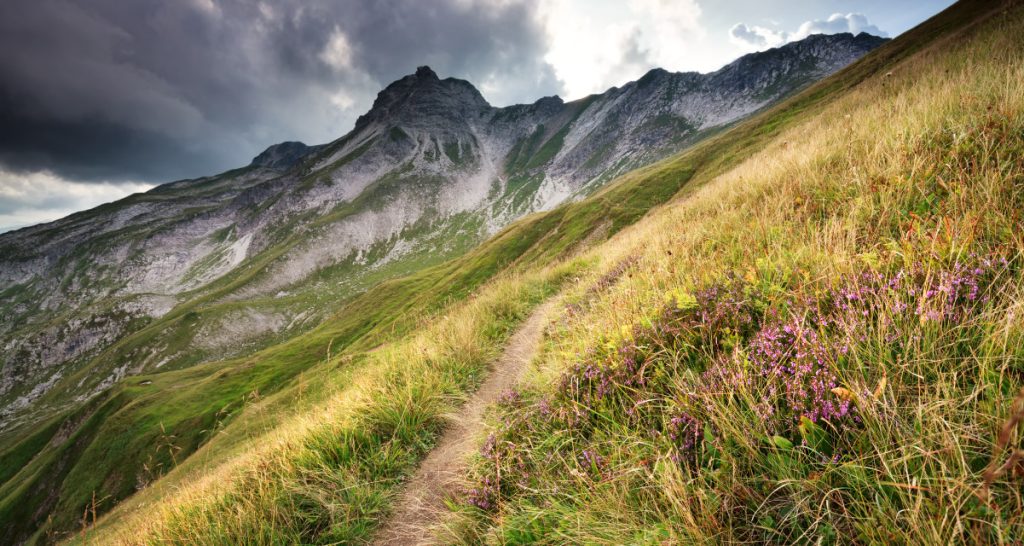

A centuries-old Chinese tradition that was almost exterminated during China’s brutal Cultural Revolution—solitary hermits who retreat into China’s mountains to pursue paths of simplicity and contemplation—is once again alive in remote areas of the country.

Mystics have sought solitude in forests, mountains, and deserts for thousands of years. But why?
There are a multitude of related reasons. Here are just a few:
- To practice one’s spiritual path apart from worldly distractions
- To simplify one’s life and ultimately to purify oneself spiritually
- To work toward enlightenment, as Buddhists do, or toward immortality, as Taoists do
- To walk an inner path of reunion with God
China, a land no longer associated with mysticism, once had a rich tradition of hermits living apart in remote areas. Theirs were solitary spiritual journeys, inner pursuits that varied with each individual hermit, but with a common theme of withdrawal from society to focus on making progress on one’s spiritual path.
Chronicling a centuries-old spiritual tradition
That tradition reaches back centuries in China.
Bill Porter’s 1993 book, Road to Heaven: Encounters with Chinese Hermits, traces that history and chronicles Porter’s own journeys into remote mountainous areas in China to find and learn about modern-day hermits living there. In search of information, he also visited temples and spoke with their abbots and monks.
The book provides a rare glimpse into the lives of these reclusive individuals. It details their simple lives, their hardships, and the Taoist and Buddhist beliefs and practices that inspire them.
Porter’s fascination with hermits stems from his belief in the value of solitude, meditation, and the pursuit of spiritual enlightenment. His book sheds light on the enduring tradition of hermitism in Chinese culture. It also showcases its relevance in the modern world.
Road to Heaven helped fuel the hermit movement in China
Not only did Road to Heaven tell the previously little-known story of Chinese hermits, it also was part of the story. Porter’s book sold only modestly when its English version was first published in 1993. However, when the Chinese translation came out in 2006, the book became a bestseller in China with more than 100,000 copies sold.
Road to Heaven spread the word of the hermit tradition and also inspired Chinese from many walks of life to try the hermit’s path for themselves.
Where do hermits live and how many are there today?
In his travels and inquiries throughout China, Porter learned that hermits lived almost exclusively in a relatively small part of the huge Zhongnan (Chungnan) mountain range, which extends all the way to India.
Porter’s 1990 visit to Hsianchi Temple and its 68-year-old abbot Hsu-tung elicited the abbot’s guess that there were about 250 hermits living in nearby mountains. But “monks and nuns living in the mountains don’t have to register with anyone, so there’s no way of knowing,” Hsu-tung added.
That was more than 30 years ago. As recently as five years ago, there were an estimated 600 hermits living in the Zhongnan Mountains. However, there could be more as there has never been a “hermit census.”
The life of a Chinese hermit
Meditation, chanting, and simple living are core components of hermitic life. Hermits mostly use Taoist and Buddhist rituals in their attempts to cultivate inner peace and wisdom.
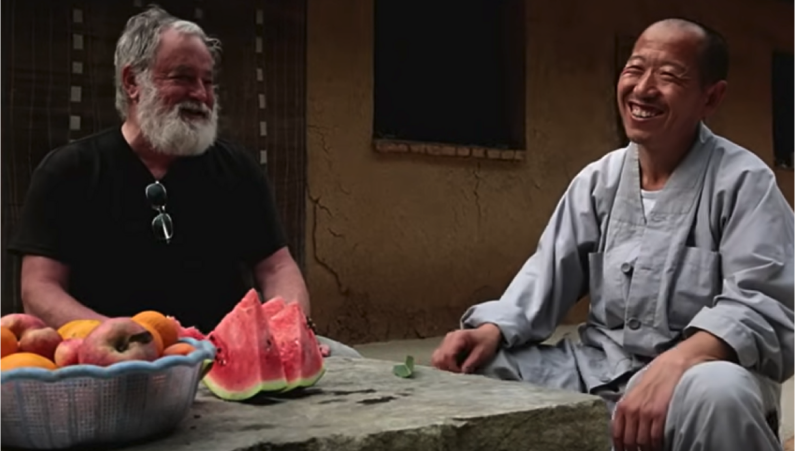
Though they undertake journeys into remote mountain areas, for them the real journey is the one within. Hermits often stress that true freedom is found not in external circumstances, but within oneself.
A spiritual graduate school
Bill Porter has an interesting way of describing what hermits do. “I like to tell people it’s like spiritual graduate school,” he explained in a YouTube interview. “You don’t do it because, oh, it sounds so cool and I’m going to go into the mountains. Because you won’t last one winter. These are people who have developed…some skill, some talent that other people don’t have, and some attraction to a path, a spiritual path.
“And so they practice with a teacher, whether it’s Confucian, Buddhist or Taoist…And you reach a certain point where certain members want to experience it for themselves because when you study with a teacher, you’re reading books, you’re listening to your teacher. Those are your teacher’s words. So you go into the mountains to find your own words, your own voice. That’s what is the foundation for this tradition, what I call the hermit tradition.”
The average hermit “goes in the mountains about the same length of time as a graduate student in the West—about three to five years is typical,” Porter adds. “You get a lot of ten-year periods, too, and some people never come down. That would be maybe three to five percent just don’t come down or they come down, they say, oh, I got to go back up because they enjoy that solitude.”
Hermits must first learn how to survive
The first order of business for a neophyte hermit is learning how to survive in the mountains.
Some lean on the knowledge of older hermits, for there is communication within the hermit community, such as it is. Yes, hermits live solitarily but they do walk the mountain, receive visitors (though rarely), and sometimes visit other hermits.
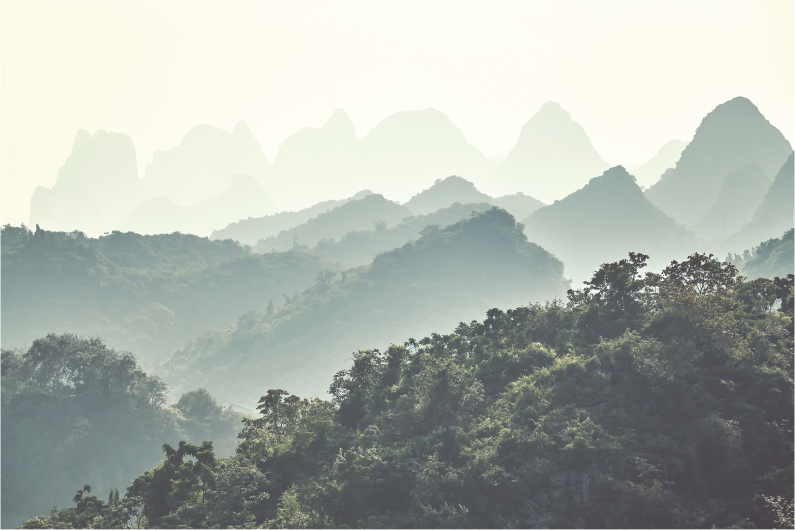
“Usually, everybody knows how to plant spinach or some greens,” Porter explains. “And…you need a staple, carbohydrate, and it’s either rice or wheat flour. And so somebody’s got to supply that because you can’t grow that on a mountain. So you’re going to need somebody to help you.”
That somebody is usually the local villagers who live at the foot of the mountain.
“Every village likes to have hermits…nearby,” Porter explains. ”If there’s a hermit on your mountain, [villagers believe] it’s going to rain on time. Or if somebody in the village has gone mad, has a physical illness, you go up and a hermit can provide treatment. Because medical knowledge is also being passed down generation by generation.
“So these hermits, without even planning to do it, become healers of different kinds. That’s not their object, but that’s just what happens on the mountain. You just learn a whole new set of information and skills you develop in order to survive.”
Some hermits support themselves by collecting and selling herbs to herb gatherers.
Out of respect, hermits live at least a two-hour walk from the nearest local farmer. After all, these farmers have lived in the areas much longer than the hermits.
For their cooking fires, hermits collect only fallen deadwood near where they live. So, they have to live in an area where they can collect wood, and also near a water source.
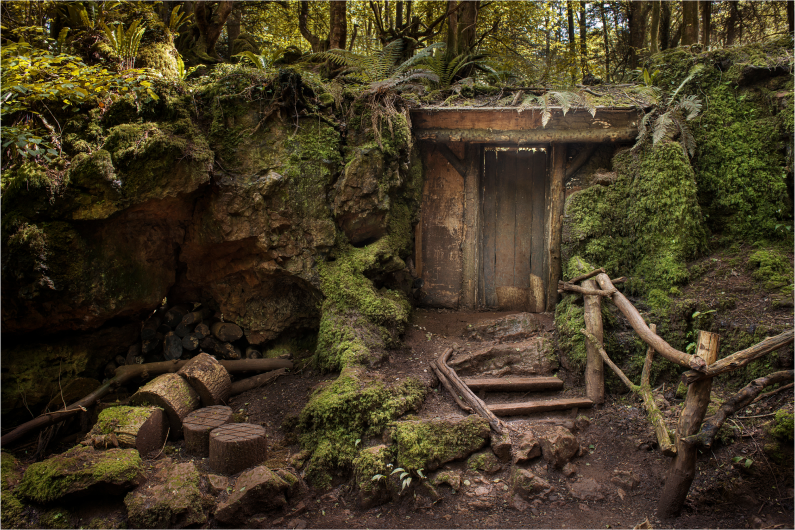
“And of course, they’re competing when they grow vegetables,” Porter notes. “So they’re competing with wild animals, too. Not usually bears. And of course, bears are all gone. And so are the tigers now. So that’s not a threat….
“There were definitely a lot of bears in the Zhongnan Mountains when I was doing my interviews. But they’re gone now. And so are the South China tigers, about the size of a German shepherd.”
Porter adds: “I’ve never met a hermit who was harmed by them. Of course, I’m only meeting the hermits who are alive. And they’re all vegetarians. I’ve never met a hermit that eats meat.”
Insights into hermits’ attitudes and beliefs
Porter’s interview with elderly monk Master Hseih in Hseinku Temple in Huashan provides fascinating insights into the attitudes of some Chinese hermits. Upon asking Hseih about Taoism, the monk spoke of Lao-tzu (Laozi), who is revered as the original teacher of Taoist principles.
“Lao-tzu said to cultivate tranquility and detachment,” Hseih explained. “To be natural. To be natural means not to force things. When you act natural you get what you need. But to know what’s natural, you have to cultivate tranquility.”
He added that “the Tao isn’t something that can be put into words…You can’t force things, including practice…The main thing is to reduce your desires and quiet your mind.”
Hseih added that his mountain, as throughout other mountainous areas of China, has been developed for tourism. “There used to be a lot of hermits here,” he told Porter. Now, because of tourism “the tranquility is gone. And so are the hermits.”
Porter then asked Hseih where the hermits went.
“That’s hard to say,” he answered. “Hermits want to be left alone, so they’re not easy to find. They prefer isolation…They prefer to meditate.”
The wisdom teachings of hermits
Road to Heaven is filled with anecdotes Porter has collected from hermits. Often these tales include little wisdom teachings.
For example, a monk named Hsiu-yuan he visited after a treacherous trek down the backside of a mountain— who lived in a hut so remote that few ever visited him—replied to Porter’s questioning if he ever got lonely.
“No, not as long as I have the wind and the moon, the water and the mountains for my companions,” Hsiu-yuan answered.
The story another monk, named Yen-che’ng, told Porter is rich with insight into hermit life. Upon being asked by Porter what he told Porter’s driver regarding what he and other monks were doing on the mountain, he replied:
“I talked about meditation. I explained how first we chant the name of the Buddha to settle the mind. Only when the mind is settled can it become quiet. Then I explained how we quiet the mind by asking who’s chanting the name of the Buddha. Only when the mind is quiet can it become still. Then I explained how we still the mind by putting aside the name of the Buddha. Only when the mind is still can it see. And only when the mind can see can it reach the mystery of mysteries.
“I explained that this is a process that anyone who practices has to go through. How long it takes is up to the individual.
“It’s like walking down a road. The road keeps changing. Sometimes it’s easy, sometimes it’s hard. But for people who practice, living in the mountains is much easier than living in the city. Our life looks hard to outsiders, but we’re not concerned with comfort. We’re here to practice.”
The joys of hermit life
Porter explained further: “We’re always worried about some material thing or some relationship issue or some need for a career advancement or whatever. These people have let all that go. And their biggest worry every day was trying to feed themselves, that’s all. And whenever they would see me, they would always smile, and they would go back in and start a fire and start cooking something.
“Even though they had next to nothing, they would always make some food, make some noodles. And they were so willing, also, to talk.”
Porter calls Chinese hermits “the happiest people I’ve ever met.” Considering their outlook on life, it’s not hard to see why.

Leave a Reply