

The room is quiet except for the low rhythm of a heart monitor and the soft hum of a volunteer’s voice. A warm hand rests on another that is cool to the touch, and for a while, there is nothing to do but sit and breathe together.
In that small stillness lies the essence of the No One Dies Alone movement: a promise that no person’s final moments will unfold in loneliness or neglect.
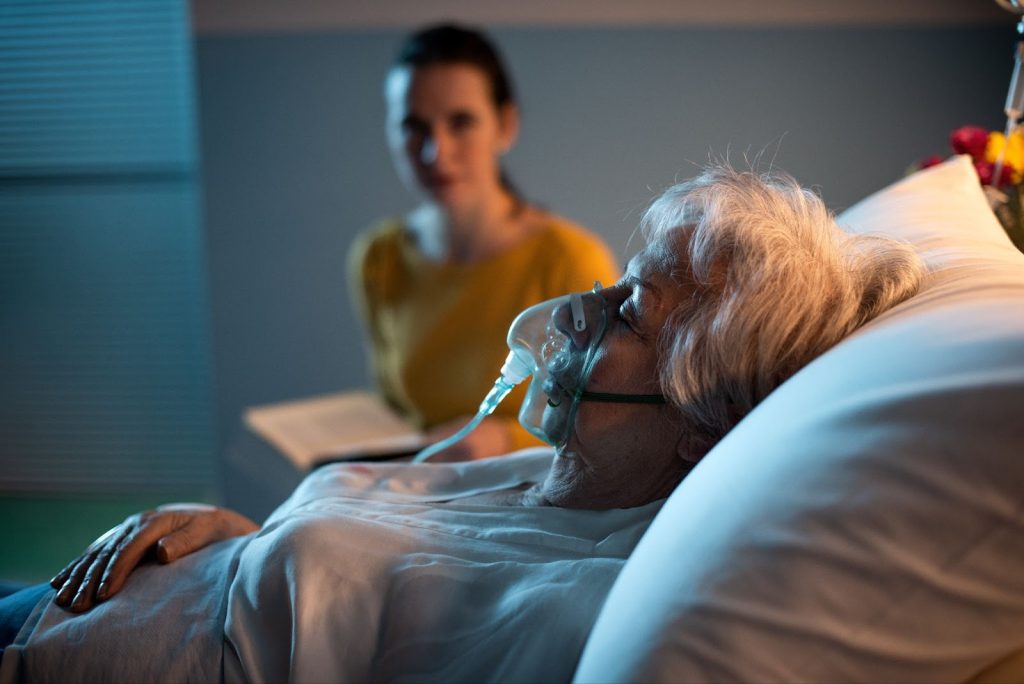
For many who serve as bedside vigil volunteers, the act of being there feels like healing itself, but a different kind. These volunteers, ordinary but very special people, come not to fix or to cure, but to bear witness. They visit to whisper a prayer, to hum a familiar tune, and to hold a hand until the very end.
These gestures, simple as they are, carry immeasurable weight. They speak to something ancient in the human spirit: the need to be seen, to be remembered, to know that one’s life mattered.
Hospitals can be starkly bright and busy places, filled with machines that sustain life but rarely touch hearts. The No One Dies Alone program restores what medicine alone cannot: dignity, companionship, and the quiet assurance that love still abides in the room. In that presence, fear often softens, and peace has a chance to enter.
How one nurse sparked a global compassion movement
The No One Dies Alone story began in 1986 at PeaceHealth Sacred Heart Medical Center in Eugene, Oregon. A nurse named Sandra Clarke was caring for an elderly man who knew his time was near. He asked if she would stay with him for a while. Clarke assured him she would return after finishing her rounds. But when she came back, he was gone. He had died alone.
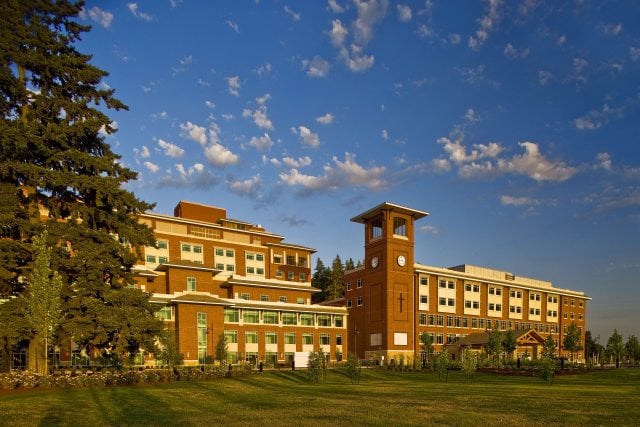
That moment haunted her. It revealed a gap, not in medical care, but in human kindness itself. There was the absence of a witness at life’s threshold.
Out of that remorse grew resolve. Clarke envisioned a small circle of hospital volunteers who could be called when a patient was dying without family or friends nearby. Their only task would be to sit in quiet vigil and offer the comfort of their presence.
Within months, No One Dies Alone was born. What began as a humble effort in one Oregon hospital soon drew attention across the nation. Nurses, chaplains, and administrators recognized its simple power: anyone, trained with compassion, could become a bridge between life and death.
Forty years after Sandra Clarke’s heart-wrenching experience, hundreds of hospitals, hospices, and veteran care centers have adopted Clarke’s model. Each vigil, each moment of silence shared between two souls, adds to a legacy that began with her promise to never let anyone die unseen again.
How does the No One Dies Alone program work?
In hospitals and hospices across the country, a quiet network stands ready to answer a simple call: Someone is dying alone—can you come? Within minutes, a volunteer appears at the bedside.
They may read softly from a favorite poem, offer a gentle touch, or simply sit in silence as the hours pass. There is no script, no right or wrong way to be present—only the shared intention to ensure that life’s closing chapter is not written in solitude.
The No One Dies Alone (NODA) model is built on this call to presence. To be present. Each hospital forms a small team of trained volunteers, people of every age and background who understand the weight and grace of being there at such almost overwhelmingly poignant moments.
They receive orientation on how to sit in compassion, maintain calm, and respect diverse beliefs. Nurses or chaplains coordinate the vigils, calling volunteers when a patient has no visitors or when family members cannot be present.
Over time, what began in one Oregon hospital has expanded to more than 400 institutions worldwide, including the Mayo Clinic, veterans’ hospitals, and long-term care homes. Each program adapts Clarke’s framework to its own community. Each proves that compassion, once sparked, needs little to sustain itself but willing hearts.
What is the difference between No One Dies Alone and hospice care?
Unlike hospice care, which focuses on physical comfort and medical management, the NODA companion’s purpose is spiritual and emotional. The volunteers are witnesses, not caregivers. They serve as companions, not clinicians.
A hand held, a hymn hummed, a prayer whispered—these gestures do not heal the body. Rather, they acknowledge the soul and honor the essence of the one passing from the screen of life.
The volunteers: ordinary people, extraordinary presence
The strength of No One Dies Alone lies in its volunteers. They are ordinary individuals drawn by an extraordinary calling. Some are nurses or former caregivers. Others are students, chaplains, or retirees who felt something stir within them when they heard of the program. What unites them is not experience but empathy.
One volunteer describes her first vigil as “the most peaceful night of my life.” Another says he joined after losing his mother alone in a hospital room. His hope was that no one else would face that kind of solitude.
Volunteers speak of how the work has changed them—how fear of death gives way to reverence, and how the simple act of sitting quietly can open a door to deep peace.
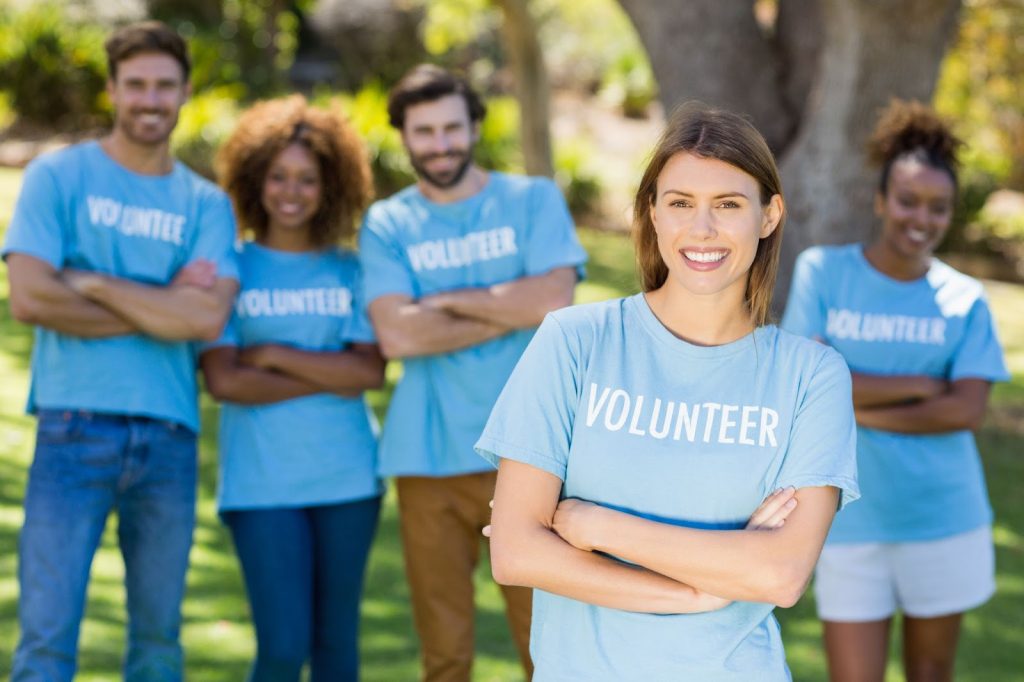
NODA training emphasizes presence over performance. Volunteers learn to read subtle cues: when a patient seems restless, when quiet words soothe, when silence itself is the purest comfort. They are taught that their stillness is not passive—it is an offering, a way of saying, You are not forgotten.
For many, the gift flows both ways. Some volunteers describe leaving each vigil with a deeper appreciation for life, relationships, and the fragility that binds us all. They come to give comfort, but they leave feeling comforted themselves.
Through their steady devotion, these companions transform fear into solace and isolation into shared humanity. Each bedside vigil becomes a testament to the enduring truth that even in our final hours, we are never truly alone.
Hospitals and communities embracing the call
As noted, today No One Dies Alone programs have been adopted in hospitals, hospices, veteran care centers, and academic medical centers across the US and beyond. Some examples:
- At the 10 University of Michigan Health hospitals across the state, volunteers are called to provide emotional support during the final 48 to 72 hours of life for patients who might otherwise die alone.
- In Suburban Hospital in Bethesda, Maryland, part of the Johns Hopkins network, an email alert goes out when a patient becomes eligible for a vigil. Volunteers then sign up to sit at their bedside in two- or four-hour shifts. This hospital’s NODA team includes non-clinical staff such as food services, IT, and others because this is a mission of presence, not one that requires professional credentials.
- In AdventHealth Parker in Colorado, one volunteer named Katherine Wiley sat with a dying woman whose adult sons arrived minutes too late. The sons were emotional and grateful to learn someone had stayed with their mother in her final moments. Katherine then became a driving force to extend the NODA program across other AdventHealth facilities.
- Recently, Cape Fear Valley Medical Center in Fayetteville, North Carolina, launched its first group of bedside vigil volunteers. When a patient is placed on what is known as comfort care, which is often during the last 72 hours of life, the hospital alerts volunteers to begin keeping watch and offers blankets, music, and religious texts tailored to the patient’s preferences.
Even in remote or resource-limited settings, the model works:
- In Antelope Valley Medical Center in Southern California’s high desert, volunteers are called to sit in vigil with patients who have no local family or friends and are expected to pass within 48 hours.
- In Inverclyde, Scotland, west of Glasgow, volunteers use a WhatsApp group to schedule their shifts. They also maintain a shared journal of observations about patients’ states of mind and any interactions they may have had with them.
These examples show the reach and the flexibility of the movement. Each hospital shapes the program to its culture and capacity, but its mission remains the same: compassionate end-of-life companionship where none would otherwise exist.
Beyond the bedside: ripple effects of compassion
The legacy of No One Dies Alone stretches far beyond a single vigil. Its philosophy has influenced complementary efforts such as No Veteran Dies Alone and inspired similar programs in prisons, nursing homes, and spiritual communities.
For example, at Trinity Health in Michigan, a volunteer program called “Comfort Companion” (modeled after NODA) lets visitors sit not only with patients who are dying, but also with patients who are isolated—even if they may recover.
These ripple programs remind us that presence is not just for the final hours. It has grown beyond that companionship in the final moments into purposeful actions that reclaim dignity for anyone in a state of vulnerability or solitude.
In many communities, train-the-trainer models have emerged, with volunteer networks engaging in mutual support, storytelling, and spiritual sustenance.
The impact is both communal and personal. When a hospital prioritizes something as “soft” as sitting at a dying person’s bed, it shifts the institution’s culture. Hospital staff experience renewed purpose. Family members witness profound respect. And volunteers themselves often carry the lessons of compassion into their daily lives.
Why this program matters more than ever
In a time when social isolation is very common, No One Dies Alone reminds us of one unchanging truth: we need one another, even when the ability to communicate fades.
Modern medicine can prolong life, ease pain, and manage symptoms, but it often cannot offer presence. For many, their final hours are not about treatment but about being seen and honored. In this context, NODA’s model addresses a deep ethical and spiritual gap.
As America’s population ages and nuclear families shrink, more people will face the prospect of dying without a family member or friend nearby. To illustrate the point, one volunteer movement estimated that their team is now alerted multiple times per month across their region.
Because of this growing need, hospitals in many regions are now considering having a No One Dies Alone program as part of their standard end-of-life care. In systems like Johns Hopkins Medicine, NODA is administered simultaneously through chaplaincy and volunteer offices. The effect is an infusion of quiet humanity into institutional structure.
In the face of death—and even more so, in the face of people dying forgotten and alone—presence becomes an act of hope. It says: You matter. You will be accompanied. And perhaps, in that assurance, fear quiets and dignity endures.

Closing reflection: carrying the torch forward
Forty years ago, a nurse’s regret sparked a movement. Today, each vigil held by a volunteer is a whispered echo of that original promise: no one dies alone.
Return in imagination, if you will, to that first scene—two hands clasped in silence, a life passing with a witness beside it. The world may hum its machines, but here, in the hush of a life falling silent and passing into the beyond, something vital persists.
Sandra Clarke’s legacy continues in every vigil at PeaceHealth, in every counselor who trains a new volunteer, in every institution that commits to being present for every patient, even the ones leaving us shortly. And in each act of accompaniment, we reclaim a sacred truth: life’s ending is a moment of profound human connection.
May we, in this age, rise to that calling. May we answer the silent invitation at every bedside. May none ever take a final breath unheard, unseen, or unloved.
How to volunteer for No One Dies Alone
Find a program. Search your hospital’s site for “No One Dies Alone,” “Spiritual Care/Chaplaincy,” or “Volunteer Services.” Then apply.
Complete the onboarding process. Most programs require an application, interview, background check, health clearance, and orientation. Time commitment expectations are also defined. As a side note, most programs require volunteers to be 18 or older.
Take the NODA training. You’ll learn bedside presence, boundaries, and what to do during a vigil. Some programs add short online modules and a brief in-person orientation session.
Join the on-call roster. Volunteers sign up for two- to four-hour windows and get notified when a vigil is needed.
If there’s no program yet in your area, take the initiative. Share starter guides, such as this one by the Supportive Care Coalition, with the chaplaincy, palliative care, or volunteer services of your local health care facility.
5 responses to “No One Dies Alone: The Sacred Duty of Presence ”
-
Some people need to be alone to die. I know that now. It is hard to leave the ones you love, hard to drift away from where you are being connected. When my mother died, I had left the room to make a cup of tea. Someone else was with her, but not touching her, just watching. Later, a friend and psychologist explained that sometimes people struggle with dying because of the love of others so near. They need to be let go. I think that when my time comes, I would like to be alone, too. I guess it depends on the situation. If I was badly injured say, in a car accident, I might want some moral support from a friendly volunteer. It just depends. As our palliative doctor opined, each person is different and it is hard to predict anything about their passing, even how long they might live. Dying can be so different from what we are led to expect in the movies. On the other hand, showing compassion and being a friend to the dying is important and helpful. Thank you for writing up this interesting new movement of showing compassion for the dying.
-
You’re most welcome, Lesley. Thank you for your thoughtful comments. Patrick
-
-
No one should ever die alone. Thanks to Sandra Clarke’s resolve to never let this happen again, her actions now leave a legacy of hope and compassion for millions who may otherwise have faced such a bleak ending to their lives. Her actions have also positively impacted the lives of the volunteers who choose to selflessly participate simply by their loving presence.
Very inspiring article Patrick! Thanks for sharing. -
Very Inspiring. This may be an answer to one of my prayers. Thank you.
-
Glad to hear it, James. I appreciate your reply. Patrick
-


Leave a Reply