

Pressure on traditional agriculture is reshaping how food is grown—not just where it’s produced, but also how growing space is used.
Limited land near cities, fragile supply chains, and rising transportation costs are making a different model more economically viable. This new approach is called “vertical farming.”
Vertical farming is often grouped with another subset of farming: indoor agriculture. However, that label misses the point, as controlled-environment growing has existed for decades, especially in large-scale greenhouses. The real shift is this: farming goes up instead of out.
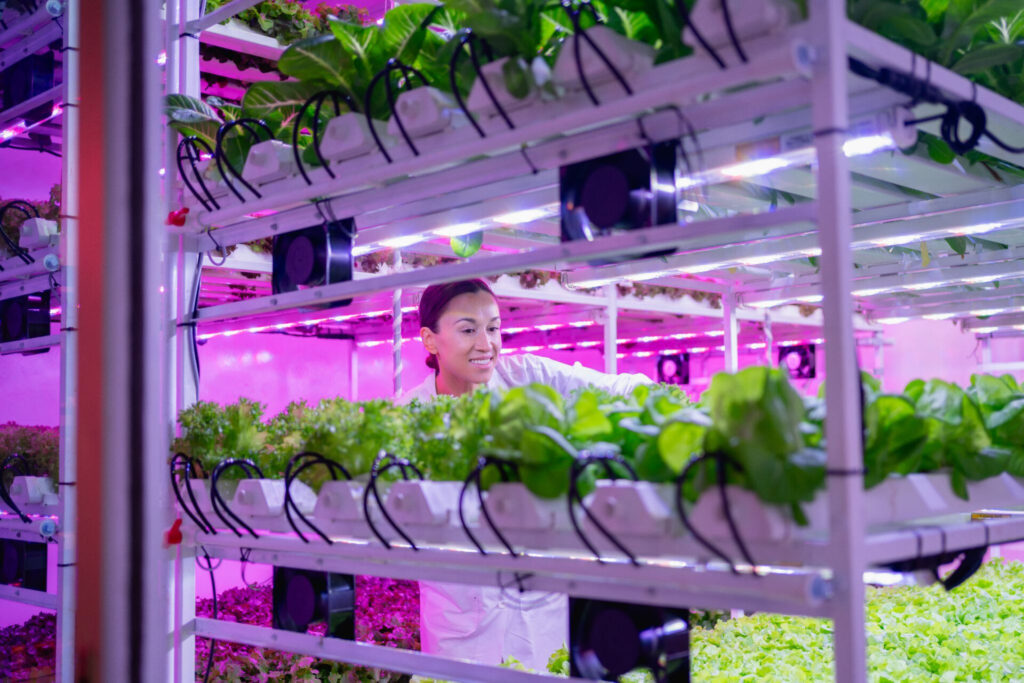
By building vertically, the point of these systems is to produce more food per square foot while using water and nutrients more precisely. This reduces reliance on long-distance, increasingly strained distribution networks while delivering fresher produce to end users.
What is vertical farming?
In a nutshell, vertical farming is the practice of growing crops in stacked layers within controlled environments to maximize output per surface area used.
It typically uses hydroponic or aeroponic systems that deliver water and nutrients directly to plant roots without the need for soil. However, what defines vertical farming is the combination of these systems with multi-level structures that compress production into a much smaller footprint.
How vertical farming differs from traditional and indoor agriculture
Indoor farming has long used controlled environments to increase yields. Vertical farming builds on that foundation but changes the geometry—and with it, the economics.
Compared with both field agriculture and conventional greenhouses, vertical farms have the following characteristics:
- They multiply output by stacking growing layers. Instead of on a greenhouse floor or a single field, crops grow on tiered racks like shelves in a warehouse. The result is that a single building can produce what would otherwise require multiple acres.
- They use water and nutrients with greater precision and less waste. Plants are fed through controlled systems that deliver exactly what each layer needs. Excess water is captured, filtered, and reused, rather than running off and soaking into the ground.
- They can be replicated in smaller units and in different locations. Instead of one massive farm, the system can be installed inside a grocery distribution center, near a restaurant hub, or in cities far removed from agricultural hubs.
This vertical design makes it possible to produce crops in dense or land-constrained areas where traditional farming is not practical.
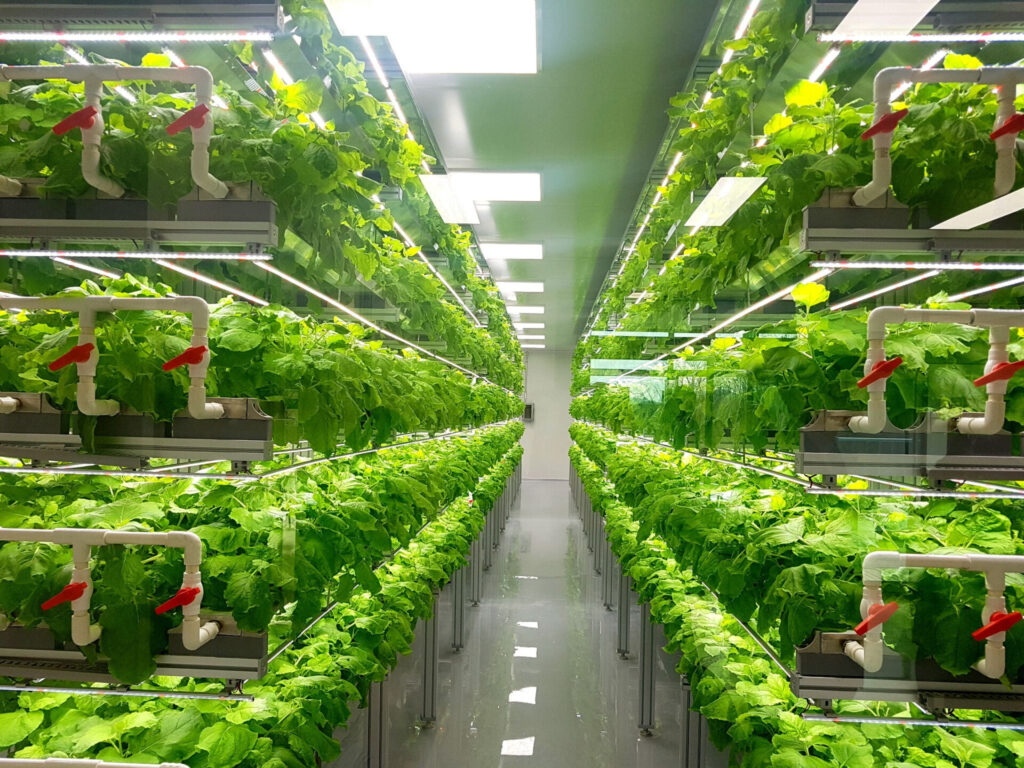
By shrinking the land footprint, vertical systems can move closer to urban markets and be spread out over multiple locations rather than concentrated in a few dedicated agricultural regions.
The result is a more distributed model of production. This model shortens supply chains by bringing certain crops much closer to the point of consumption.
What defines vertical farming: building upward instead of outward
The defining shift in vertical farming is physical. Instead of spreading crops across fields or huge greenhouses, these farms stack plants in layers inside a single structure, compressed into a much smaller footprint by using height instead of horizontal space.
Each layer becomes its own growing surface. Rows of greens sit on shelves, racks, or trays, often rising several stories high inside facilities purposely configured for such growing.
Without exposure to weather, each layer can receive the same light, nutrients, and climate conditions. That consistency is what allows vertical farms to treat every level as a repeatable unit of production.
Year-round production follows naturally from this setup. Because the system is enclosed and regulated, crops are no longer tied to seasons or local climate. Each layer produces according to its own cycle, independent of what’s happening outside.
This shift toward building upward fits naturally into environments where space is limited and proximity matters. But the real story of vertical farming is not just where it happens—it’s how these stacked systems actually work.
How vertical farming works
At its core, vertical farming is a layering of two systems: plant biology and tightly managed conditions. Each growing level is not just a physical shelf, but a self-contained environment where light, water, and nutrients are carefully managed.
Hydroponics: feeding plants in stacked systems
Most vertical farms rely on hydroponics, where plants grow without soil and receive nutrients through water-based solutions.
Without soil, each layer becomes lighter, cleaner, and easier to organize into dense vertical arrangements. Instead of roots spreading unpredictably through the ground, they sit in controlled channels or trays, allowing each level to function as a compact, repeatable growing unit.
Nutrients can be adjusted at each layer depending on the crop or growth stage. This gives growers a fine level of control over how plants develop throughout the entire stack.
Aeroponics and advanced systems
Some systems go a step further with aeroponics, where plant roots are suspended in air and misted with nutrient solutions.
This reduces the weight and bulk of each growing layer even further, which makes it easier to stack more levels within the same growing structure. It also improves oxygen exposure to the roots, which can accelerate growth and increase yields within the vertical system.
In these setups, the physical constraints of soil are removed almost entirely.
LED lighting and controlled environments
Because vertical farms operate indoors, artificial lighting replaces sunlight as the primary energy source for plant growth.
LED systems are positioned at individual layers so they receive consistent, targeted light regardless of their position in the stack. There’s no shading from upper layers, and no dependence on time of day or season.
Temperature, humidity, and airflow are also regulated across the entire structure, so each layer experiences nearly identical conditions.
What crops work best in vertical layers
Not every crop fits easily into a stacked growing system. The tight spacing, controlled inputs, and layered design that make vertical farming efficient also determine what can be grown.
That’s where some important questions arise.
Leafy greens dominate vertical farming
Leafy greens are the backbone of most vertical farms: lettuce, spinach, arugula, kale.
They grow quickly, stay compact, and don’t require deep root systems or structural support. A rack of lettuce can move from seedling to harvest in a matter of weeks. This makes it ideal for rotating cycles of stacked production growing.
Research reflects this concentration. In reviews of hydroponic and vertical systems, crops such as lettuce and similar greens are by far the most studied and widely grown categories.
Compact, fast-growing crops fit stacked systems
Vertical farming favors plants that behave predictably in confined spaces.
Herbs and microgreens follow the same pattern. Basil, mint, cilantro, and pea shoots can be grown densely, harvested quickly, and replanted in rapid succession. Their root systems remain shallow, and their growth cycles align cleanly with controlled lighting and nutrient delivery.
Fruiting crops like tomatoes or cucumbers can also be grown this way, but they push against the limits of indoor, vertical growing. They require more height clearance, structural support, and often manual pollination. These limitations complicate the clean, repeatable layering that makes vertical farming efficient.
High turnover makes vertical density economically viable
The economics of vertical farming depend on speed as much as space.
Because infrastructure and energy costs are high, crops need to cycle quickly. Leafy greens can be harvested in as little as 30 days in controlled systems, compared to much longer timelines in soil.
That rapid turnover is what makes the model viable. Each layer is not just producing—it’s producing frequently. Slow-growing crops such as root vegetables, by contrast, tie up valuable vertical space for longer periods, which makes them harder to justify economically in this model.
Where the questions begin: nutrients, soil, and “organic”
Once you understand why leafy greens dominate, a deeper question naturally follows: What happens to nutrient quality when plants are grown without soil, under artificial light, in tightly controlled systems?
The honest answer is the research is mixed, and highly dependent on how vertical growing systems are managed.
Some controlled studies show not much difference in core nutritional values. For example, comparisons of hydroponic and soil-grown tomatoes have found similar sugar levels and overall fruit quality, with some nutrients (like lycopene and beta-carotene) even higher in hydroponic systems.
Other findings point in the opposite direction. One analysis of tomatoes reported lower mineral content (including phosphorus, potassium, and zinc) in hydroponically grown crops compared with soil-grown counterparts. Moreover, broader reviews note a key limitation: there are very few tightly controlled, apples-to-apples comparisons, and results vary based on nutrient solutions, crop variety, and growing conditions.
In soil-based systems, nutrients come from a living ecosystem of minerals, microbes, and organic matter. In soilless vertical systems, on the other hand, nutrients are precisely formulated and delivered directly to the roots.
So the question shifts from where nutrients come from to whether a formulated nutrient solution can match the full spectrum of minerals, trace elements, and microbial interactions found in soil.
The soil question: does it matter?
There’s growing evidence that soil itself, biologically active soil, may influence nutrient density in ways that are not fully replicated in controlled systems such as indoor vertical farming.
Studies comparing regenerative and conventional farming systems suggest that soil health, microbial life, and organic matter can affect micronutrient and phytochemical levels in crops.
That introduces a deeper layer to the conversation.
Vertical farming removes soil entirely. That simplifies control, but it also removes the biological complexity that soil provides. How much that tradeoff matters nutritionally is still being worked out.
How vertical farming stacks up against organic farming
This aspect of vertical farming is where the distinction becomes clearer, because most vertical farms do not qualify as organic. Organic standards—at least in the way many people understand them—are tied to:
- Soil-based growing systems: Plants are grown directly in the ground, not in water or inert substrates. The soil itself is part of the growing system, providing structure, minerals, and a habitat for life. A typical example would be a vegetable farm that builds fertility through compost, cover crops, and crop rotation, rather than relying on liquid nutrient solutions. The soil is not just a medium—it is the foundation of the system.
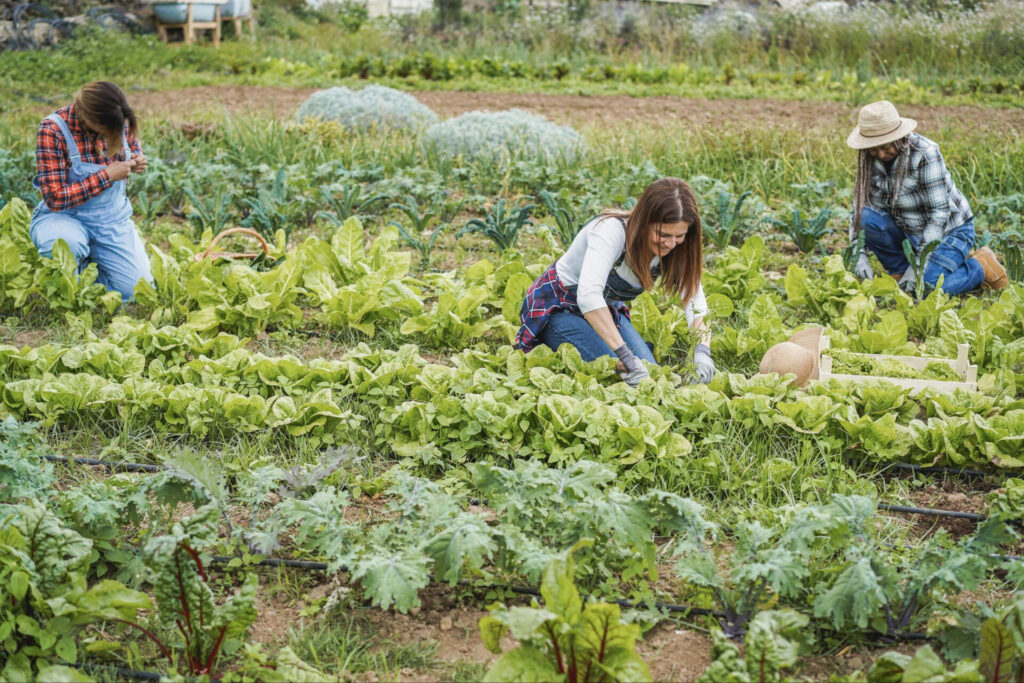
- Ecological nutrient cycles: Nutrients are generated and recycled within a broader farm ecosystem rather than mixed in a tank and delivered on demand. Farmers return organic matter—things like composted plant material, animal manure, or green manure crops—to the land to replenish fertility. Over time, this creates a loop: plants grow, residues decompose, and nutrients are gradually released back into the soil for the next crop.
- Living soil biology: Healthy soil is alive with microorganisms—bacteria, fungi, protozoa, and earthworms—that interact with plant roots. These organisms help break down organic matter, unlock minerals, and form symbiotic relationships with plants. For example, mycorrhizal fungi extend a plant’s root system, helping it access water and nutrients it otherwise couldn’t reach. In organic systems, supporting this living web is considered essential to plant health, not optional.
Across countries, the exact rules and certifications vary, but these three ideas show up again and again. Organic farming, in plain terms, is not just about what you avoid—it is about working with a living soil system that feeds plants through natural processes rather than pre-mixed nutrient formulas.
Two fundamentally different approaches to growing food
Vertical farms take a different route. Instead of relying on soil ecosystems, in hydroponic or aeroponic systems nutrients are dissolved in water and delivered directly to plant roots. These nutrients are typically blended from mineral salts and adjusted with precision, rather than built up gradually through compost, soil life, and organic matter.
That shift changes the role of the farm itself. In a soil-based system, fertility develops over time through biological activity. In a vertical system, fertility is measured and mixed up front, then continuously monitored.
That said, the picture is not entirely black and white.
Vertical farms often use little to no pesticides. This is because indoor conditions reduce exposure to pests and diseases. Inputs can be tightly controlled, which limits contamination and creates consistent growing conditions from one harvest to the next. Some operators are also experimenting with organic-derived nutrient solutions or hybrid models that try to incorporate elements of both approaches.
Even so, the underlying models remain distinct. Organic farming builds on living soil systems that evolve over time. Vertical farming, by contrast, creates ideal conditions by directly managing light, water, and nutrients at every stage of growth.
The economic challenges of building upward
The promise of vertical farming is clear. The economics are less forgiving.
Building upward requires a different kind of investment than traditional agriculture. Instead of land and machinery spread over large areas, costs are contained within a single structure where lighting systems, climate controls, sensors, irrigation, and software all work in sync from day one.
Instead of using the sun and the rain for growing, humanly created energy systems sit at the center of the equation. Artificial lighting replaces sunlight. Climate systems run continuously to maintain stable conditions across every layer. One risk to these vertical farming setups is that even small changes in energy pricing can shift profit margins quickly.
Profitability depends on a tight balance. Farms need enough production density to justify the infrastructure, while keeping operating costs within reach. Crop selection matters. Location matters. System efficiency matters. When those variables align, the model can work. When they don’t, the economics tighten fast.
Scaling vertical farming systems
A small number of companies have been working to scale vertical farming beyond the pilot stage. AeroFarms has focused on highly controlled aeroponic systems for leafy greens. After expanding aggressively, the company restructured in 2023 and narrowed its operations as it works toward a more durable economic model.
Infarm, a Berlin-based vertical farming company founded in Germany in 2013, took a different approach. The company developed compact vertical farms placed inside supermarkets and distribution centers to grow food closer to consumers. Rapid expansion brought global reach, but rising energy costs and operational complexity forced a pullback and a more focused footprint.
Both cases point to the same reality. Scaling is not simply a matter of repeating the model in more places. It depends on consistent performance, disciplined operations, and cost structures that hold up under real-world conditions.
The future of vertical farming
Vertical farming is still in its early chapters. The systems work. The question now is whether they can work at scale, consistently and profitably. The companies that succeed will likely be the ones that solve not just how to grow upward, but how to do so with efficiency and economic clarity.
What comes next is a process of refinement.
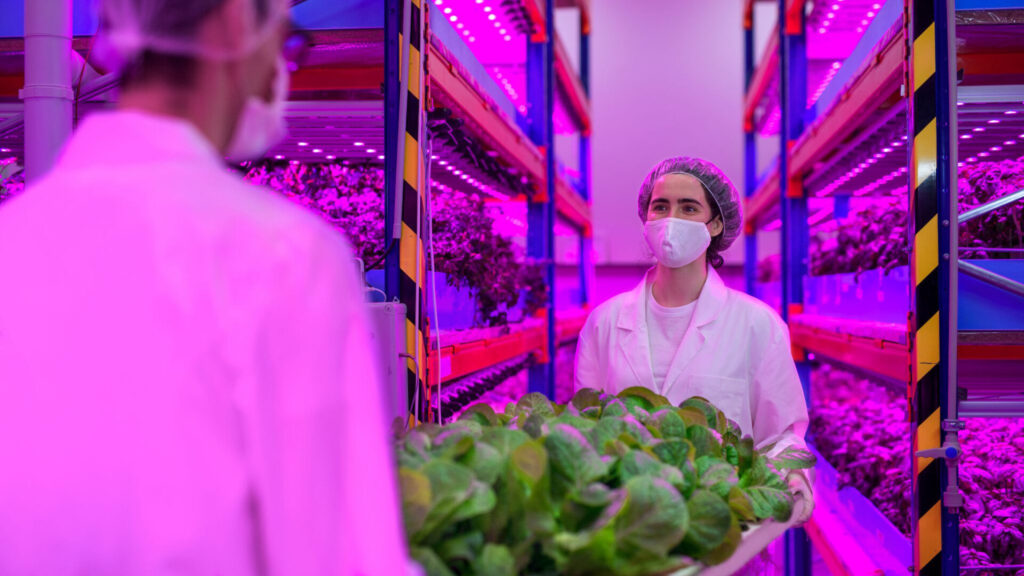
Automation is beginning to take on a greater role across these systems by handling seeding, monitoring, and harvesting with greater precision. Robotics can operate across layers in ways that are difficult to replicate in open fields.
Lighting continues to improve, with more targeted wavelengths tuned to plant growth. At the same time, plant science is adapting, with varieties selected specifically for indoor, stacked environments.
The focus is shifting toward getting more consistent output from the same volume of space, while reducing the cost required to produce it.
Expansion is likely to concentrate where these advantages matter most: dense urban regions, areas with limited arable land, and locations where the cost of building and operating upward is offset by the proximity to consumers.
In that sense, vertical farming is not spreading everywhere. It is finding the places where vertical density offers a clear advantage—and evolving there first.
3 responses to “Vertical Farming: How Stacking Crops Is Reshaping Food Production”
-
this turned out well
-
Patrick,
I truly enjoyed your article on vertical farming and will definitely share with my boys. What an interesting concept. I’m sure it will evolve quickly in the near future. I remember when you and our brother William dabbled in hydroponics in years past. Thank you for sharing this interesting information. Love, your sister Mary Jo 🥰 -
Excellent informative article, extremely comprehensive and — importantly — very nuanced!
As an experienced “permaculturist,” I cannot discern how the author has omitted any unaddressed essential on the topic.


Leave a Reply