

In a soybean field in Kansas, dew beads are on the leaves. The only sound is the steady whirring of a ground drone easing through the rows. It moves with quiet intent, like a careful gardener. Where it passes, tiny weeds fall cleanly, their roots severed. Not a drop of herbicide was sprayed.
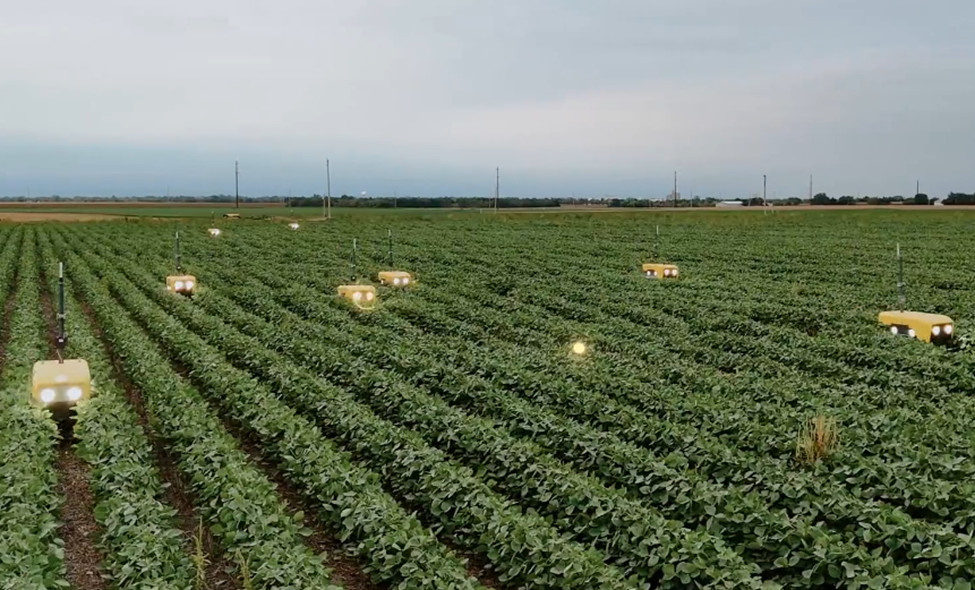
This is the future many farmers are testing now: precision farming, where intelligent field machines deal with weeds one by one, instead of spraying entire acres with herbicides such as Roundup.
Glyphosate, the active ingredient in Roundup and other herbicides, is the world’s most widely used weed killer. In recent decades, its use has increased sharply alongside the rise of glyphosate-tolerant, genetically modified Roundup-Ready crops.
But the movement toward precision farming methods challenges that old model with a new goal: to grow healthy food while protecting the soil and the entire ecosystem in which it grows.
For generations, herbicides have been the blunt tool of modern agriculture. They keep fields weed-free, but at a cost to waterways, soil life, and human health. Now, a new crop of agricultural innovators believes there’s another path—and their prototypes are already working the fields.
What makes precision farming different?
The traditional one-size-fits-all farming method views a field as one big canvas. Rather than tending each plant individually, the farmer manages an entire field the same way, with a single herbicide pass and uniform seeding.
In contrast, precision farming focuses on the needs of each plant. Using vision AI, GPS mapping, and soil sensors, these systems can tell exactly where nutrients are needed and where weeds are growing.
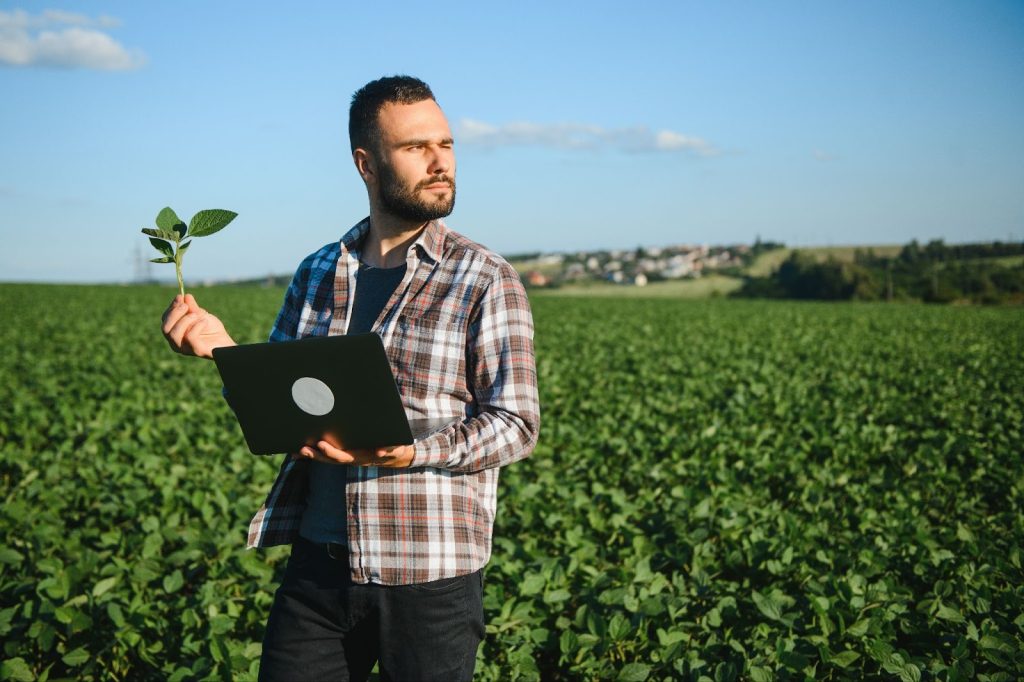
Imagine the following high-tech approach in action:
A network of cameras and sensors rides on small field drones as they move between the rows. The AI-powered visual inspection compares thousands of leaf shapes each second. It identifies weeds by their jagged edges, pale color, or other characteristics.
GPS mapping records every pass to within an inch, so that each plant can be revisited later with pinpoint accuracy. Beneath the soil, buried sensors read moisture and nutrient levels and feed that data back to the system.
Together, these tools draw a living map of the field, one that shows in real time which plants are thriving and which are calling for help.
From blanket spraying to plant-by-plant care
Put simply, that living map changes weed control from a uniform application into targeted, localized treatments—or, if ground drone weeding machines are employed, no herbicide at all.
Instead of a tractor blanketing acres with Roundup, ground drones move row by row. They trim or target only what’s necessary. The result is less waste, healthier soil, and potentially huge reductions in chemical use, with all their ill effects on human health and the environment.
This is not science fiction. Farmers are already using GPS-guided tractors and aerial drones to manage their crops more efficiently. But this new generation of ground-based machines takes precision to the level of the soil.
It’s like the difference, for your average gardener, between spraying a whole yard for dandelions versus plucking each one out. Except now, the “plucker” is a solar-powered, AI-driven assistant that never tires.
Inside the rise of smart field robotics
One of the most determined pioneers in this emerging field is Clint Brauer, a third-generation farmer from Kansas. After years in the tech industry, he returned to his roots and founded Greenfield Robotics. His big idea was that small autonomous machines could do what herbicides have done for decades—without the side effects.
Brauer’s early field trials were rough. Clay soil clogged parts of the machines. Rain turned prototypes into stranded hulks. Investors were skeptical, farmers even more so.
But persistence paid off. Greenfield’s latest WeedBot models now patrol real farms across several states. They cut weeds mechanically between crop rows while keeping damage to the crops to under one percent.
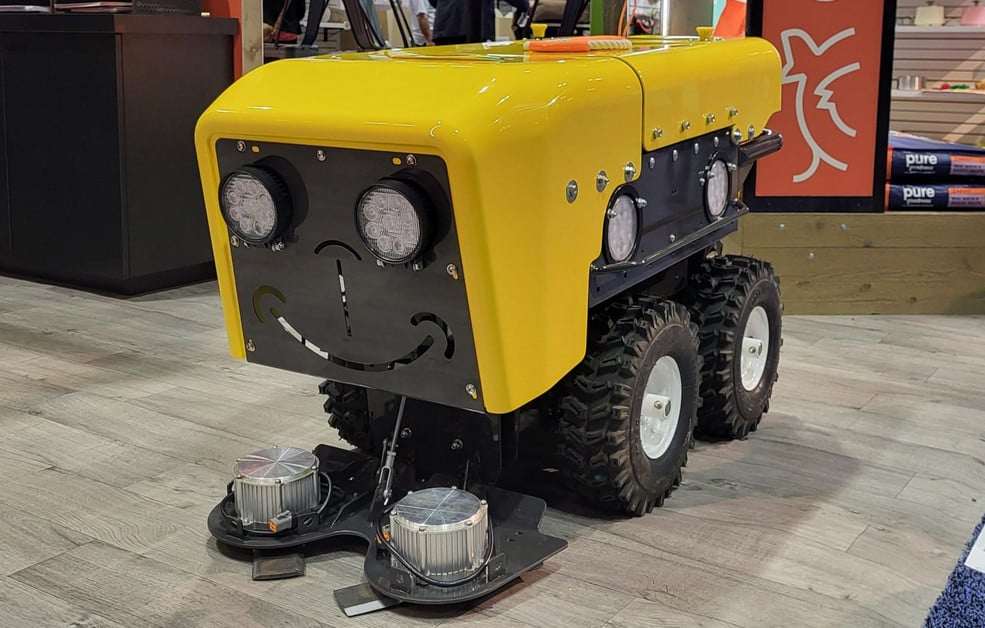
Each machine saves hours of tractor time and gallons of fuel. But the biggest upside of this new technology is that it makes herbicide-free farming methods practical.
Brauer believes his mission is bigger than profit. “We want to give farmers the tools to restore soil health,” he says, “and still make a living doing it.”
A movement that is spreading beyond Kansas
Today, Greenfield Robotics leads a small but growing movement. Their precision ground drones are showing that the long reign of herbicides might finally be challenged.
Other companies have joined this farming revolution. Here are three others at the forefront of this field:
- Aigen Robotics (US): Aigen builds solar-powered field drones that use onboard AI and computer vision to identify and clip weeds. Because of their lightweight design, fleets can work continuously without fossil fuels.
- Carbon Robotics (US): Carbon Robotics is the creator of the LaserWeeder, a machine that uses thermal energy to vaporize weeds in milliseconds. It can eliminate more than 100,000 weeds per hour using high-precision computer vision and CO₂ lasers, all without touching the soil or applying any herbicide.
- Naïo Technologies (France): Naïo is a European pioneer in autonomous weeding and cultivation robots for vineyards, vegetable farms, and specialty crops. Their compact, battery-powered units use GPS navigation and mechanical tools to manage weeds safely while working among delicate plants.
Together, these innovators are helping farmers imagine what a future with far less herbicide use could look like. The vision is of fields tended by quiet, tireless ground drones that know exactly where to cut, and when to let nature take the lead.
Can precision farming replace herbicides?
Not yet—at least not on the biggest farms. Even though the organic farming movement continues to grow, the vision of herbicide-free agriculture on a grand scale is still beyond today’s technology.
The new ground drones are still being refined for speed, battery life, and durability across vast, uneven fields. Maintenance, too, adds costs that large operations must weigh carefully.
What’s emerging instead is a pragmatic middle ground: targeting weeds so precisely that chemical use plummets.
Even so, “less” can be revolutionary. Consider a case in point.
Ecorobotix’s plant-by-plant precision
In Switzerland, Ecorobotix’s ARA sprayer uses vision AI to spot individual weeds and micro-dose with herbicide only where needed. The company claims up to 95% reductions in herbicide applications, thanks to the machines’ ability to distinguish between crops and weeds and their tightly controlled nozzles that deliver pinpoint sprays.
In practice, that means less residue in soil and water, healthier microbial life, and lower herbicide costs. A spraying machine can be tuned to different crops by swapping crop-specific detection algorithms, which act as software updates to its “eyes.”
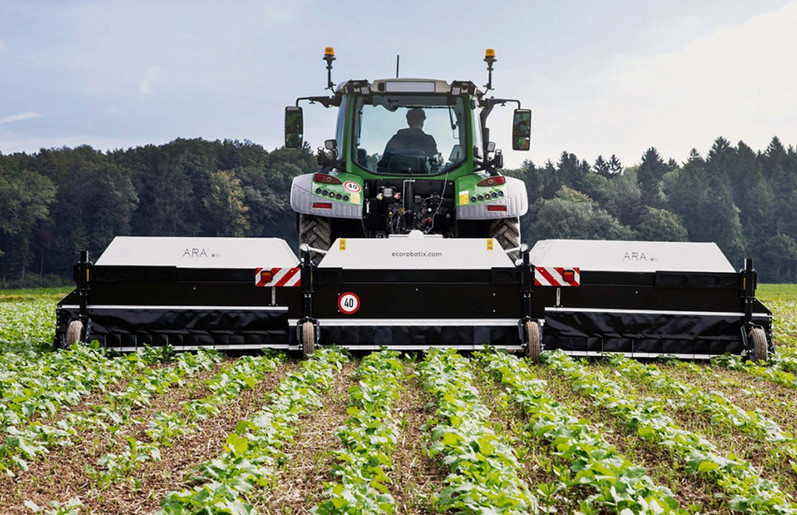
Systems like this are being deployed first with mid- or high-value crops. However, they point to where this trend is headed: away from more chemicals and toward near-zero waste and smarter stewardship of every drop of herbicide applied to the weeds.
Zooming back out, field results are encouraging across vendors and regions. In soybeans, trials of this selective-spray method have averaged around 76% herbicide savings, with individual fields ranging from roughly 44% to 91% reductions.
A broader review of smart weeding robots and sensor-based spraying found up to 90% reductions in chemical use. It’s not yet a full replacement, but it’s a sign that we’re edging closer to chemical-free farming.
What’s holding farmers back from adopting these technologies?
For many farmers, it comes down to practicality. The machines are expensive, and the return on investment isn’t always clear in the first few seasons. Also, rural broadband coverage in certain areas remains thin, which limits the data connections these systems rely on. And then there’s an old-school reason: some hesitate simply because they don’t trust a robot to do a farmer’s job.
Regulations are another uncertainty. So far, few rules exist for autonomous farm equipment, which leaves some insurance and safety questions unresolved.
To bridge these gaps, pilot programs and farm cooperatives are beginning to share costs and expertise. These early networks are helping small and midsize growers test the systems and ease the new-tech adoption curve.
What technologies power precision farming’s new generation?
These technological advances blend vision AI, GPS mapping, and IoT sensor technologies with advances in solar power and lightweight batteries. Together, these give machines something close to field awareness—an ability to read the land, not just roll across it.
Data from every pass builds a detailed soil portrait: moisture, nutrients, weed growth, and plant health. Shared across networks, these data-driven farming maps help nearby growers make better calls, too.
It’s all part of a steady shift toward regenerative agriculture. The components of this new approach to farming are less input, more observation, and greater respect for the land.
The market outlook: where is this headed?
Momentum is building fast. Analysts tracking agricultural robotics and precision farming see a steady rise in investment and deployment.
The global precision agriculture market—valued at about $10 billion in 2023—is projected to grow more than 13 percent annually through 2030, driven by herbicide-reduction goals and shrinking farm labor pools.
Startups like Greenfield, Carbon Robotics, and Ecorobotix are drawing serious venture capital as farmers search for reliable, cost-saving automation in agriculture. Large equipment makers, from John Deere to CNH Industrial, are also buying or partnering with smaller innovators to keep pace.
The bottom line is that investors are betting on inevitability. As regulations tighten around chemical use and rural labor becomes harder to find, precision farming technologies will move from niche to norm. For most growers, it’s not a question of if they’ll adopt these tools, but when.
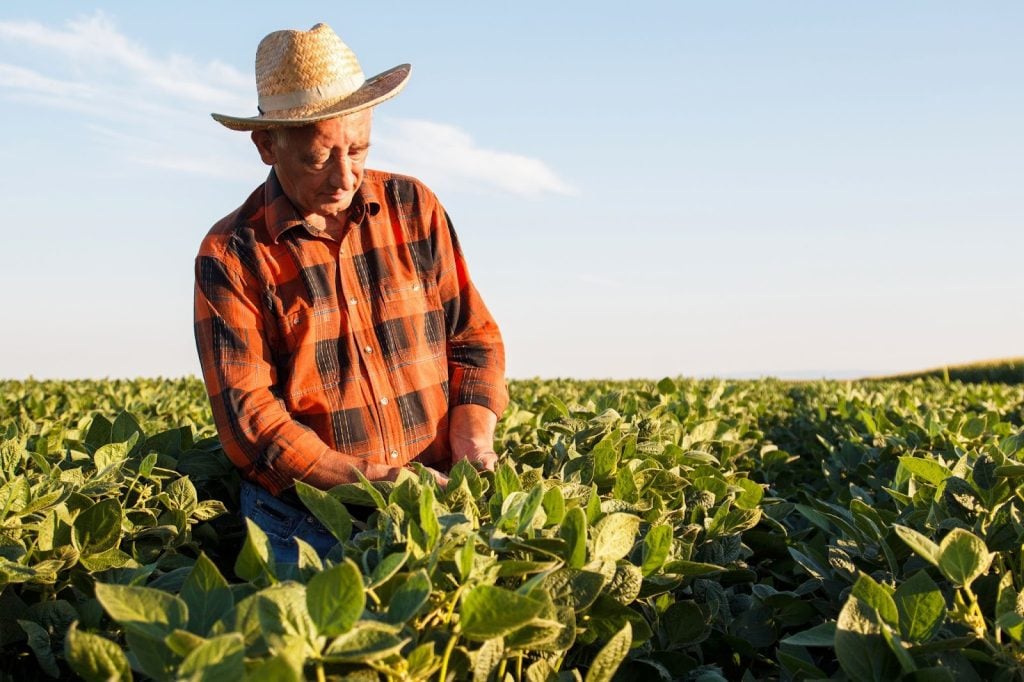
Can machines make farming truly regenerative again?
At heart, this shift isn’t just about smarter machines. Similar to the organic farming movement, it’s about changing the relationship between farmers and the land. Clint Brauer likes to say he isn’t trying to “disrupt” farming, but to restore it. His vision, shared by others in this field, is simple: use technology to make it easier to do the right thing for the soil.
As precision ground drones take over the dullest, most chemical-heavy chores, farmers are freed to focus on the living system itself—the health of the soil, the timing of crops, the balance of water and sunlight. The goal isn’t to dominate nature, but to partner with it.
If these early efforts succeed, the same tools that once pushed farming toward industrial-scale agriculture could help bring it back into balance. Fleets of quiet, intelligent drones may soon tend fields the way farmers once did and often still do: by observation, patience, and care.
In that sense, precision farming might not just signal a shift away from herbicides and pesticides. It could mark a return to something deeper: farming as stewardship of the land.
__________________
The most common herbicides
While glyphosate remains the most-used herbicide on the planet, it’s only one compound in the lineup of chemicals that has shaped modern agriculture for decades. Each has its strengths as well as its consequences.
Glyphosate (Roundup) – Used on soybeans, corn, and cotton. It is highly effective against a wide range of weeds, but long-term use has led to resistant “superweeds.” Debates continue over potential cancer links and ecological effects on soil microbes and aquatic life.
Atrazine – Widely applied on corn and sorghum. Persistent in groundwater and known to disrupt hormone systems in amphibians and possibly humans, it’s banned in parts of Europe but still common in the US Midwest.
Paraquat – Fast-acting and non-selective, used for clearing fields before planting. Extremely toxic to humans; even small exposures can be fatal. Its health risks have led to bans in over 50 countries, though it remains in use elsewhere. The US Environmental Protection Agency (EPA) continues to allow paraquat for agricultural use by licensed applicators, and usage persists in most developed countries.
Dicamba – Employed mostly on soybeans and cotton engineered to tolerate it. Highly volatile, it can drift and damage nearby crops and wild plants. Its use has sparked legal disputes and environmental concerns.
2,4-D (2,4-Dichlorophenoxyacetic acid) – One of the oldest herbicides, used on grains and lawns. While less acutely toxic than paraquat, studies suggest links to non-Hodgkin lymphoma and potential risks to aquatic species.
These herbicides have made industrial farming highly productive, but at an environmental cost that’s becoming harder to ignore. In contrast, precision farming uses intelligence, not intensity, to protect crop yields while sparing the soil, the water, the consumers, and the farmers themselves.

Leave a Reply