

For as long as people have looked up at the sun, they have wondered what it would take to harness its power here on Earth.
For decades, the answer seemed out of reach. Sun-like nuclear fusion felt enormous and distant. To recreate the fire at the heart of the sun meant embarking on huge projects—immense machines with massive budgets, and a finish line that kept moving further out.

That story is starting to change. We reported on new fusion technologies in our June 2025 article, Nuclear Fusion: Clean Energy Whose Time Has Come?
Now, it’s time for an update—for this promising technology is evolving at a fast pace.
A new fusion energy breakthrough is emerging from an unexpected direction. The next wave of reactors is far smaller and far faster to build. Compact designs allow engineers to create a prototype, run it, study the results, and rebuild it within days.
Small scale now means rapid progress.
The distinction between nuclear fusion and nuclear fission
Even though fusion and fission share the word “nuclear,” they work on opposite principles.
Fission—the process used in today’s nuclear power plants—splits unstable heavy atoms like uranium and plutonium and creates long-lasting waste. Fusion, on the other hand, joins light atoms such as deuterium and tritium (isotopes of hydrogen) and releases energy with minimal byproducts.
This distinction sets the stage for what comes next. If fusion becomes practical at small scale, it could power cities, industries, data centers, and even deep-space missions. It would offer a new and truly clean energy source.
For the first time, the future of fusion no longer feels distant. It feels as if this technology could fit inside a warehouse today and, one day, perhaps even inside the footprint of a shipping container.
What exactly is a fusion energy breakthrough?
A “fusion energy breakthrough” does not mean a working commercial power plant. It means scientists or engineers have overcome one of the long-standing obstacles that have slowed fusion’s progress—whether that’s maintaining stable plasma, reaching higher temperatures, improving confinement, or building reactors that can be tested and rebuilt far more quickly.
These obstacles also include heating fuel to extreme temperatures, keeping it stable long enough for fusion to occur, and capturing more energy from the reaction than the reactor consumes.
Progress has been slow because most fusion machines invented to date are enormous. They take years to design, even longer to modify, and each test requires intensive planning. A small hardware change can trigger a long chain of delays.
That is why recent advances are drawing so much attention. In the past few years, researchers have achieved new milestones in ignition experiments, novel confinement approaches, and compact prototypes that move through test cycles at a steady pace.
Yes, each step still falls short of producing practical power—but each one removes another piece of the obstacles puzzle that has held fusion back.
A breakthrough signals that a long-standing limit has shifted and that the next step is now within reach. It also gives engineers a clearer path toward the ultimate goal: a reactor that produces steady, reliable energy without the fuel risks and waste issues associated with fission.
The shift from mega-reactors to micro-reactors
Fusion research once centered on massive machines, and the mainstream of the field still relies on them today. The best-known example is the tokamak, a magnetic doughnut the size of a building. Projects like ITER in France required thousands of workers, years of construction, and budgets that climbed into the tens of billions. Each upgrade demanded long planning cycles and a full shutdown of the machine.
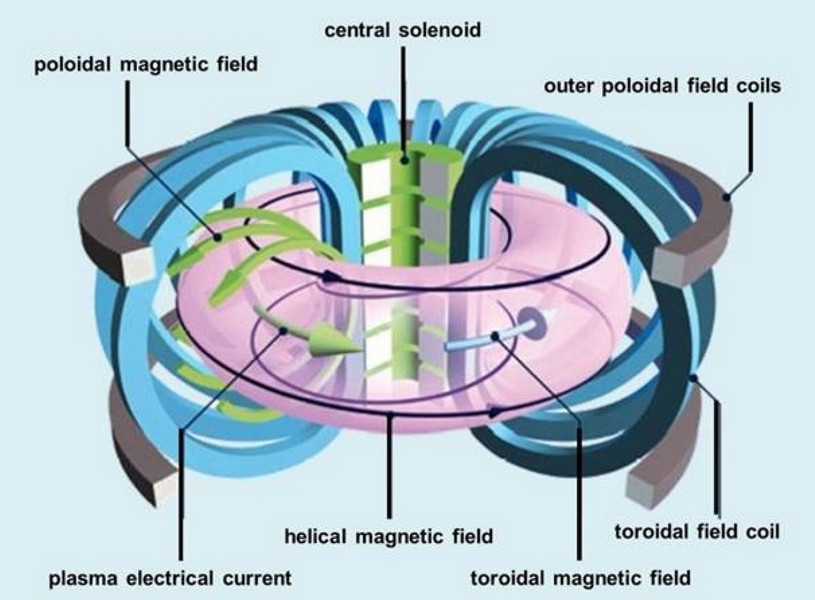
Why compact reactor designs accelerate fusion progress
New fusion startups have taken a different path. They focus on compact reactors that engineers can build, test, and rebuild rapidly. The smaller size makes accelerated cycles of testing and improvement possible. Instead of waiting months or years for a single modification, teams can adjust designs in days.
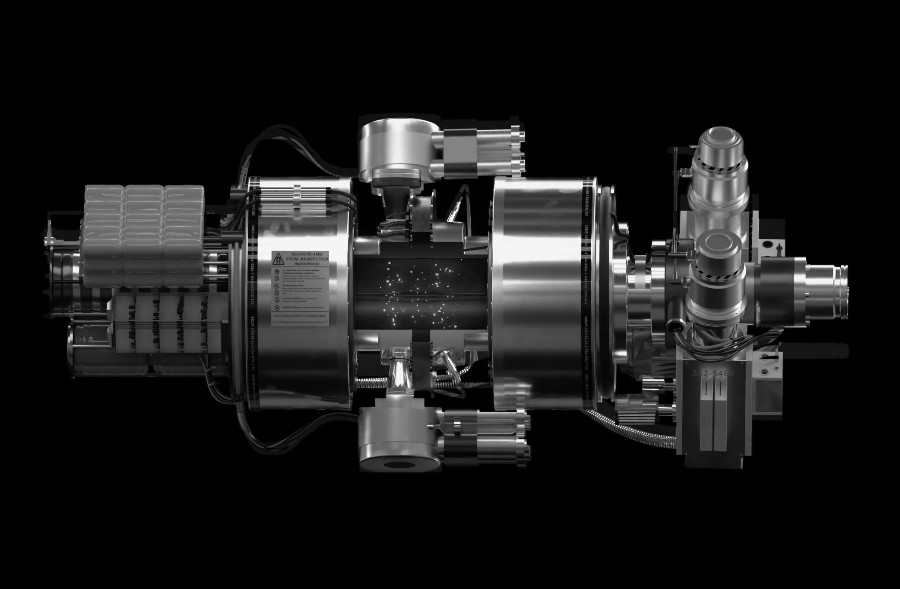
Avalanche Energy is one of the companies built around this idea. The team’s prototype reactor, called the Orbitron, uses a mix of electrostatic and magnetic fields to pull ions toward a central target. The device is designed to produce fusion reactions without the massive footprint of a tokamak. It also gives the team a way to push plasma density and confinement experiments forward at a steady, fast pace.
This approach has drawn interest from researchers and investors who see potential in a smaller, more agile path toward fusion power. Large reactors still matter, but compact systems offer a new route that may reveal answers earlier megaprojects struggled to find.
“If [the Orbitron] was a room-sized fusion reactor, it would have taken years to go from a failure to another iteration,” explained Morin Borghei, Avalanche’s Head of Electrical, in a YouTube video detailing the company’s fusion energy progress. In contrast, Avalanche has “been able to do 27 iterations within a year,” he noted.
That research speed is a fundamental point of the design.
Avalanche’s Orbitron “needs to be small for those rapid iterations, but it [also] needs to be small for the economics,” Avalanche Cofounder Brian Riordan noted.
How does electrostatic fusion differ from magnetic fusion?
Fusion machines have taken various forms over the decades, but two approaches dominate the field: magnetic confinement and electrostatic confinement. Both try to force light atoms together at high speed. However, the two methods could not be more different.
Magnetic confinement relies on powerful coils to trap a ring of superheated plasma. Tokamaks and stellarators use fields strong enough to keep ions away from the reactor walls while they reach fusion conditions. The machines are large, complex, and expensive, but they create a stable path for long pulses of high-temperature plasma.
Electrostatic fusion takes a different route. Instead of huge magnetic fields, it uses electric fields that pull ions toward a central point. The force is direct and efficient. In an electrostatic system, ions accelerate toward the center, collide, and release energy in the process. Because the equipment is smaller and simpler, teams can test new ideas far more quickly.
Electrostatic systems come with certain trade-offs. They face challenges in plasma stability and confinement time, and they have yet to reach the conditions needed for net energy, which means producing more energy from the reaction than the reactor consumes. But their small footprint and low cost make them ideal for rapid development.
A hybrid approach designed for speed
Avalanche Energy uses a hybrid design that blends both principles. The Orbitron pulls ions inward with electrostatic force while magnetic fields help guide and confine electrons. This combination gives the team a way to experiment quickly while keeping the plasma organized enough to push toward higher densities.
“We magnetically confine electrons, like a magnetron in your microwave, and we electrostatically confine the ions,” Riordan explained. In simple terms, the Orbitron uses magnets to hold the lighter particles in place and uses voltage to pull the heavier ones toward the center. Each type of particle stays in the zone where it works best.
The result is a machine small enough for rapid testing yet structured enough to explore new territory on the fusion map. It is an attempt to capture the strengths of both approaches while avoiding their biggest limits.
Why size matters: the promise of a smaller fusion future
Fusion has always carried a sense of possibility. A machine that joins simple atoms and releases vast energy that could change how the world powers everything, from industry to transportation to the devices that run our daily lives.

However, until recently that vision depended on machines so large that each step forward required years of construction, planning, and upgrades. Progress has been far too slow to influence real-world energy needs anytime soon.
Small reactors shift that picture. A compact fusion system could sit near a factory, a remote mine, a data center, or a research station far from a major grid. It could deliver steady power without relying on long fuel chains or large infrastructure. Because the fuel is drawn from forms of hydrogen, the supply would be stable and abundant.
A different kind of energy option
Compact fusion also fits needs that large reactors cannot meet. A smaller machine can support operations that need reliable power and cannot wait for a national-scale project to come online. Mobile units could serve disaster zones or regions with weak electrical grids. Space missions could run on fusion power without carrying massive fuel loads or batteries.
Avalanche Energy’s work is built around this idea. The company’s goal is to show how a small, fast reactor might support a future in which energy is both abundant and widely distributed. That sense of purpose, as much as the physics, motivates the team.
“I don’t care about money, I don’t care about fame,” says Avalanche Cofounder Robin Langtry. I want to see this future that I grew up with as a kid happen in my lifetime.”
Smaller reactors will not replace every other fusion approach, but they open a path that was once hard to imagine. They create opportunities to test faster, adapt faster, and one day deliver power in places where large reactors cannot go. The promise lies not only in the energy itself but in the freedom that a compact system could offer.
The challenges that remain for fusion energy
Fusion energy goals are ambitious, and smaller reactors do not escape the core difficulties that have slowed the field for decades. Even with rapid testing cycles, every design must overcome the same fundamental hurdles: plasma stability, confinement time, energy capture, and the conditions needed for a practical power source.

Why fusion remains a difficult problem
The physics are unforgiving. A fusion machine must control particles that move at extraordinary speeds and temperatures. Any imbalance in how those particles circulate can disrupt the reaction and shut the system down. The smaller the reactor, the less room there is for error, which makes stability both critical and difficult.
Fusion engineers often describe their work as a long sequence of tests, adjustments, and surprises. They know the promise is big, but they also face a system that resists easy answers. Avalanche’s team speaks about this with unusual candor.
“It’s so hard because…we’re taking something that doesn’t work and we’re trying to make it work,” said Robert McMullen, Avalanche’s Head of Mechanical Engineering.
One example is plasma rotation. When the particle flow inside a reactor drifts out of balance, the entire system can wobble. Avalanche’s engineers compare this to a household problem that almost everyone recognizes. “It’s sort of like a washing machine where the clothes all end up on one side,”Langtry explained. “The whole machine is shaking.”
What every fusion design must overcome
Managing those instabilities is one of the central challenges for every fusion design, whether small or large. It demands a mix of physics insight and practical engineering. It also forces teams to push past familiar assumptions and look for new ways to shape the plasma.
The Orbitron is still early in its development. It has not reached the conditions required for steady, self-sustaining fusion, and it faces the same questions every small reactor design must answer: how to protect the machine components, how to scale to higher power, and how to maintain the reaction long enough to extract useful energy from it.
Yet the team believes its rapid test cycles give it a path to work through those problems faster than traditional machines would allow. Progress remains difficult, but each attempt builds on the last. The work is a reminder that fusion is a long-term effort, even for systems designed to move quickly.
Who’s leading the race toward practical fusion energy?
The number of serious efforts to build a working fusion reactor has grown over the past decade. A small group of companies now anchors the field. They are each pursuing their own paths toward the same goal: a reactor that can deliver reliable energy without the scale or cost of traditional designs. Their approaches vary, but all share the belief that fusion technology can move faster than past megaprojects allowed.
That said, large projects still matter. Commonwealth Fusion Systems continues to advance high-temperature superconducting magnets for a next-generation tokamak.
TAE Technologies follows a beam-driven approach that draws from decades of plasma research.
Helion is developing a pulsed fusion system and has already signed an agreement to supply power to Microsoft once commercial operation becomes possible.
Each company is betting on a specific design philosophy, and each has made visible strides.
A different bet on a smaller machine
Avalanche Energy stands out because it tries to develop a compact reactor that can run on short test cycles and move quickly toward higher performance levels. The team sees value in starting small, learning fast, and building a system that could serve needs far beyond the scope of large fusion facilities. Their goals are ambitious, but they are anchored in hardware they can test and refine inside a warehouse.
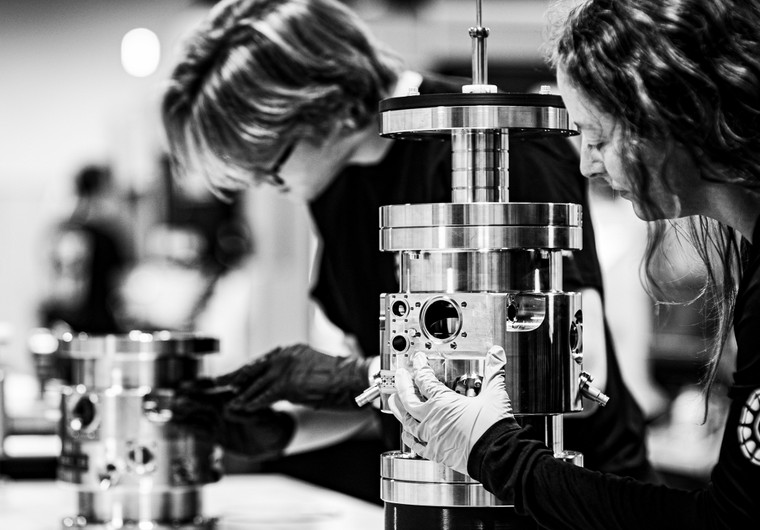
Avalanche’s approach does not guarantee success, and no one in the field claims otherwise. But the company represents a shift toward fusion paths that rely on fast testing, rapid adjustments, and real-world flexibility. It sits alongside the larger players not as a replacement for their work, but as an alternative route that might reach useful milestones sooner.
How close are we to a measurable fusion breakthrough?
Fusion progress tends to move in steps, not leaps. Each machine reaches a set of conditions, and those conditions reveal what the next design must solve. Small reactors can work through those steps faster, but as noted, they face the same physics challenges as every other system. That makes it important to look closely at the measurable progress companies are reporting.
Avalanche Energy’s recent results give an indication of where compact fusion stands today. The company measures its reactor’s performance in terms of plasma density, which helps determine how often ions collide. Higher density increases the chance of fusion reactions. During a series of tests, the team recorded a result that surprised even them.
“The number that came back was about 4e12 per cubic centimeter,” Langtry announced. “We blew past our Series A milestone by about 40×.”
“4e12” is scientific shorthand for four trillion. Reaching that density in a space roughly the size of a sugar cube meant the team hit forty times the particle-density milestone set for their Series A funding round.
That density matters because fusion depends on how many ions can be packed into a tiny volume. More particles mean more collisions, which is the only way fusion can happen.
It’s a meaningful engineering step, but it remains well short of the densities needed to produce sustained fusion energy. Progress like this shows momentum, but by no means completion.
What this milestone really tells us
A number like this marks real progress. A small reactor that reaches higher density moves closer to sustained reactions, which is one of the key steps on the road to practical fusion. Avalanche still needs longer confinement times, higher temperatures, and a design that can run in steady cycles.
Other companies have made their own advances. Helion reports progress on pulsed fusion and as noted above, has signed an agreement to supply power to Microsoft once commercial operation is possible.
Commonwealth Fusion Systems continues to develop high-temperature magnets that could support a new generation of tokamaks.
Each approach reflects a different idea for reaching stable fusion, and each carries its own set of milestones.
The road from progress to power
Compact nuclear fusion is not yet at the point of delivering power. But the results emerging from Avalanche and others show that essential pieces are moving into place.
The question ahead is how quickly those pieces can be combined into a stable, reliable system that produces more energy than it consumes. That step will determine when fusion begins to shift from experiment to real-world use.
The potential impact of a true nuclear fusion revolution
A real fusion energy breakthrough would ripple far beyond the lab. Abundant fusion power could reshape daily life in ways we can scarcely imagine. It could provide steady power grids without fuel constraints, clean electricity for every home, and enough extra energy to run fleets of desalination plants where water is scarce.

Remote communities could leapfrog into reliable electrification. Entire industries might be rebuilt around heat and power that never run out.
If the next fusion energy breakthrough delivers on its promise, it won’t just change how we power our world. It could redefine what’s possible for civilization itself.
And yet, the heart of the story is simple. Progress in fusion is a reminder of human ingenuity, of how far curiosity can carry us, and of the timeless quest to bring starfire down to Earth.

Leave a Reply