

This is the tale of a poor Indian farmer named Jadav Payeng. It traces back almost half a century. There is a special quality to it: the protagonist’s reverence for his dharma, to use an ancient Sanskrit word for what in spiritual circles is called one’s divine plan or sacred labor.1
The fruit of Payeng’s decades of striving is a magnificent forest. It was planted one tree at a time on a desolate sandbar near Majuli Island in the Brahmaputra River of Assam state, in northeastern India.
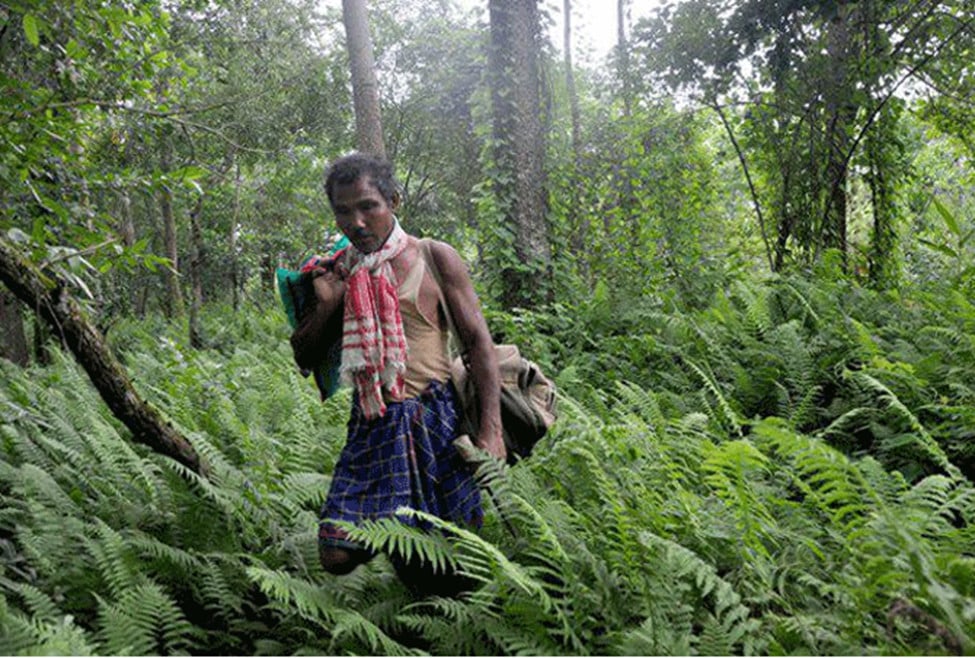
Today, the Forest Man of India, as he is known, is a living symbol of what patience and love for nature can do. He reminds us quite literally that the future is something we grow.
“It’s not as if I did it alone,” he told NPR in a 2017 interview. “You plant one or two trees and they have to seed. And once they seed, the wind knows how to plant them, the birds here know how to sow them, cows know, elephants know, even the Brahmaputra river knows.”
Even today, in his 60s, Jadav Payeng continues to plant trees in his remote corner of India, tucked up near the border with Tibet.
In 1979, the Brahmaputra River was carving and reclaiming its banks into a scatter of barren sandbars, as it had done for aeons. When the spring floods receded, the bodies of snakes lay strewn across one of those islands, stripped of shelter and scorched by the sun.
Sixteen-year-old Jadav Payeng, a Mishing tribe youth from Assam, couldn’t bear the sight. “The snakes died because they had no trees, no shade,” he later recalled to NPR. “So I thought, what if I plant some?”
Armed with a handful of bamboo shoots, he began pressing them into the dry sand, one by one. Jadav had no plan, no audience, no government funding—only his own quiet conviction that life, even that of lowly snakes, deserved another chance.
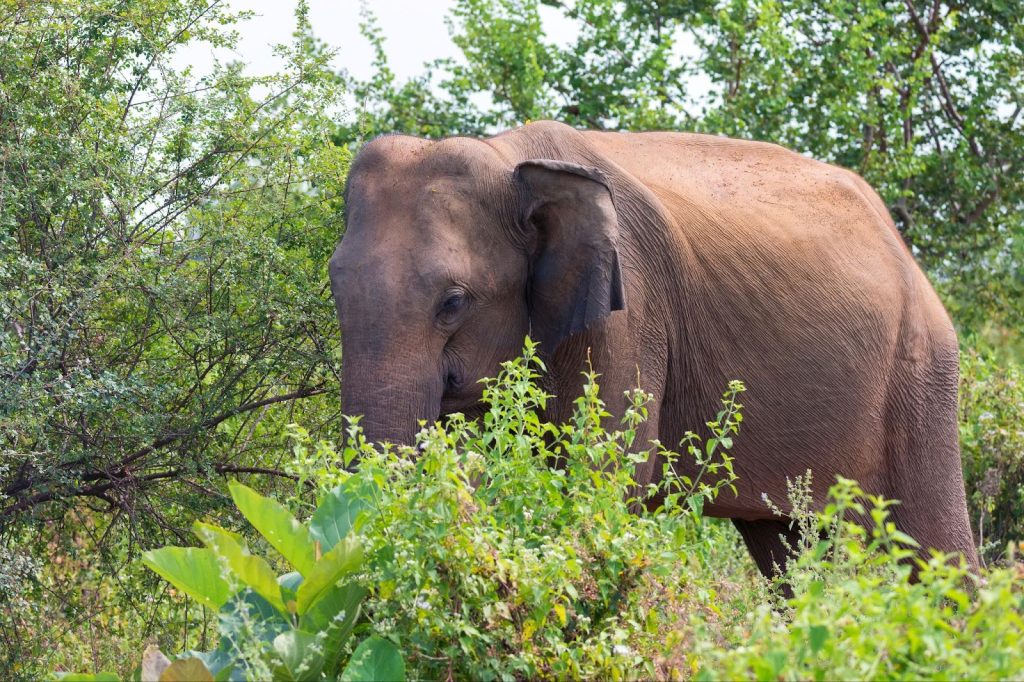
What began as a gesture of compassion became a lifelong practice of devotion. Over the next 40-plus years, that same island, once written off as wasteland, transformed into Molai Forest: a 1,300-acre refuge for elephants, deer, rhinos, and countless birds and reptiles.
Even tigers.
How did Jadav Payeng start planting trees?
As the Brahmaputra’s floodwaters fell in 1979, a teenage Payeng started with what he had: bamboo cuttings and seeds. He hauled clay pots of water from the river to keep the shoots alive.
Summer burned. Monsoon winds tore up the ground. He planted again. He walked to nearby villages for seedlings and learned by trial and error which roots would grip the shifting soil and which would not survive the floods.
People said nothing could grow on that island. He kept planting anyway: banyan, gulmohar, and arjun trees that cast shade, knit the soil, and shelter new life. The color of the island changed by degrees. Pale sand gave way to green. Birds returned. The sound of wind over emptiness softened into the rustle of leaves.
Payeng lived much of those early years in near solitude, close to the saplings. He guarded them from cattle, gathered seeds, and tended the ground as if it were a small temple of life. When asked later why he stayed with the work, he described a simple joy in watching trees take root and mature.
How the island forest became a model for reforestation
For decades, Payeng worked unseen while the humble beginnings of a forest took hold in the middle of the ancient river. However, people started paying attention when a dense woodland became visible where there had only been sand, and elephants began moving through the island.
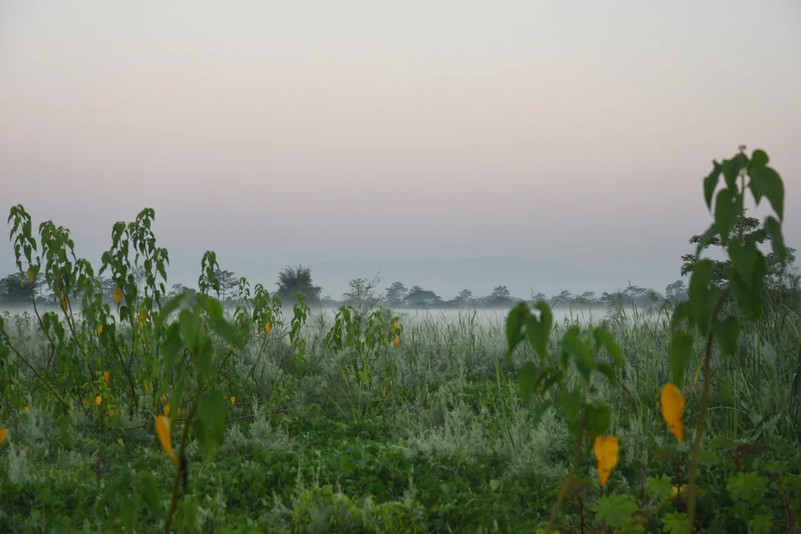
Officials from the Assam Forest Department visited to verify what people were hearing. Journalists followed with cameras and notebooks. Scientists and conservationists came to observe the basic ingredients on display: patient planting, species that anchor soil, shade that cools the ground, leaf litter that builds humus, and a habitat that invites birds and mammals back.
From there, Molai Forest was cited widely in articles, talks, and documentaries as a real-world model of how degraded river islands can recover when protected and replanted over time.
“Model” here does not mean a formal program or blueprint issued by the state. Rather, it refers to a living demonstration of how steady, locally guided work can stabilize the soil, grow a new canopy, and restore habitat even in a harsh riverine setting.
Why Jadav Payeng never left the forest
Even after recognition from officials, journalists, and visitors from distant countries, Payeng stayed where it all began. Fame didn’t pull him away; it simply brought more footsteps to his island of trees. He kept the same dawn routine—walking the paths, checking young saplings, watching for grazing cattle, gathering seeds after the rains.
When asked what the awards meant, he usually turned the question aside. The forest was the acknowledgment that mattered. Its shade and birdsong were enough of a reward.
More than a home, the place became proof. By tending and adding trees year after year, Payeng showed that a damaged stretch of river sand could heal and flourish. Molai Forest stood as a working example that others could point to when they wondered whether renewal was still possible.
Legacy and lessons: the forest as teacher
Today, Molai Forest acts as a living classroom. Students, researchers, and filmmakers visit to study what one man’s persistence achieved without machinery, funding, or plans on paper. The soil now teems with microbes that bind it together. The trees regulate local humidity, and the forest even buffers nearby villages from erosion during floods.
Payeng speaks simply about what it all means. He says people often look to governments or corporations for restoration, yet forget their own power to plant and protect. His story reminds visitors that regeneration begins not with some policy decision but with personal responsibility. With simple acts of care, repeated over time.
When asked in the NPR interview how he has sustained his passion, Payeng answered metaphysically. “No one sees God,” he said. “I see God in nature…It gives me inspiration.”
In recent years, he has begun sharing what he learned with local youth, urging them to start with small patches of barren land the same way he once did.
Molai Forest continues to grow, and so does the idea behind it: that devotion itself can be a force of renewal. It is a humble man’s legacy—and proof that patience, purpose, and love of life can turn even a sandbar into a sanctuary.
Note
1. Dharma is an ancient Sanskrit word that appears in the Rig Veda, which dates back over 3,000 years. It is one of the oldest attested Sanskrit terms. Its root is dhṛ (धृ), meaning to hold, sustain, or support. Over time, dharma has come to signify the natural order that upholds the universe, and by extension, a person’s moral or sacred duty—their rightful path or labor.

Leave a Reply