

Editor’s note: This is Part One of a two-part series on two highly innovative companies that currently dominate their respective information technology markets. Part One of the series profiled the American company NVIDIA. Part Two features the Taiwan-based semiconductor manufacturing giant TSMC.
Taiwan Semiconductor Manufacturing Company (TSMC) is renowned worldwide for its relentless advancements in microchip manufacturing. The company’s dominance of its huge information technology (IT) manufacturing niche is a testament to its visionary founder and leader, Morris Chang.
The unassuming Chang turned 93 in July 2024. He retired as chairman of TSMC in 2018 but remains active as a speaker and mentor.
The strategic position of TSMC
TSMC’s strategic position as a Taiwanese company has far-reaching implications within the global tech industry, particularly in its relationship with the United States and its stance relative to mainland China.
TSMC produces the most advanced microchips in the world, which power everything from smartphones to artificial intelligence applications and advanced military systems.
The company’s capacity to drive innovations in microchip manufacturing is unmatched. Its latest advances in 5nm and 3nm process node manufacturing are at the heart of improvements in everything from the next generation of electronic devices to AI-related technologies.
Moreover, the geopolitical importance of TSMC’s Taiwanese identity can’t be overstated. Taiwan, a democratically governed island, is viewed by China as a breakaway province, and tensions between the two have major ramifications for global supply chains.
TSMC’s location in Taiwan rather than mainland China serves as a buffer that aligns with the strategic interests of the US and its allies, who are keen to maintain access to the world’s most advanced microchips. This geographic and political distinction enhances the strategic value of TSMC in the eyes of the global community.
Furthermore, TSMC’s close collaboration with US companies cements its role as a key player in the semiconductor industry. Major American tech giants, including Apple, AMD, and NVIDIA, rely heavily on TSMC’s manufacturing capabilities to produce their most advanced chips.
This symbiotic relationship not only drives innovation and economic growth but also fortifies the tech alliance between Taiwan and the US.
An example of this is TSMC’s new manufacturing plant in Arizona, which is currently under construction. TSMC’s $40 billion investment in the project, backed by additional subsidies from the US government under the CHIPS and Science Act, underscores this deep-rooted partnership.
TSMC is also planning a third TSMC Arizona facility that will increase its overall investment in Arizona to more than $65 billion.
These initiatives are designed to bolster domestic semiconductor production. They will also mitigate supply chain risks and ensure that technological leadership of advanced microchip manufacturing remains with Taiwan in partnership with the US.
TSMC’s unparalleled leadership in advanced semiconductor manufacturing is a cornerstone in the global information technology landscape. Its Taiwanese roots and strong ties with US companies make it an indispensable entity in the ongoing battle for technological supremacy and economic and geopolitical security between the US and allied nations against Chinese hegemony.
Microchips vs. semiconductors: what’s the difference?
Before delving deeper into TSMC, the terms “semiconductor” and “microchip” (or “chip”) need to be clearly defined, as they are sometimes misunderstood.
What is a semiconductor?
Semiconductors are the base materials used to create microchips. Not all semiconductors are microchips, as semiconductors can be used in a variety of applications beyond microchips, such as diodes and transistors.
A semiconductor material has an electrical conductivity that is somewhere between a conductor (like a metal) and an insulator (like a ceramic). The unique properties of semiconductor materials make them essential for modern electronics. The most common of these materials is the element silicon, which is abundant on Earth.
What is a microchip?
Microchips are devices built using semiconductor materials. All microchips use semiconductors.
TSMC manufactures both semiconductors and microchips. The chips are designed by other companies. Here’s a breakdown:
TSMC semiconductor manufacturing
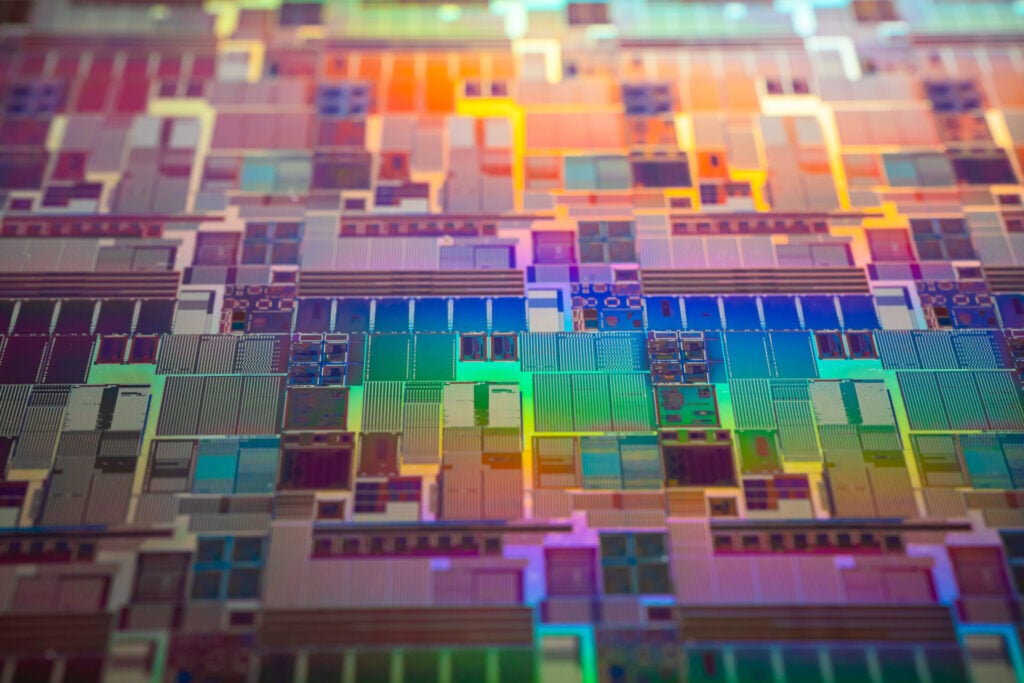
TSMC is a pure-play foundry, which means it focuses on manufacturing semiconductor wafers. These wafers are the base materials made of semiconductor substances (such as silicon) used to create various electronic components.
TSMC microchip fabrication
TSMC manufactures integrated circuits (microchips) on these semiconductor wafers. These microchips are often designed by other companies, such as Apple, AMD, NVIDIA, and Qualcomm.
A brief history of TSMC
Taiwan Semiconductor Manufacturing Company was founded in 1987 by Morris Chang, with backing from the Taiwanese government and private investors including Phillips, the Dutch electronics giant.
At the time, the global semiconductor industry was dominated by integrated device manufacturers (IDMs) such as Intel, IBM, and Texas Instruments. These IDMs designed and manufactured their own chips.
Chang’s vision was to establish a pure-play foundry that would concentrate solely on manufacturing semiconductors for other companies.
Critical partnership and initial challenges
In its early years, TSMC faced significant challenges, including skepticism from potential clients and the need for substantial capital investment.
However, Chang’s strategic approach and the support from the Taiwanese government were pivotal. The government provided critical financial backing through its Industrial Technology Research Institute (ITRI) and other public funds. This demonstrated to investors and the world at large a national commitment to the semiconductor industry.
TSMC began operations in 1987. In 1988, the company successfully completed its first production run, which attracted its first major customer, Texas Instruments.
Strategic decisions and steady growth
Chang’s leadership emphasized continuous investment in cutting-edge technology and manufacturing capacity. TSMC’s focus on being a foundry allowed it to cater to a diverse range of customers, including major industry players like NVIDIA, Apple, and Qualcomm.
This customer-centric approach differentiated TSMC from competitors and positioned it as a trusted partner in the semiconductor industry.
Government support and policy initiatives
The Taiwanese government’s policies toward supporting the company’s fledgling tech sector in the early days of TSMC were instrumental to its growth. Beyond its initial investment in the company, it provided grants and tax incentives to support research and development.
The government also invested in developing the Hsinchu Science Park, where TSMC’s headquarters and key facilities are located. The sprawling facility, home also to United Microelectronics, MediaTek, Realtek, and a number of other Taiwanese tech firms, is located an hour-long train ride (70 kilometers) southwest of Taipei.
Global expansion and leadership
By the late 1990s, TSMC had established itself as a global leader in the semiconductor industry.
Under Chang’s guidance, the company continued to improve its manufacturing processes to a point where it stands today as the undisputed market leader in advanced (10nm-5nm) microchip manufacturing with an astounding 90% market share. Its market value of more than $550 billion (as of 2024) puts it in the top 10 most valuable companies in the world.
Why has TSMC been so successful?
Today, TSMC is the world’s largest semiconductor foundry. The numbers demonstrate that. However, they don’t explain why. Since consistent success does not happen in a vacuum, it’s enlightening to take a look at the identified reasons behind TSMC’s ongoing success.
Morris Chang explored some of these reasons in a 2023 presentation at his alma mater, the Massachusetts Institute of Technology (MIT).
Educated workforce, low turnover
“Why is TSMC successful in Taiwan?” he rhetorically asked the MIT audience of academics and students attending his lecture. “Because TSMC also gets good, well-trained technicians and even well-trained operators from a lot of trade schools in Taiwan….
“Taiwan doesn’t really have schools for operators, but they are willing operators,” he clarified. “They don’t turn over, they don’t leave their job as soon as there’s something better.” The employee turnover rate at TSMC is “like two percent a year,” he noted.
Chang compared this to his experience at Texas Instruments in Dallas, where he worked prior to moving back to Taiwan to run TSMC. The employee turnover rate in Texas Instrument’s US microchip production facilities was “15% when there was a recession…and 25% when times were good,” he noted. “And [in chip manufacturing] that’s deadly, because it takes about three months at least to train an operator.”
Chang went on to discuss some of the other reasons behind TSMC’s success, including government support, geographical reasons, and more.
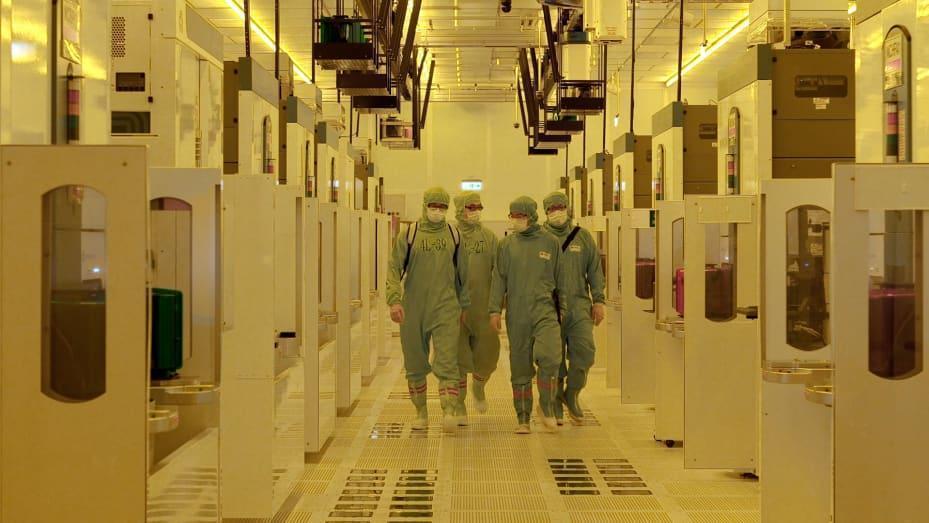
There are some other ingredients as well that make up TSMC’s recipe for success:
Government support
For almost 40 years, Taiwan’s government has provided incentives to bolster the growth and innovation of its semiconductor industry, which has greatly assisted TSMC. The government provides tax incentives to the industry under the “Statute for Industrial Innovation,” known also as the Taiwanese Chip Act (TCA).
Initially passed in 2010 with amendments as recent as 2024, the law provides companies with tax deductions for research and development (R&D) and new equipment expenses. The precisely tailored financial incentives provided by this law encourage companies to successfully grow their businesses in Taiwan.
The tax incentives are directed at companies that meet specific criteria, such as having significant R&D expenses and investments in advanced manufacturing equipment. TSMC has taken advantage of these incentives and other market factors to dominate the advanced microchip manufacturing market.
The Taiwanese government assesses companies applying for incentives based on their critical position in the international supply chain. This ensures that the benefits are directed toward firms that play a pivotal role in the global semiconductor ecosystem.
These measures are designed to encourage companies to invest in research and development within Taiwan, which helps the island nation maintain its leadership in semiconductor manufacturing.
Taiwan also is taking steps to protect the advanced process technologies of TSMC from being transferred abroad. The goal is to keep the small country functioning as a center of top-end chip production into the future.
However, just as Taiwan has supplanted the US as the market leader in the production of advanced microchips, Chang expects other nations such as Vietnam to compete with Taiwan in the not-so-distant future for portions of that rapidly expanding, AI-driven market. “What we see in Taiwan, we saw in the US” in the 1950s and 1960s.
“And I think for Taiwan, they enjoy the advantage now, but I think they will lose it to another country. I don’t know who, maybe India, maybe Vietnam, maybe Indonesia, in another 20 or 30 years.”
Cultural work ethic, efficient logistics, and proximity to suppliers
The Taiwanese culture of dedication and diligence contributed to high productivity and efficiency at TSMC. The geography of the small nation also plays a part in the success of its semiconductor industry.
Chang illustrated these factors. “Taiwan is a relatively small island, but we do have major [TSMC] facilities in three cities…All three are connected by fast trains, high-speed trains.
“And at any time, including now, there will be a thousand or more engineers, not operators or technicians, a thousand or more engineers assigned to another city, another city other than his home city.”
Chang went on to explain that TSMC provides dormitories for these workers, who travel to their jobs by fast rail. They stay in the dorms Monday through Thursday night and travel home Friday afternoon. “It’s not a fun life, really, but it’s effective for the company. And they are willing to do it” because their jobs provide a good living and also because of the work ethic ingrained in Taiwan’s culture and people.
The close proximity of essential suppliers allowed for quick and reliable access to necessary goods and services, which optimizes production processes. Local chip design companies, silicon wafer suppliers, gas suppliers, and others provide TSMC with essential goods and services, Chang noted.
Important global semiconductor equipment manufacturers such as ASML, Applied Materials and Lam Research, Advanced Semiconductor Engineering, and others “all having service centers, training centers and labs in Taiwan,” do the same, he added. With these companies and others, TSMC developed a reliable and integrated supply chain, with most suppliers either based in or having branches in Taiwan.
Morris Chang’s strategic decisions
Chang’s pivotal decision to focus exclusively on the manufacturing of chips allowed TSMC to specialize and excel in this niche. He established TSMC as the world’s first dedicated semiconductor foundry.
Under his leadership, TSMC prioritized building strong, long-term relationships with customers. The list of companies TSMC services reads like a who’s who of some of the top companies in the world.
TSMC’s expansion plans
TSMC has begun 3nm chip production in a new facility in Taiwan. It is the world’s first 3nm fabrication plant. The company plans to build another 3nm fab in Phoenix, Arizona alongside its first-ever fabrication factory in the US, which is nearing completion.
Geopolitical implications of TSMC being Taiwanese
TSMC’s dominance in advanced semiconductor manufacturing makes it a cornerstone of the global technology supply chain.
Particularly as it relates to the most advanced chips in the world, which are used to drive the most advanced and even yet-to-be created AI applications, so it is geopolitically very significant that TSMC as the maker of those chips is based in Taiwan rather than China. This factor provides some level of security and trust for Western companies concerned about IP theft and cybersecurity.
Companies in the US and other Western countries view TSMC as a more secure partner compared to Chinese firms, due to geopolitical tensions and concerns over state-sponsored espionage in China. This makes TSMC a preferred supplier for advanced, sensitive technologies.
TSMC’s unique position as the world’s leading pure-play foundry is a result of its technological prowess, specialized focus, and substantial R&D investments. From a geopolitical and cybersecurity perspective, its location in Taiwan, as opposed to China, provides both strategic advantages and potential risks.
The Silicon Shield theory
The concept of the “Silicon Shield” refers to the idea that Taiwan’s critical role in the global semiconductor supply chain, particularly as it relates to TSMC, acts as a deterrent against a potential Chinese invasion. This theory is grounded in several key points:
Economic dependence
It’s a fact that China is highly dependent on Taiwan’s semiconductors for its own technological development and economic growth. Destroying this supply source by attacking Taiwan would have serious if not catastrophic economic repercussions for China.
Strategic importance
Any conflict in Taiwan would disrupt the global supply chain and massively affect economies worldwide. This interdependence makes a military invasion less attractive due to the potential global economic backlash.
Political and security considerations
An invasion would likely lead to severe international sanctions, diplomatic isolation for China, and potential military action such as blockading incoming oceangoing shipments of petroleum products that China, a massive importer of energy products, cannot survive without for any length of time.
The United States has a major interest in maintaining the status quo in Taiwan due to its reliance on semiconductors and strategic interests in the region. US military presence and alliances in the Asia-Pacific act as additional deterrents.
Evidence and analysis
Financial reports and trade data demonstrate the high level of interdependence between China and Taiwan, especially in the tech sector. China’s significant imports of Taiwanese semiconductors underscore this reliance.
Despite the decades-old conflict between China and Taiwan, the two nations remain major trading partners. In 2024, Taiwan’s exports to China are expected to be one-third of its total exports globally. Currently, Taiwan is working to diversify its exports away from China, but the two nations are still strongly linked by trade.
TSMC: more than just a highly successful company
Today, TSMC is the undisputed leader of an IT sector that is fundamental to continued progress in many areas of human endeavor. What began as the vision of Morris Chang, an engineering graduate student at MIT, has become much more than just a supremely successful company.
Tech innovation catalyst
TSMC has evolved into a key driver of technological innovation in areas including artificial intelligence, high-performance computing, and consumer electronics. TSMC not only meets the demands of today’s tech giants but also sets the stage for future breakthroughs.
The company’s drive makes progress possible across numerous fields, from healthcare to environmental sustainability.
A cornerstone of economic stability
Beyond its financial success, TSMC has become a cornerstone of global economic stability. Its leadership in semiconductor manufacturing supports an ecosystem of suppliers, manufacturers, and tech companies worldwide.
This economic influence extends far beyond Taiwan. It promotes growth, job creation, and technological development in many nations and regions. It also contributes greatly to critical supply chain integrity within global markets.
Sustaining global security
As we look to the future, the global tech industry’s reliance on TSMC underscores how important it is to sustain stability and security in key nations and regions. Taiwan, one of those key nations, is now a cornerstone of global innovation.
The future of the semiconductor industry, and indeed the broader tech landscape, hinges on this stability.

Leave a Reply