

Theo, a high school kid who loves to make things, sits cross-legged on his living room floor, a plastic bin of LEGO bricks tipped out in front of him. The carpet becomes his design studio.
He’s looking for some creative fun. But in the back of his mind, crowdsourcing principles drive what he’s doing and how he’s doing it.
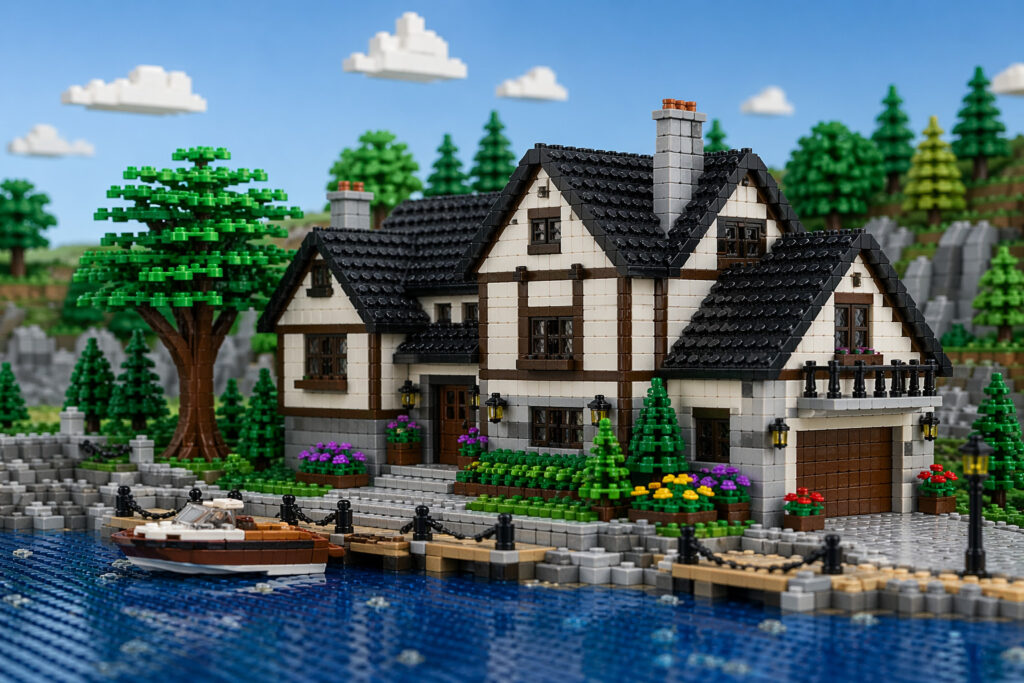
He begins the way most LEGO builders do. Not with software, but with touch. He sorts parts by instinct. Plates in one pile. Beams in another, brick in a third. Transparent pieces off to the side in case he wants windows.
Perhaps he sketches a quick idea in a notebook: maybe a glass-roofed botanical garden, or a tiny house on stilts. Or perhaps he just starts building, spurred on by his imagination.
He experiments with size first. Six studs wide? Eight? He snaps together a baseplate and begins stacking bricks to test proportions. The doorway feels too narrow, so he rebuilds it. The roof collapses under its own weight, so he reinforces it with cross beams.
He swaps colors, steps back, squints, adjusts again. The design evolves through trial and error—brick by brick.
From LEGO pieces to pixels and design stories
When the physical model feels right, he moves to a digital version using LEGO Digital Designer or Brick Link Studio. On his laptop, he recreates the model precisely by selecting exact part numbers. He makes sure that every connection works within LEGO’s building standards.
The software lets him rotate the model in 3D and check structural stability. It even generates a parts list for his design. He is able to tweak angles that were awkward in his physical model.
Next comes Theo’s presentation.
He is not a professional designer. He has learned the software mostly by experimenting and watching a few tutorial videos. But he knows enough to make his model look clear and appealing on screen.
Inside LEGO Digital Designer, he rotates the model until he finds an angle that shows off the best features—maybe the front entrance and the roofline together. He takes a clean screenshot. Then he turns the model slightly and captures another view from the back, and perhaps one from above so people can see the layout.
To create what designers call a “render,” he simply uses the program’s built-in export feature, which produces a polished image of the digital model against a plain white background.
For a “cutaway” view, he does something simple: he temporarily removes the roof in the software and takes another screenshot so viewers can see inside. Or he hides one wall to reveal interior details. No advanced animation is required.
If he wants to show movement—perhaps a hinged roof or sliding door—he rotates the moving part slightly and captures two separate images to suggest how it works.
Then he writes his description in everyday language.
He explains what inspired the design. He lists the estimated number of pieces, which the software generates for him. He describes play features in plain terms: “The roof lifts off.” “The greenhouse doors open.” “There’s space for three minifigures.”
Those explanations matter, because now, Theo’s design is about to leave his laptop and face thousands of strangers online.
Opening the design to the world
When he feels ready, Theo opens the submission page on LEGO Ideas.
He uploads his images one by one. The front view becomes the cover image. The overhead shot shows the layout. The roof-off version reveals the interior. He pastes in his description. The parts count fills in neatly. He chooses a clear, descriptive title.
Then he clicks “Submit.”
Other LEGO fans start building with him
Within hours, his project is live.
At first, nothing happens. Then the post gets a few views, a couple of “Supports.” Maybe a comment from someone in another time zone who happened to see it early.
Then the conversation begins.
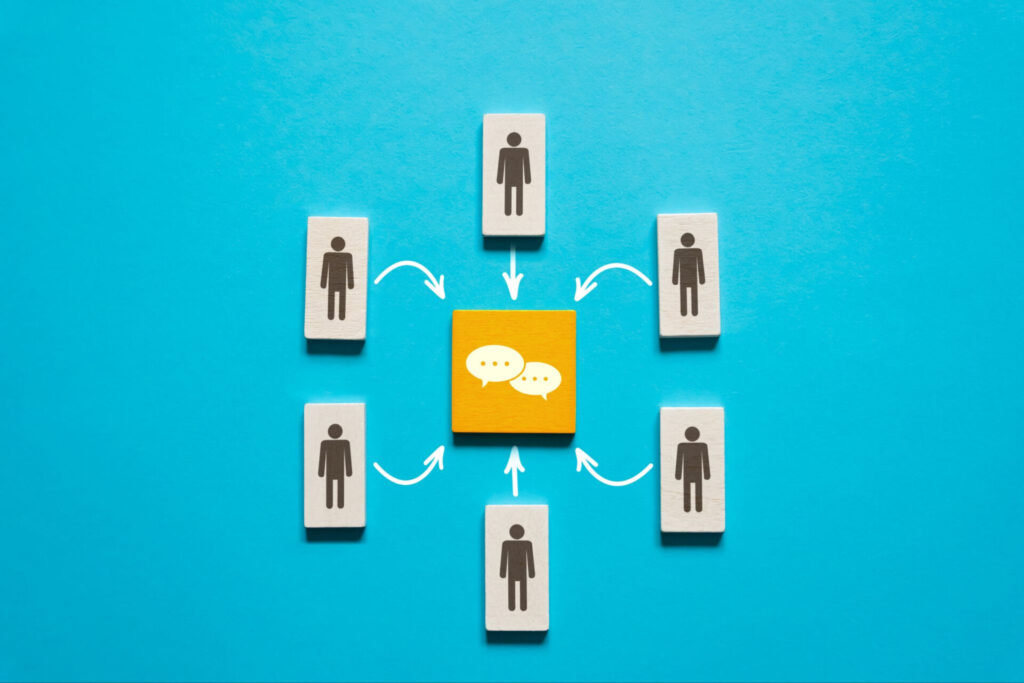
A LEGO builder from Spain suggests widening the doorway by two studs. Someone in Canada asks whether the roof could hinge instead of lift off. A longtime LEGO fan points out that a darker green might make the greenhouse look more realistic.
Theo reads every comment.
He opens his file again. He tests the wider doorway, tries the darker color. He experiments with hinging the roof. When the changes improve the design, he uploads updated images. Version 1.1. Then 1.2.
The number under “Support” begins to climb—from 100 to 1,000 to 5,000.
Each click represents someone who believes this LEGO set deserves to be produced.
What started as a solo experiment on Theo’s living room floor is now being studied by hobbyists in Germany, parents in Brazil, architects in Japan. They are not just admiring it. They’re refining it.
From community approval to official review
If the project reaches 10,000 supporters, it moves into official review by LEGO designers inside The LEGO Group. Professional set designers evaluate whether it can become a real boxed product sold worldwide.
Theo’s living room is still quiet. But the idea no longer belongs to him alone.
It now belongs to the crowd.
When customers become collaborators
Theo’s story feels personal, but it is not unusual.
What just happened in his living room is part of a larger design model known as crowdsourcing.
Crowdsourcing is often confused with crowdfunding. The two sound similar, but they operate differently.
Crowdfunding asks people to contribute money to bring an idea to life.
Crowdsourcing asks people to contribute judgment, expertise, criticism, and refinement before a product is created.
In Theo’s case, no one is funding his greenhouse. Rather, strangers online are improving and stress-testing it. They’re identifying its weaknesses, suggesting enhancements. All of this feedback indicates potential demand for the product long before a factory molds a single LEGO brick.
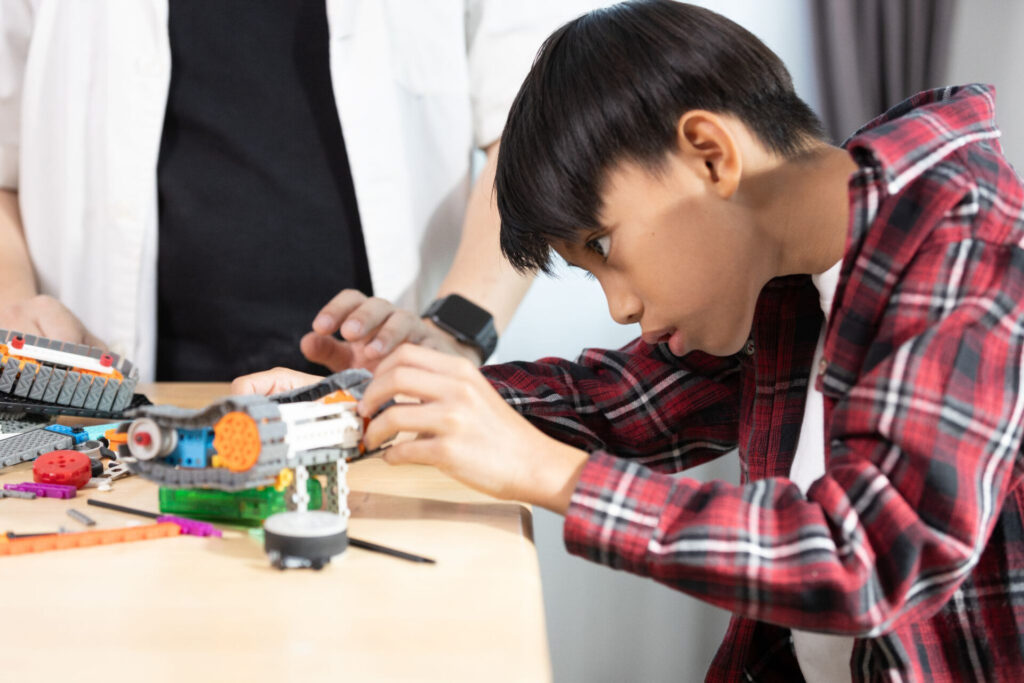
By the time a project reaches 10,000 supporters and enters review at The LEGO Group, it has already survived thousands of mini-evaluations.
Testing before investing
Traditional product development often happens behind closed doors. A small internal team brainstorms, prototypes, revises, and eventually launches. The first real-world test comes after production, when customers vote with their wallets.
Crowdsourcing flips that sequence.
The market responds to an idea before any capital is committed.
When creators share in the revenue
There is another incentive layered into the model.
If a fan-designed set is approved and released, the original creator receives a percentage of the revenue. The builder is no longer just a hobbyist. He becomes a paid contributor to the product line.
That financial share changes behavior. Participants stop treating the platform like a suggestion box. They design as potential partners. They think about cost, usability, structural integrity, and appeal. They anticipate objections and refine weak points before others point them out.
Compensation introduces discipline. The result is not simply more ideas, but stronger ideas.
Weak concepts fail to gain traction. Strong concepts gather visible support. By the time the most compelling designs reach the company, thousands of real customers have already tested and endorsed them.
Crowdsourcing as a repeatable product design model
LEGO did not invent the practice of inviting customers to submit, refine, and validate product ideas. It simply made that model visible at global scale.
The same pattern of open submission, public refinement, measurable demand, and shared reward now appears across industries that have nothing to do with plastic bricks.
Apparel design driven by customer voting
At Threadless, artists submit T-shirt designs online, the community votes, and the highest-rated designs move into production.
The company does not rely on internal trend forecasts. It manufactures what thousands of customers have already endorsed. When artwork is selected, its designers earn a share of the revenue.
Though “the crowd” does not fund the product, it does validate it.
Open-source software and distributed innovation
In software, the model appears in open-source platforms like Linux.
Programmers across the world contribute improvements, test updates, identify bugs, and debate features in public. Code is examined before its release. Problems are brought to light early, and improvements are stress-tested by users who care deeply about performance.
The product evolves in full public view.
Moreover, no single internal team shoulders the entire innovation effort. Expertise is spread across a distributed network, and is multiplied the same way.
Consumer electronics shaped by user feedback
The same pattern appears in hardware.
Companies like GoPro actively monitor creator forums and customer communities. Users post footage, and suggest mounting improvements. They report durability concerns, and request new accessories.
The company watches what gains traction. Instead of waiting for disappointing sales to reveal a flaw, engineers spot weaknesses early. They also get to see what customers actually do with the product, not what marketing materials assume they will do.
Customer feedback becomes invaluable early-stage product research.

Even food brands now experiment with public validation before large-scale rollouts.
Snack companies release limited flavors. Beverage brands test new formulas in small markets. Online engagement, repeat purchases, and community response determine what becomes permanent.
This is crowdsourcing applied to consumer demand.
The public is no longer only the buyer. It becomes the proving ground.
Why crowdsourcing reduces risk
Traditional product development absorbs risk upfront. Internal teams brainstorm privately. Prototypes are refined behind closed doors. Manufacturing capital is committed before meaningful customer input. Marketing budgets are spent persuading consumers to want what already exists.
Crowdsourcing flips that sequence.
The company is not guessing what might sell. It is observing behavior.
People often say they like something. They say they might buy it.
But voting, commenting, refining, pre-ordering, or publicly endorsing requires effort. Effort filters out casual interest.
In that sense, crowdsourcing acts as a demand validation system. It reveals which concepts generate enough energy to move people from observers to participants.
How financial incentives sharpen design
That financial share changes behavior in subtle but important ways.
When contributors know they could receive a percentage of revenue, they stop treating the platform like a comment thread. They begin thinking like product designers. They double-check their own ideas before submitting them. They anticipate objections, test structural weaknesses, and clean up rough edges before the crowd points them out.
Participants do not suggest ideas simply for entertainment. They design carefully and respond to feedback rather than ignoring it. They refine weak points instead of defending them. They think about cost, manufacturability, usability, and appeal—not just whether the concept feels clever.
The possibility of compensation encourages contributors to move from “Wouldn’t this be cool?” to “Would this actually work?”
In effect, the company outsources early product testing to the very people who will eventually buy the product.
However, it does not surrender control.
Final approval still rests with professional teams. Manufacturing standards still apply. Alignment with the overall company brand still matters.
Crowdsourcing does not eliminate expertise. Rather, it focuses expertise at the right moment in the design cycle.
Crowdsourcing’s effect on the marketplace
By the time a crowdsourced product reaches formal review, it has already survived thousands of individual evaluations. Bugs have been fixed. Customer preferences are clear.
By the time the product reaches retail shelves, an entire online community is already invested in its success.
What began with Theo adjusting a doorway by two studs reflects something larger than a single LEGO set. It reflects a major shift in how products successfully move from imagination to marketplace.
One response to “Crowdsourcing: How Customers Are Driving Better Product Design”
-
How stupendous it is to have this all happening now!! Wow. The earth and everyone on it will be able to soar to heights of great creativity with so many people benefiting by it!


Leave a Reply