

In a rural Kenyan village, a mother presses a few buttons on her battered cellphone and sends her daughter’s school fees, instantly and securely, across many miles with just a simple text message. No bank account. No internet. No paperwork.
The tool she used wasn’t built by a global tech company. It was M-Pesa, a modest mobile money service that quietly transformed how millions of Africans save, send, and spend money, one text at a time.
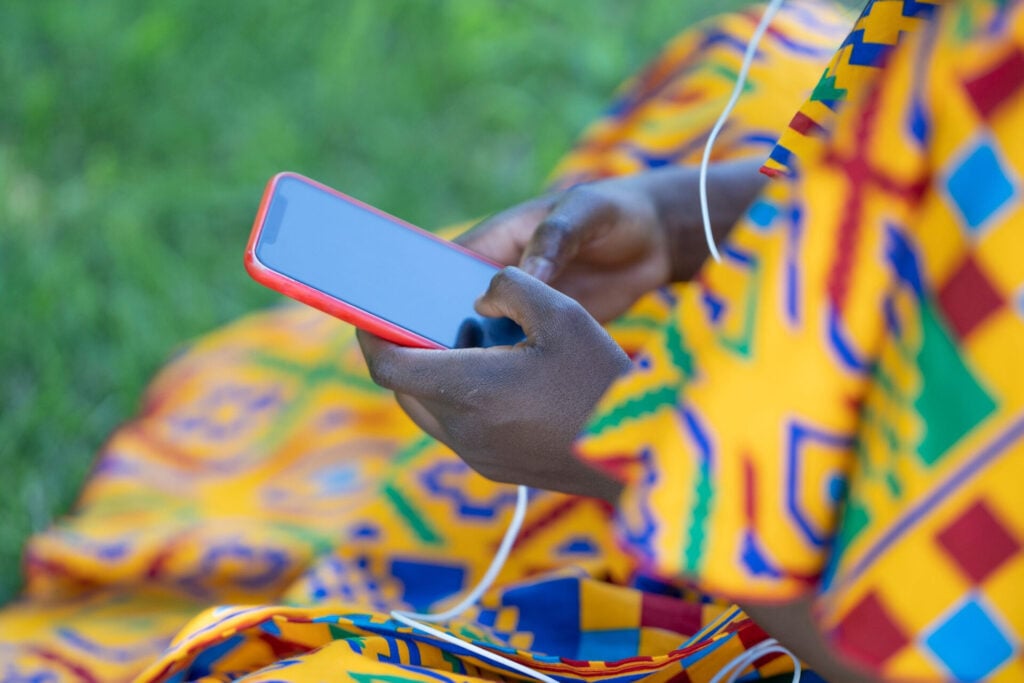
When Vodafone and Kenya’s Safaricom launched M-Pesa in 2007, its function was to help people repay their microloans via mobile phones. But within months, everyday M-Pesa users reimagined the service into something far greater. From informal street vendors to motorcycle taxi drivers, Africans from all walks of life began to send, save, and circulate money in ways that bypassed banks.
In the process, they created a new type of financial system—from the ground up.
This is the little-known story of how ordinary people transformed a telecom tool into an engine of grassroots prosperity. And how a region of the world long ignored by financial technology (fintech) companies quietly leapfrogged the rest of the financial payment world.
For most, cash was risky and banks were out of reach
In much of sub-Saharan Africa, simply receiving money from a family member or paying for daily goods was an ordeal. People often had to travel long distances to reach a bank branch—if one even existed in their area. ATMs were rare, and account requirements such as formal IDs, proof of income, and minimum balances banished the majority of people.
This vast group excluded from the formal financial system came to be known as “the unbanked.” In 2007, an estimated 80% of adults in sub‑Saharan Africa lacked any formal bank account. That was more than 300 million people.
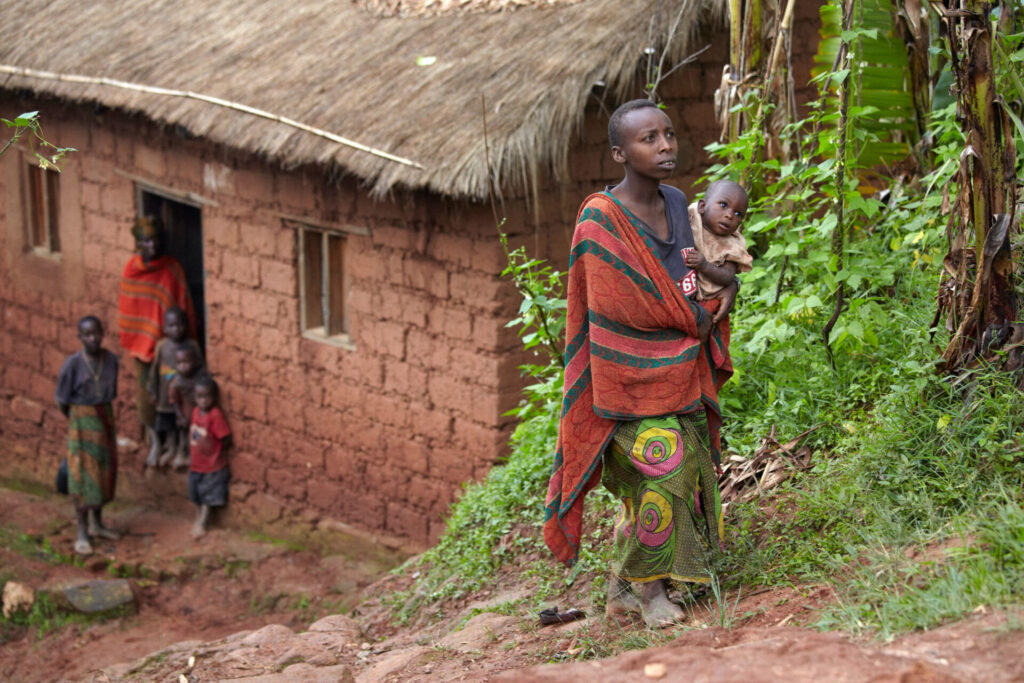
While more people in the region now have access to basic financial tools, almost half of adults in sub-Saharan Africa still remain unbanked.
It’s a reminder that informal cash handling is still part of daily life for a huge swath of the population. Without safe or efficient ways to store or transfer money, many in Africa still depend on personal networks or risky informal systems just to complete basic transactions.
Traditional banking models simply didn’t work in communities where infrastructure was thin and trust in institutions thinner.
A telecom experiment finds a greater purpose
Meanwhile, in Kenya, mobile phone usage was exploding even in areas without electricity or paved roads. With mobile connectivity rising rapidly, the stage was set for a finance workaround that didn’t look or act like a traditional bank at all.
It would take something intuitive, low-cost, and community-focused to work. And what came about happened almost by accident. This is the story of M-Pesa.
M-Pesa began with a pilot program funded by the United Kingdom’s Department for International Development, which was created and field-tested by Vodafone and its Kenyan mobile operator, Safaricom. The “M” in its name stands for mobile, and “pesa” is Swahili for money.
Its original purpose was to allow microfinance borrowers to repay loans via mobile phones. However, something unexpected happened. Pilot test users began using it for everyday money needs such as sending remittances to family members, paying for food, or splitting bills with friends—uses that had nothing to do with loan repayment.
Safaricom paid attention, saw a money-making opportunity, and quickly pivoted. By mid-2007, M-Pesa launched commercially across Kenya, fully rebranded and refocused on peer-to-peer mobile money transfers.
M-Pesa becomes Kenya’s financial backbone
Within its first year, more than 1.6 million Kenyans were using M-Pesa. By 2010, nearly 70% of the adult population had signed up. What had begun as a back-end financial service became, seemingly overnight, a national infrastructure for cashless living.
The service filled a critical gap that banks never could. It facilitated daily transactions, bill payments, salary disbursements, and even emergency donations during unrest, all through a network of trusted locals, such as shopkeepers who offered the service for a fee.
No bank, no internet, no smartphone: no problem
Unlike most Western fintech models, M-Pesa didn’t require a bank account, internet access, or even a fancy smartphone. All you needed was a basic phone, a SIM card, and access to one of thousands of local “agents.” These were usually corner shops or market stalls that acted as cash-in/cash-out points.
The result was a payment system that felt familiar, trusted, and entirely local. It met people where they were, literally and financially.
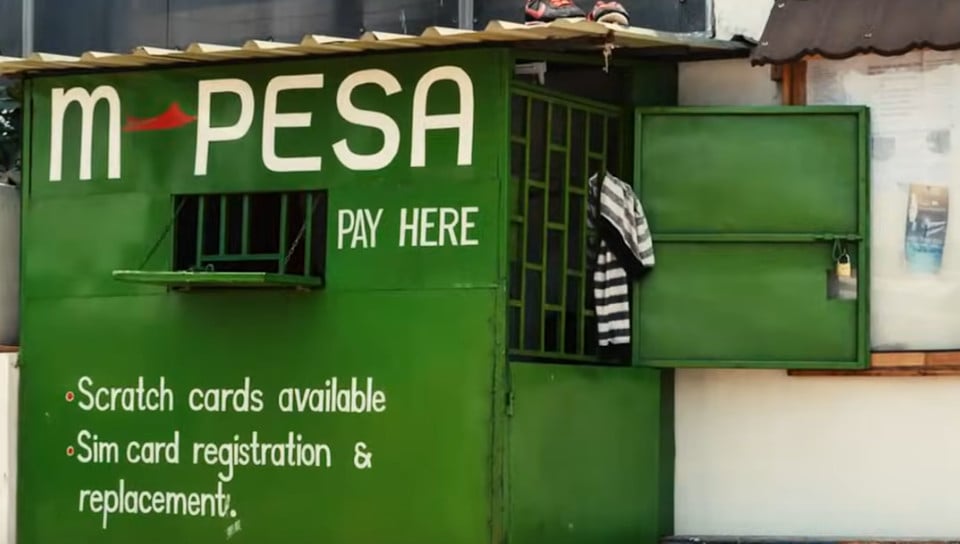
Within three years, the service had become the country’s most trusted method of moving money—all through word of mouth. What began as a pilot payment experiment was now a front-line financial tool.
The secret: M-Pesa made sense
Unlike most modern payment apps, M-Pesa didn’t try to reinvent user behavior. Almost by accident, it fit naturally into how people already exchanged money.
Its genius wasn’t in flashy features. Rather, it was simple and super practical. Users registered with an M-Pesa agent, typically a local shopkeeper or small vendor who acted as both banker and personal tech support.
These agents became human ATMs of sorts, where customers could convert physical cash into digital values (and vice versa). This built trust. Unlike a bank branch miles away, the M-Pesa agents were people you saw every day. They were part of your community.
The explosion of M-Pesa in Kenya
As M-Pesa spread, it was the users themselves who drove the innovation. In villages and markets, people began adapting the tool in ways its creators never imagined.
Women who had never controlled their own finances began saving under their own names. Motorcycle taxi drivers began accepting fares via M-Pesa text messages. Street vendors paid wholesalers from their phones.
Informal payroll systems emerged in farming communities and among construction crews. Some even created rotating savings groups and lending circles, entirely through M-Pesa.
Relatives sent money home from urban jobs with the click of a button. Suddenly, financial activity was no longer bound by geography.
These weren’t fringe uses either. They became the financial operating system for entire communities.
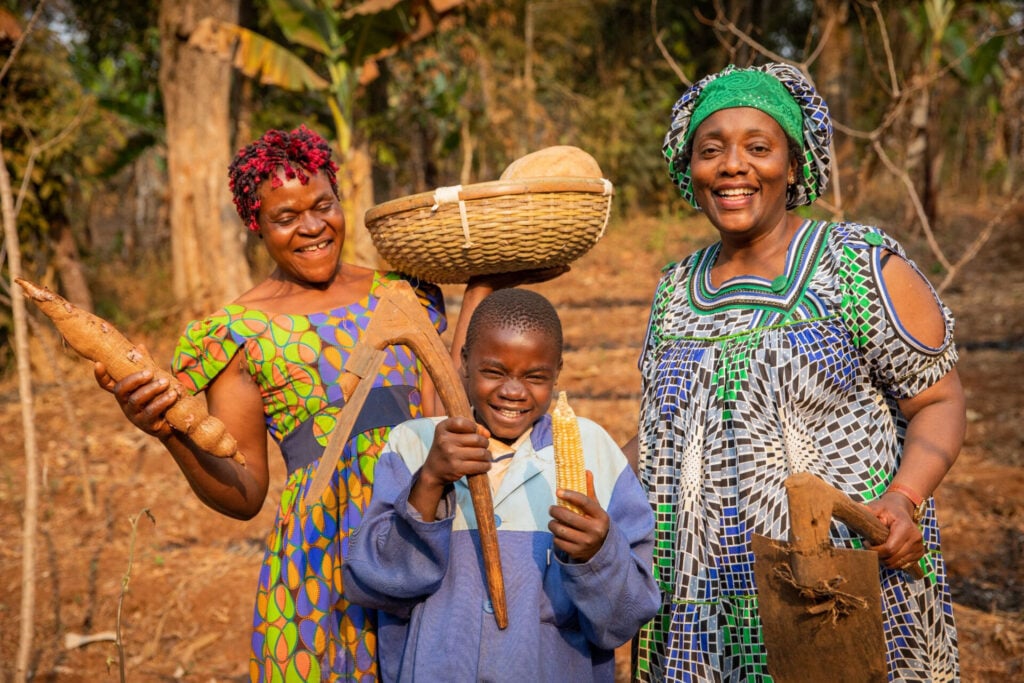
M-Pesa didn’t just fill a gap. It enabled a new kind of local economy—one where transactions, no matter how small, could be tracked, saved, and reinvested. All of this happened from the bottom up, shaped by the day-to-day creativity of people who had been excluded from formal banking for generations.
M-Pesa’s successes and failures abroad
Since 2007, M-Pesa has grown from a national solution into an international benchmark for mobile money. However, though it has been credited with lifting hundreds of thousands of Kenyans out of poverty, it has had trouble seeing comparable success in other countries.
Following its quick spread in Kenya, M-Pesa expanded to Tanzania, Ghana, Mozambique, and the Democratic Republic of Congo, as well as to countries outside Africa such as Afghanistan and India. But results were mixed.
In Kenya, the combination of high mobile penetration, weak formal banking, and cultural trust in mobile agents created a perfect climate for M-Pesa to take hold. In other countries, especially those with more established banking systems or regulatory resistance, M-Pesa struggled to take root.
Still, the broader lesson was clear: when a financial tool aligns with real-life needs and is easy to use, it doesn’t need a high-tech pedigree to succeed.
The other side of M-Pesa: central financial control?
Not everyone views M-Pesa’s rise in Kenya as an unqualified success. A recent documentary by Found in Africa titled “The Disturbing History of M-Pesa” tells a cautionary tale.
The video argues that M-Pesa may have started as a tool for financial empowerment, but has evolved into a service that also has a questionable side.
A prototype for digital currency dominance?
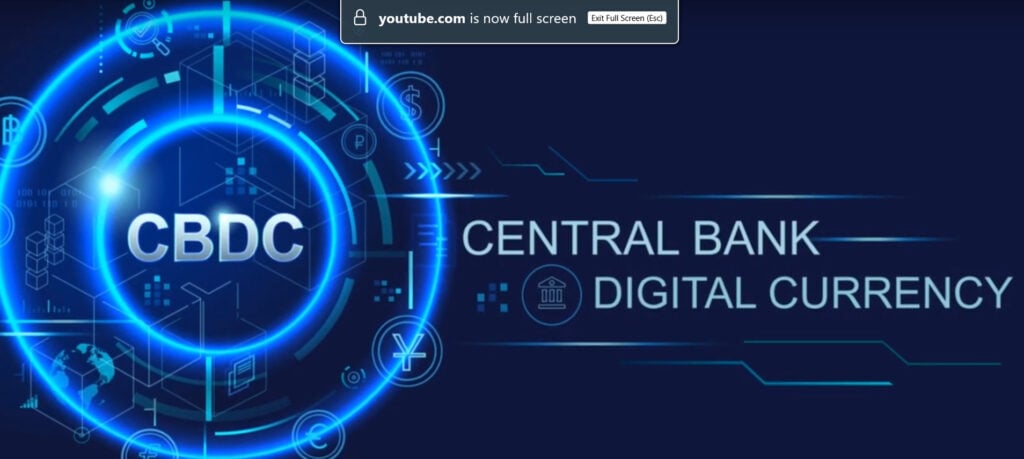
“The most disturbing aspect of M-Pesa is not just what it is now but what it’s proving possible for the future,” Found in Africa argues. “M-Pesa is essentially a walking prototype for central bank digital currencies, potentially programmable money systems that will give unprecedented control over how, when and where people can spend their money.”
This evolution from grassroots solution to global case study has not gone unnoticed. As governments and financial institutions explore the future of money, M-Pesa’s success offers both a model and a warning.
“Central banks worldwide are closely studying M-Pesa’s success as they develop their own digital currencies,” Found in Africa asserts. “The lessons, the learning, are not just about technology. They’re about social acceptance and behavioral change.”
That’s where the concern grows deeper.
The perfect social experiment
“Think about it,” the documentary urges. “M-Pesa has created a population already comfortable with digital-only currency, already accustomed to having the transaction tracked, already dependent on centralized systems for daily survival. It is the perfect social experiment of what will become the ultimate form of financial control running real time across millions of users who never consented to being the test case.”
M-Pesa’s infrastructure—while convenient and empowering—also provides unprecedented visibility into people’s financial lives. “What started as a system to help people send money home will ultimately become a blueprint for the most sophisticated financial control institution in human history,” the video argues.
Yet, according to the documentary, this wasn’t by design. “The most disturbing part [is] this was not the plan. No one set out to build this prototype deliberately.” It was, as the narrator puts it, “a simple idea to solve a real problem. But now that the blueprint exists, the question is ‘who will use it and for what purposes?’”
A breakthrough with unintended consequences
To be clear, the video does not dismiss M-Pesa’s impact. “I’m not saying M-Pesa is evil,” the narrator says. “It has genuinely transformed lives and [provided] financial services to millions of people who had none. That’s undeniable.”
Still, that impact comes with hidden costs. “The problem is not just the technology itself,” the narrator continues, “but the concentration of power it enables, the financial extraction it facilitates and the disturbing precedent it sets for our digital future.”
Perhaps the most sobering moment in the documentary comes near the end: “What happens when one company controls the financial plumbing of a nation? And not just how can we bank the unbanked, but who truly benefits when we do?”
The story of M-Pesa, it turns out, may not just be about mobile money. “It’s about the future of money itself and who gets to control it,” the film concludes. “As digital currency systems spread globally, M-Pesa’s lessons, both good and bad, will shape how money works for billions of people, and that’s why this story matters. Because one thing is certain. In a rush to celebrate innovation and progress we sometimes forget to ask, ‘Who’s really paying the price?’”
M-Pesa’s legacy and the digital road ahead
M-Pesa remains one of the most remarkable fintech stories of our time.
Born from a local need and fueled by everyday users, it helped millions in Kenya and beyond access financial tools they had never had before. It replaced long journeys and risky handoffs with something as simple as a text message. It gave people control, safety, and a sense of dignity in how they managed their money.
But as the Found in Africa documentary reminds us, even the most inspiring innovations can carry risks. This is especially true when they scale fast and concentrate power in the hands of a few. M-Pesa didn’t just open the door to financial inclusion; it also opened the door to questions about surveillance and control in a digitized world.
The truth may be that both stories are real: M-Pesa as a life-changing innovation, and M-Pesa as a cautionary tale with future implications that will require careful deliberation and policy development.
One thing about Kenya’s fintech revolution is sure: the last word hasn’t been said about it.
One response to “M-Pesa: Kenya’s Grassroots Fintech Revolution”
-
Great, informative and easy to read article. Important information, presented simply and neutrally. Thank you.


Leave a Reply