

In the coastal town of Kalundborg, Denmark, a coal-fired power plant once vented excess steam into the air as a routine by-product of electricity generation. Nearby, other facilities paid good money to produce heat, treat water, or dispose of industrial leftovers.
None of this seemed unusual—until engineers began asking practical questions about cost, distance, and waste.
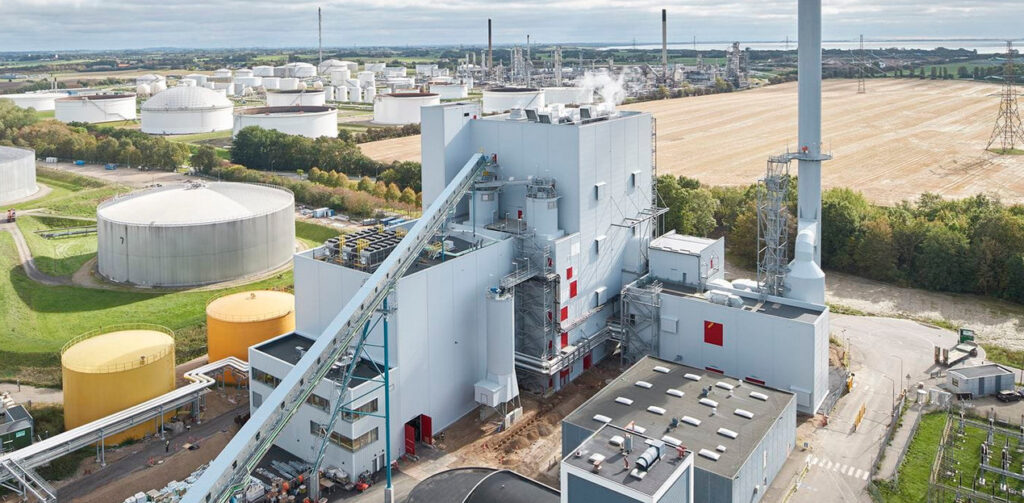
Over time, pipes were laid between neighboring companies. Steam was redirected. Cooling water was reused. Gypsum from flue-gas desulfurization at one end of the industrial complex found its way into wallboard manufacturing at the other end.
What had been separate operations slowly began to integrate with each other, not through a master plan, but through a series of bilateral decisions that made economic sense on their own. The network that emerged is now known as the Kalundborg Symbiosis.
Only later did observers recognize what Kalundborg had revealed: a working example of a circular economy taking shape without government mandates, political pressure, or ideology.
How the reuse of industrial materials grew in Kalundborg
What took shape in Kalundborg was not a single exchange but a growing pattern of reuse that crossed company boundaries. A cooperative agreement was inked for excess steam from the Asnæs Power Station to begin flowing to neighboring facilities that needed heat for industrial processes. What had once been vented as waste became a predictable input, delivered through dedicated pipes rather than purchased fuel.
Other exchanges followed. Cooling water was captured, treated, and reused instead of discharged. Sludge and by-products that required disposal were redirected into productive uses.
Gypsum generated during emissions control was recycled into drywall manufacturing. Each exchange reduced costs for both sides. Each relied on physical proximity and operational reliability rather than any ecological impetus.
A network effect takes hold
None of these decisions required a new economic philosophy. Rather, they required attention to materials that are already flowing through Kalundborg’s industry. Engineers and managers began to consider outputs without a next use phase as simply materials temporarily without a destination.
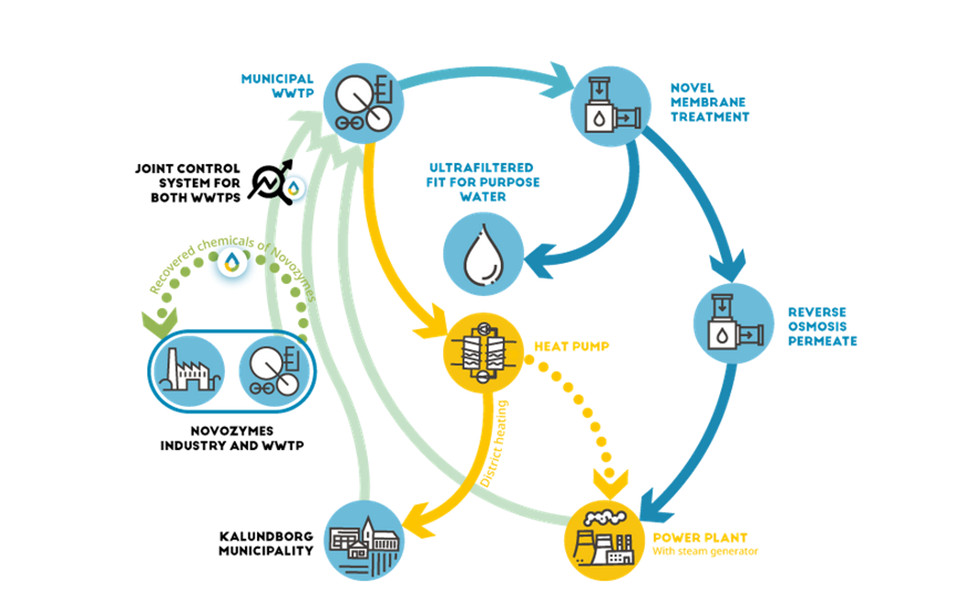
What became visible over time was a network effect. As more of these types of exchanges were established, Kalundborg’s industrial area began behaving less like a collection of independent firms and more like an interconnected organism. Resource efficiency emerged not just from optimization inside individual facilities, but also from coordination between them.
Circular economy principles revealed through practice
The language of the circular economy arrived later. Long before the term became popular, Kalundborg’s companies were already behaving in ways that would later be described as circular: keeping materials in use, reducing waste at the system level, and extracting more value from existing material resources.
What distinguished Kalundborg was not the presence of recycling or reuse, but the absence of a grand redesign. There was no single authority mapping material flows across the region.
Each link between companies was negotiated independently. Each arrangement made sense on its own. Over time, these one-to-one agreements formed a web of shared infrastructure that no single participant owned or controlled.
What is a circular economy in practice, not just in theory?
This gradual buildout revealed something often missed in circular economy discussions. These networks appeared simply because disposal was costly, usable materials were valuable, and neighboring facilities were close enough to exchange them directly.
The result was not a tidy diagram but a working industrial arrangement. Some material exchanges grew as demand increased. Others faded when processes changed or economics shifted. New pipes were added as technologies evolved.
In this context, the circular economy was not a finished design but an evolving set of adjustments that continue to be shaped by economics and engineering as well as trust built through repeated collaboration.
From linear economy habits to circular economy behavior
Before the exchanges in Kalundborg took hold, the area’s industrial facilities operated much like their counterparts elsewhere. Raw materials came in. Leftovers went out. Any materials not immediately useful were vented, discharged, or hauled away. Steam rose into the air unused. Cooling water was released back into nearby bodies of water. Each firm managed its own operations, largely in isolation.
As pipes, treatment systems, and long-term supply agreements were added, those boundaries began to blur. Decisions made inside one facility started to affect costs and reliability at another. Steam pressure mattered not just for the power plant but for neighboring businesses. Water quality upstream affected what could happen downstream.
How linear systems behave differently from circular ones
In a linear setup, each plant focuses on its own balance sheet. Cutting costs locally can push costs elsewhere, without consequence to the original decision-maker. In Kalundborg, that pattern gradually shifted. Efficiency began to show up between facilities rather than only inside them.
A unit of steam replaced fuel purchases at one site while also supporting steadier operation at another. Shared pipelines smoothed fluctuations that individual plants had previously absorbed on their own. What changed was an awareness of efficiencies that could be gained by greater connectivity and coordination of efforts in certain areas of operation.
Once materials began flowing between firms, interruptions mattered more. A delay or shutdown no longer stopped at a firm’s property line. Reliability became something companies mutually depended on. Planning extended further ahead. Coordination moved from convenience to necessity.
None of this required new buildings or new ownership. The same infrastructure remained in place. It was simply used in ways that kept materials moving instead of letting them bleed out of the system.
What happened once the pipes were in place
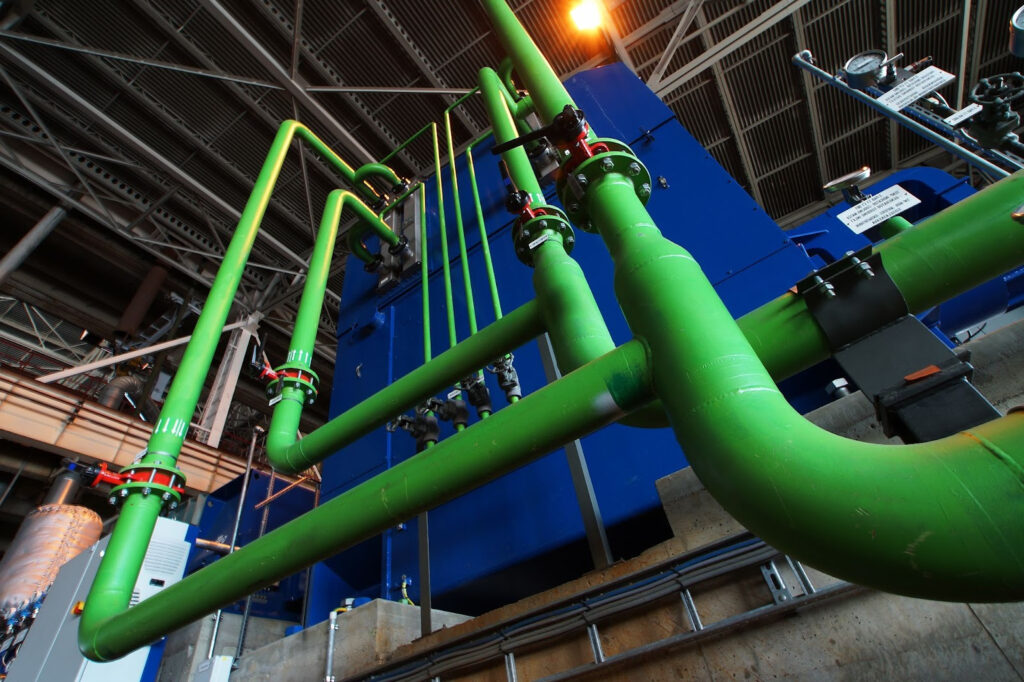
Once agreements were in place and piping systems were installed, exchanges became routine. Steam deliveries were scheduled. Water quality standards were set. By-products moved on predictable timetables.

That regularity mattered. Materials could only be relied on once they arrived consistently, at known temperatures, pressures, and volumes. When that happened, they stopped being treated as leftovers and started being planned for, just like fuel, water, or raw materials.
When one company’s excess became another’s supply
Steam from electricity generation replaced fuel purchases at nearby facilities that needed heat for manufacturing and space heating. Demand that had once fluctuated became steadier. This benefited both parties to the exchange.
Cooling water followed a similar path. After being used once, it was treated and reused. This reduced how much water had to be taken from rivers and other local sources while still supporting downstream processes.
Steam, water, and by-products moved directly from one facility to another. Those direct handoffs shortened supply chains and eliminated steps that had added cost without adding value.
Why shared infrastructure changed how companies operated
Physical links altered day-to-day decisions. A maintenance shutdown at one site affected others that depended on its steam, treated water, or process heat. Changes in pressure, temperature, or quality had consequences beyond a single facility.
As a result, planning shifted. Equipment upgrades were evaluated not only for internal gains but for how they affected shared operations. Reliability mattered more than squeezing out short-term efficiencies. Predictable performance became a shared concern rather than an internal metric.
Over time, the network itself reduced duplication. Fewer backup systems were needed. Handling and disposal costs fell. What had once leaked out of the system was now managed as part of it.
Circular economy as an operations outcome, not an ideology
Nothing in Kalundborg required participants to adopt a shared doctrine about how economies should work. Companies did not set out to “be circular.” They were just responding to specific problems: excess heat, unused materials, rising disposal costs, and neighbors who could use what they could not.

The circular economy, in this case, appeared as an unintentional byproduct of those choices. What looked like an environmental benefit from the outside functioned internally as operational alignment.
Kalundborg’s influence comes less from how it is described than from its visible infrastructure. Pipes crossing property lines. Contracts tying one firm’s output to another’s input. Maintenance schedules coordinated across facilities that remain separately owned.
What Kalundborg demonstrates
Seen up close, Kalundborg looks like a place where problems were handled efficiently—and collaboratively—as they arose, by using what was nearby and already in motion. Only later did observers recognize a circular economy taking shape.
Kalundborg’s significance lies less in what it claims than in what it demonstrates. It shows how industrial systems behave when efficiency is allowed to grow through greater awareness of nearby untapped resources—as simple as wasted steam at a local plant being redirected to meet a neighboring company’s power needs.
2 responses to “Kalundborg: Denmark’s Unplanned Circular Economy Success”
-
Thank you for another excellent article on a topic that most of us know nothing about. Keep up the good work!
-
Encouraging trend! I hope other locales duplicate it. The circular economy is slowly happening here and there around the world.


Leave a Reply