

In the shallow turquoise waters off the coast of Australia, a diver glides over what was once a living city. The coral below is pale and brittle, its bright colors bleached away. Fish that once darted between the reef’s branches are gone, replaced by drifting clouds of algae. This part of the reef, once home to thousands of interwoven animal lives, now lies silent.
Just a few meters away, the contrast is startling. A surviving patch of coral flashes with purples and golds. Butterflyfish trace slow loops around it as if reluctant to leave.
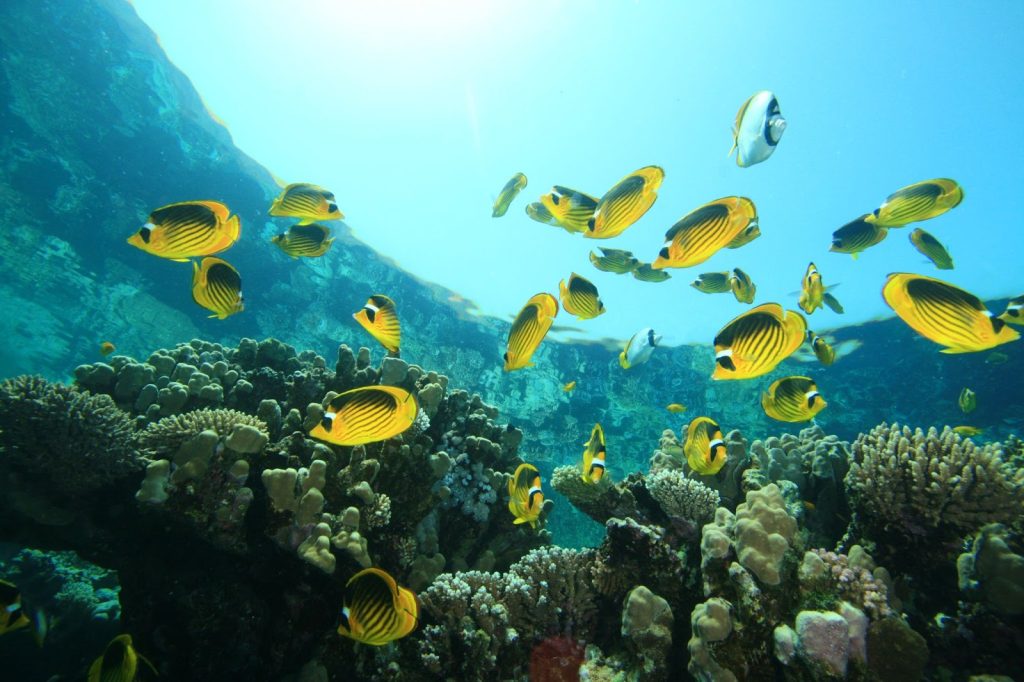
This small oasis offers a glimpse of what has been lost—and what might still be saved. Across the tropics, scenes like this are repeating, from the Maldives to Hawaii, from the Great Barrier Reef to the Caribbean.
Why are coral reefs dying—and why does it matter?
Coral reefs—colonies of small marine invertebrates—act as nurseries for a quarter of all marine life, but they are continuing to disappear at an alarming pace. Half have already vanished since the 1950s, eroded by warming seas, acidification, pollution, and overfishing.
Over the last two years, both the US National Oceanic and Atmospheric Administration (NOAA) and Australia’s Institute of Marine Science have reported large-scale bleaching events in the world’s coral reefs. In 2024, exceptional ocean temperatures drove severe bleaching from the Florida Keys to the Western Indian Ocean and across parts of Southeast Asia, with regional assessments documenting widespread impacts, according to a Florida Fish and Wildlife Report.
A cascading convergence of causes
Coral reefs don’t die from a single cause. They fade under a mix of pressures that compound and collide. The most visible trigger is heat. When ocean temperatures climb even a degree or two above normal, corals expel the tiny algae that give them both color and food. Deprived of that partnership, they turn white—a process known as bleaching.
If the heat lasts for more than a few weeks, the reefs starve. Marine scientists now call these recurring heat waves “global coral bleaching events.”
However, heat is only part of the story. As more carbon dioxide dissolves into seawater, it forms a weak acid that slowly erodes coral skeletons. Acidification doesn’t bleach corals, but it weakens their ability to rebuild after damage. In some regions, the water itself has become too corrosive for young coral to form healthy shells. This happens gradually and can’t be seen from above.
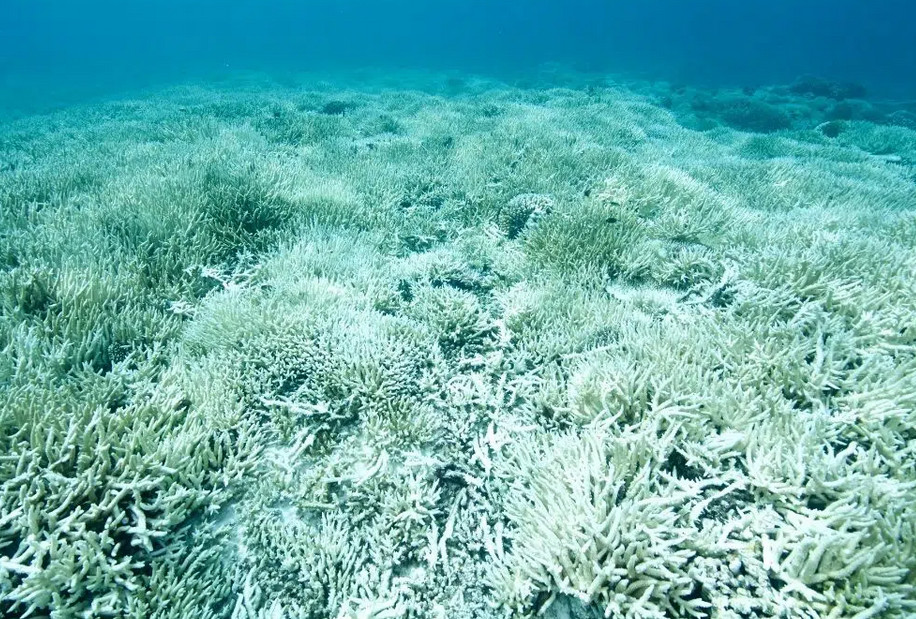
Closer to shore, runoff from farms and cities adds another layer of strain on ocean reefs. Nutrient pollution fuels algal blooms that cloud the water and smother coral polyps. Sediment from mining and coastal construction settles over reefs like dust. This blocks sunlight from penetrating to the reefs. In areas where parrotfish and other grazers have been overfished, algae take over completely. The effect is the transformation of once-bright reefs into dull, green plains.
All of these pressures overlap. A reef weakened by pollution is less able to withstand a heat wave; a reef bleached by heat is more likely to crumble in a storm. According to the World Resources Institute, this convergence of warming, acidification, and human impact has pushed many coral systems beyond their natural ability to recover. It’s not one crisis, but a cascade.
Impacts on coastal communities
For coastal communities, the impact is far more than ecological. Coral reefs buffer shorelines from storm surges. They also anchor local fisheries, and draw visitors whose spending sustains small island economies.
Their decline threatens food security and livelihoods, while also erasing cultural ties to the sea that have endured for generations.
The search for solutions
Acknowledging the severity of the problem, scientists are now racing to help these underwater worlds recover faster than nature alone can manage.
One of the most inventive ideas—3D printing of coral reefs—hopes to give life in the reefs a new foothold by merging digital design with the rhythms of the ocean itself.
How scientists are using 3D printing to restore coral reefs
In a lab overlooking the Red Sea, scientists from KAUST—the King Abdullah University of Science and Technology—are using 3D printers to rebuild coral skeletons that look almost indistinguishable from the real thing. Their simple but audacious goal is to create artificial reef structures that living coral larvae can recognize, attach to, and grow upon as if they were natural.
Traditional restoration projects rely on divers transplanting small coral fragments onto damaged reefs, one at a time. As you might imagine, this is delicate, slow work.
In contrast, 3D printing allows restoration teams to reproduce the complex architecture of coral colonies, complete with crevices, ridges, and porous surfaces, that mimic the texture of calcium carbonate. These shapes give baby corals shelter from waves and predators and help recruit fish and invertebrates back to the area.
The printers use environmentally safe materials such as limestone powder, dolomite, or clay composites that harden underwater. Some teams experiment with biodegradable binders that dissolve over time as natural coral takes hold. The resulting structures are often assembled like puzzle pieces on the seafloor and formed into lattices that mirror the geometry of the lost reef.
Can modular reef design speed coral recovery?
A similar effort known as MARS—the Modular Artificial Reef Structure initiative—is showing what can happen when marine biology meets modular engineering.
Developed by scientists at the University of Technology Sydney and the Reef Design Lab, MARS uses 3D-printed ceramic tiles that interlock like coral LEGO blocks. Each tile is seeded with living coral fragments in a controlled nursery, then deployed in clusters to create the framework of a new reef.
Because the system is modular, it can be scaled up quickly or customized for local conditions.
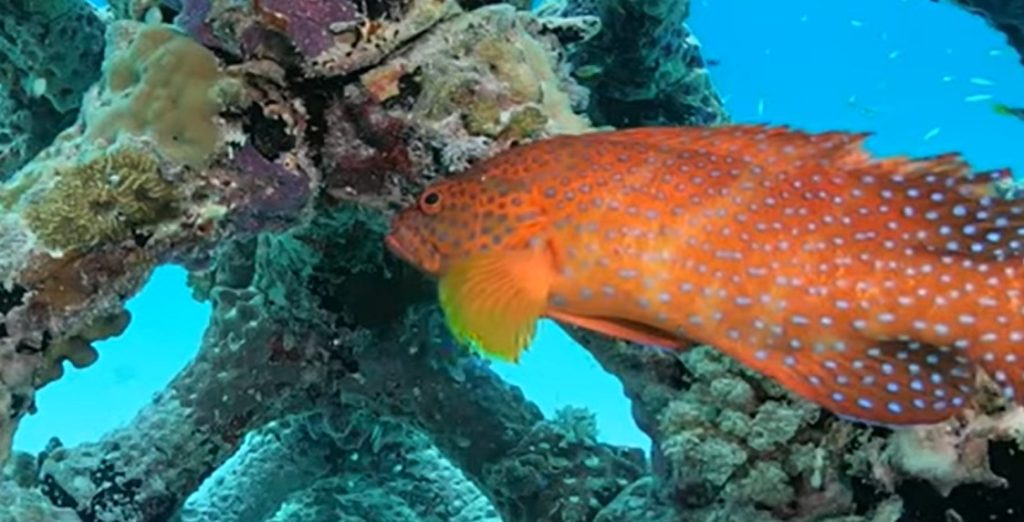
The MARS team has installed prototypes across the Great Barrier Reef and in the Maldives. It is tracking how corals grow over the textured ceramic surfaces and attract marine life, which happens within months. Early data show that fish and invertebrates begin recolonizing these sites surprisingly quickly once structural shelter returns to the seabed.
As project co-lead Professor David Suggett of the University of Technology Sydney (UTS) explained, the true value of such restoration lies in how it complements larger conservation goals. “Reef restoration has been criticised as ineffective and unscalable based on outcomes from ‘fast-fail’ experiments,” he said in a 2024 UTS briefing, “but those same experiments are now beginning to show real promise.”
In a separate statement, Suggett emphasized that reef recovery efforts cannot replace climate action but must advance alongside it. “Both are needed to secure a future for reefs and the millions of people worldwide who depend on them,” he said.
3D-printed reefs move from lab to ocean
In 2024, a collaboration between KAUST researchers and architects from the Reef Design Lab in Australia installed dozens of such 3D-printed modules along the Saudi coast. Early observations show promising coral settlement rates, especially in areas where natural reef recovery had stalled.
Similar pilot projects are underway in the Maldives, the Caribbean, and the Mediterranean. Each is custom-designed to harmonize with local species and ocean chemistry.
The appeal of 3D printing includes the speed with which these artificial reefs can be deployed. Designs can be digitally modeled, adjusted for site-specific conditions, and printed within days.
These engineered reefs are not meant to replace nature but to give it a head start. By restoring the marine infrastructure that nature once built, researchers hope to shorten the decades it can take for a damaged reef to regenerate on its own.
The economics of engineered reefs
Reef restoration has long been slow and expensive. Costs can easily exceed $100,000 per acre and depend on depth, logistics, and local conditions.
3D printing is helping reduce those costs—but it remains far from cheap. A single printed module can cost between $500 and $5,000, depending on size, material, and transportation. Each full pilot reef, such as those built by KAUST and Reef Design Lab, can cost several hundred thousand dollars once diving operations and monitoring are factored in.
Funding so far comes from a mix of government research grants, coastal tourism funds, and private-sector partnerships. The Saudi project is backed by KAUST’s Red Sea Research Center and the Ministry of Environment, Water and Agriculture.
In Australia, the MARS initiative draws support from the University of Technology Sydney, the Reef Design Lab, and public–private partnerships tied to the Great Barrier Reef Foundation. Some early prototypes have also attracted corporate funding, including contributions from luxury resort groups whose livelihoods depend on healthy reefs.
Still, scaling these technologies to meaningful levels poses a huge challenge. Coral reefs cover roughly 285,000 square kilometers worldwide. So far, most 3D-printed deployments measure in tens or hundreds of square meters. The scale gap is enormous.
Scaling restoration from prototypes to ecosystems
To make a real difference, researchers argue, engineered reefs must become modular, replicable, and locally manufactured. One emerging strategy is to share open-source 3D models so coastal nations can print their own modules using locally available materials. This approach bypasses costly international shipping.
Another is to pair restoration with community-based coral farming, where small island operators grow coral fragments to seed onto printed structures.
Digital design also opens the door to automation and mass production. Large robotic arms, similar to those used in construction printing, could one day fabricate reef structures directly from barges or floating platforms. Combined with drones and undersea mapping, these systems might allow continuous, scalable restoration—building reefs faster than they are destroyed.
But technology alone will not solve the problem. Coral survival still depends on water quality, temperature, and time. 3D-printed frameworks can provide the scaffolding, but living coral must still reclaim it and grow on it.
The promise and the peril of engineered reefs
The rise of 3D-printed reefs captures the best of human ingenuity. It employs science and design to restore life where it has faltered. The technology’s promise lies in its speed, precision, and adaptability. It can replicate the complex geometry of natural coral faster than nature itself, and provide immediate refuge for fish and a surface for new coral growth.
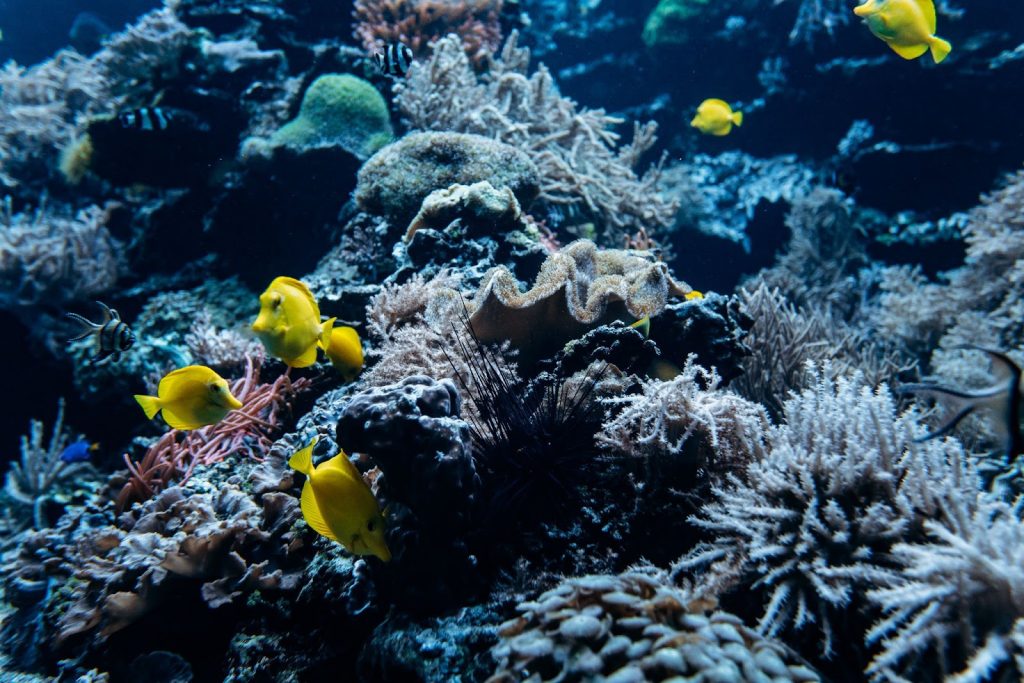
Yet there is also peril in the idea that technology alone can save the seas. Artificial reefs can stabilize damaged areas, but they cannot undo the heat and acidification that cause corals to die in the first place. If global emissions and local pollution continue unchecked, no number of printed modules will prevent widespread reef decline.
Marine biologists caution that 3D printing should not be viewed as a cure for reef decline, but rather as one of several complementary tools that can help restore some ecosystem function while longer-term recovery efforts take hold. As one review of reef restoration methods noted, such technologies can “improve the ecosystem function of degraded coral reefs,” but only when combined with broader strategies to reduce pollution, warming, and overfishing.
A delicate balancing act
In the end, the promise and the peril of reef health are intertwined. The same innovation that gives reefs a fighting chance also reminds us of our responsibility to protect the living ocean that sustains them.
For now, in scattered shallows from the Maldives to the Red Sea, small engineered oases of coral color are beginning to regrow, along with the hope that these magnificent creations of nature can flourish again in the world’s great blue oceans.
