

New media, which encompasses digital communication channels such as social media, streaming platforms and online publications, is reshaping how people consume, share and engage with online content. It’s no secret that the rise of modern online media has revolutionized journalism, entertainment and marketing.
As technology continues to advance, the next decade promises even more disruption and innovation in these communication fields.
New technology forces are driving changes in new media outlets at a dizzying pace. Artificial intelligence (AI) is streamlining content creation and curation, while blockchain and decentralized platforms are challenging the grip of traditional media gatekeepers.

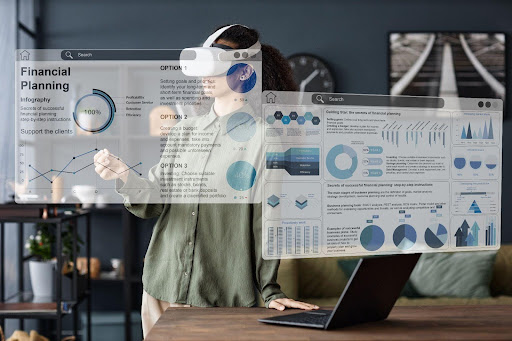
Meanwhile, immersive technologies like augmented reality (AR) and virtual reality (VR) are pushing the boundaries of storytelling and how audiences interact with the information that comes their way.
For content creators, adapting to emerging trends that are shaping new media will be key to staying relevant. By understanding as many of these tech advancements as possible, creators can navigate these challenges and seize new opportunities as they present themselves in the coming years.
AI-driven journalism and content creation
Artificial intelligence has already made a huge impact on journalism and content creation. AI-powered tools like OpenAI’s ChatGPT, DALL·E, and Sora, as well as Midjourney and Stability AI’s Stable Diffusion, are producing human-like text, realistic images, and even video clips.
Editors and journalists are integrating AI-generated articles into newsrooms. They are using these tools for research, summarizing, and even drafting full-length articles. Writers and media producers are employing AI models to create interactive experiences, including AI-generated scripts, voice overs, and animations, and drastically reducing production times in the process.
Meanwhile, these tools continue to get better and better. We marvel at the astonishing speed at which AI research and writing assistants such as Copilot, Grok, and ChatGPT are evolving. Recently, the most popular of these tools took exponential leaps with the release of their “deep research” versions.

Consider ChatGPT’s Deep Research feature. While the ChatGPT’s standard search function provides quick and mostly excellent answers, its Deep Research version is much more powerful.
Deep Research autonomously conducts extensive web searches, analyzes multiple sources, and compiles detailed reports with citations. This process can take between 5 to 30 minutes, depending on the complexity of the query, and provides a depth of analysis akin to that of a professional researcher.
Here’s an overview of some top large language model-based tools (LLMs) and their latest deep research versions. These advancements highlight the rapid pace at which AI tools for research and writing are evolving.

Beyond the written word, video editors and content creators are also harnessing AI to influence video content. They are using automated editing tools to generate B-roll, improve audio quality, and suggest edits based on engagement trends.
Global media teams are employing AI-powered translation and voice cloning to expand their reach and connect with audiences more efficiently than ever before. These developments mark a new era where AI is not just assisting but actively shaping content creation under human direction.
The dark side of AI-created content
Yes, there are unethical and even sinister ways to utilize such tools, as this NBC News report points out. Misinformation, deepfakes and biases embedded in AI-generated content pose risks that creators must deal with responsibly.
Because of these dangers, content creators must be highly ethical in their AI usage, as well as transparent regarding their sources. Upholding journalistic integrity in such a fast-changing creative environment will be more critical than ever.

However, it would be naive to think that all or even the vast majority of content creators will play by these rules. That’s why content consumers, too, will need to be discriminating as they navigate these uncertain new media waters.
The future of AI in content creation
The next decade will see AI moving beyond assistance to becoming a full-fledged creative partner. AI-driven storytelling is poised to evolve, with algorithms capable of generating full-length books, films and investigative news reports.
AI-powered collaborative editing tools will have the power to refine content in real-time, offer predictive suggestions, and boost creativity, rather than simply replace human input.
Personalized media consumption will also reach new levels. AI tools will have the ability to curate content based on individual preferences. Creators will be able to offer targeted news feeds and entertainment experiences to specific users. This hyper-personalization could redefine how audiences engage with content and make interactions more immersive and relevant.
Beyond traditional media, AI-driven storytelling will push the boundaries of interactive narratives. Advances in generative AI could lead to AI-created virtual influencers, AI-generated game narratives, and fully synthetic films.
As AI models improve, the line between human and machine-generated content will blur. As one might imagine, such ambiguities will create both opportunities and challenges for media creators.
The implications of AI-driven content for creators
The rise of AI-driven content demands new skill sets from creators. Learning how to work with AI as a collaborative tool will become essential. AI-enhanced research, editing and storytelling techniques will separate those who adapt from those who struggle to compete.

Rather than replacing creativity, AI will amplify it. This helps creators focus on innovation and storytelling while automating the technical aspects of their content work.
However, with AI’s increasing role in content creation, creators must remain vigilant about the ethical pitfalls that come with it. The ease of generating convincing but misleading narratives, the risk of unintentional plagiarism, and the challenge of maintaining originality in an AI-saturated space all demand new levels of responsibility.
Transparency will be key
Transparency about AI’s role in the creative process will be critical—not only to uphold trust with audiences but also to safeguard the integrity of creations. Creators who prioritize accuracy, originality and ethical storytelling will be the ones who truly stand out in this shifting landscape.
Monetization will require authenticity and more
Monetization in an AI-dominated media space is another challenge. With AI capable of mass-producing content, standing out will require authenticity, community-building and unique perspectives.
Content creators may need to explore new revenue models, such as AI-enhanced premium content, interactive storytelling experiences, and personalized subscription services. Those who embrace AI while maintaining creative integrity will be best positioned to thrive in the future media environment.
How does decentralization work in new media?
Now, let’s look at how decentralization is reshaping the media landscape by offering creators new ways to distribute and monetize their work—without relying on traditional platforms.
Today, big companies—think YouTube, Medium and Substack—dictate how content is distributed and monetized. They control the algorithms, the ad revenue, and even whether a creator’s content remains accessible.

On the other hand, decentralized platforms make it possible for creators to bypass these middlemen and share their work directly with audiences in a way that’s more transparent, secure and financially fair.
This shift is already happening. More community-driven platforms are emerging, fueled by advances in blockchain technology and a growing push to shift control away from big media companies and into the hands of creators. Here are a few examples:
- Mastodon, a decentralized social network, allows users to create and moderate their own communities without corporate oversight.
- Paragraph gives writers and content creators direct ownership of their work through blockchain-based publishing.
- Odysee offers an alternative to YouTube where video creators can earn cryptocurrency instead of relying on ad revenue.
These platforms and others like them signal a shift toward a more creator-empowered media landscape. But how do they compare to the corporate-owned platforms that dominate today?
Decentralized vs. corporate-owned platforms: what creators need to know
The key difference between the two models boils down to control, ownership, and monetization.
Platforms like Mastodon, Paragraph, and Odysee aren’t owned by a single company. That means no centralized authority determines their policies. This gives creators more control over their content, their audiences, and how they earn.
Compare this to corporate-owned platforms:
- YouTube operates on an ad-driven model where creators earn a cut of ad revenue. But there is a catch—or actually three catches: YouTube decides who qualifies, takes a sizable percentage, and can demonetize content at any time.
- Substack gives writers ownership over their subscriber list, but still takes a 10% cut of paid subscriptions.
- Medium pays writers based on time spent reading, but controls how articles get surfaced and monetized.
In contrast, blockchain-based platforms like Mirror.xyz and Odysee allow creators to fully own their content and earnings, often through cryptocurrency and digital tokens. This removes corporate middlemen but also introduces challenges—such as the volatility of crypto-based income and the relative difficulty of growing an audience on newer platforms.
Audience-building and monetization on decentralized platforms
Can you build an audience and monetize on these platforms? This is the number one question for creators. The reality? It’s possible, but harder—for now.
Decentralized platforms, built on Web3 technology—a vision of the internet that prioritizes user ownership, blockchain-based transactions and decentralization—offer greater freedom and more generous revenue models. But they lack the built-in audiences that platforms like YouTube and Substack provide.
On corporate platforms, discovery is easier, but creators pay a price in lost control. On decentralized platforms, the challenge is building a following without the benefit of algorithmic amplification.
Still, early adopters have an opportunity. As Web3 platforms grow, those who establish themselves now may benefit later when these networks gain mainstream traction.
Preparing for a decentralized future
If you’re a creator looking to future-proof your content strategy, now is the time to start exploring Web3 tools. Learning how to use digital wallets, smart contracts, and non-fungible tokens (NFTs) could give a creator an edge as blockchain-based platforms mature. It’s also wise to experiment with decentralized platforms now, before they go mainstream, to establish a presence while competition is still low.
Ultimately, the future of content creation is shifting toward creator ownership.
Whether decentralized platforms will fully replace corporate-run networks remains to be seen. But one thing is clear: the creators who understand these emerging tools—and use them strategically—will have the greatest ability to control their work, their audiences and their earnings.
The rise of immersive media: AR, VR, and the metaverse
The spectrum of digital content is evolving rapidly, and immersive media—augmented reality (AR), virtual reality (VR) and the metaverse—is at the forefront of this transformation. As these technologies mature, they are reshaping how stories are told, how audiences engage with content, and how creators monetize their work.

The evolution of AR & VR in storytelling
Augmented and virtual reality are no longer just experimental tools. Rather, they are becoming integral to storytelling across industries.
In journalism, interactive VR reports allow audiences to step inside news events rather than simply read about them.
Meanwhile, AR overlays are redefining digital advertising and social media engagement by turning static posts into interactive experiences. Brands and creators alike are leveraging AR filters, 3D effects, and location-based enhancements to create more engaging, immersive content.
The future of virtual spaces & content creation
The expansion of metaverse platforms—virtual, persistent digital spaces where users can interact, create, and transact in real time—is also opening new doors for content-sharing and collaboration.
AI-generated virtual influencers and digital personas are gaining traction. These virtual personalities offer brand new ways to engage with audiences while allowing creators to build entirely digital identities.
In addition, VR-based education and interactive learning media are transforming everything from corporate training to remote classrooms. The result, in theory, is knowledge that is more accessible and engaging.
Again, there is no doubt that risks abound within these new AI frontiers. Yet, for creators who embrace these tools ethically and strategically, the opportunities to innovate, connect and monetize in virtual spaces have never been greater.
Practical steps for creators
To stay ahead, creators should start exploring AR tools like 8th Wall, which enable interactive storytelling and brand engagement.
For VR content, learning 3D modeling software and platforms like Unity or Unreal Engine can provide a competitive edge.
Finally, understanding monetization opportunities—such as virtual events, NFT-based digital goods and metaverse-exclusive content—will be key to thriving in the next phase of digital media.
The future of news and media consumption
The way people consume news and media is changing fast. AI-enhanced newsfeeds are increasingly personalizing the content we consume by curating stories based on user behavior, user preferences and past interactions.

Meanwhile, interactive storytelling—through gamification and immersive formats—helps audiences to experience stories rather than passively consume them. This could make journalism more dynamic and participatory.
A powerful example of interactive storytelling using an immersive format is The New York Times’ “The Displaced” VR documentary. This project uses virtual reality to place viewers in the lives of children displaced by war via a 360-degree, first-person experience of their environments.
Rather than just reading about these youngsters’ struggles, audiences could step into their worlds, see the devastation firsthand, and gain a deeper emotional connection to the story. The documentary’s immersive approach illustrated poignantly how VR can transform storytelling by making news experiences more visceral and participatory.
Social media models are shifting
At the same time, traditional social media models are shifting. The ad-driven platforms that once dominated digital interaction are losing traction as users seek more intimate, niche-based communities.
Platforms like Discord, Substack, and Telegram are gaining popularity, in part because they offer creators greater control over their audiences without relying on algorithms for visibility.
For content creators, this shift means embracing direct-to-audience strategies. Building email lists, launching private membership communities, and offering exclusive content will become essential for long-term sustainability in a fragmented media landscape.
Ethical challenges and opportunities in new media
As AI-generated content becomes more prevalent, so do ethical concerns. The rise of deepfakes and AI-driven content that is spun one way or another makes digital literacy and media verification tools more critical than ever. However, ironically, even some self-labeled verification tools are suspect.
Beyond misleading information, data privacy is a growing concern. Decentralized technologies promise a future where users control their own data rather than surrendering it to corporate platforms.
To deal with these challenges, content creators must place a high priority on ethical responsibility. This includes transparency in AI-generated content, adhering to ethical media standards, and engaging proactively in digital literacy efforts. All of these practices will help creators build trust with their audiences and future-proof their careers.
What’s next for content creators?
The future of content creation is being shaped by AI, Web3, and immersive media. Dizzying new developments in these areas will require creators to stay adaptable.
The shift toward decentralized platforms, personalized news consumption and interactive storytelling presents both challenges and opportunities. Those who embrace new technologies while maintaining integrity in their creativity will be best positioned for success.
Experimentation is key to long-term success. This includes learning how to leverage AI tools, create immersive experiences and build direct relationships with niche audiences.
As new media continues to evolve, the most successful creators won’t just follow trends—they’ll join in shaping them for decades to come.

Leave a Reply