

Gone are the days when a handful of large broadcasting companies controlled the news arriving daily in our living rooms. Instead, individuals from all walks of life have become their own broadcasters by embracing a new media phenomenon: podcasts.
From talk show interviews to tech innovations, from self-help to political commentary, podcasts speak to every conceivable interest.
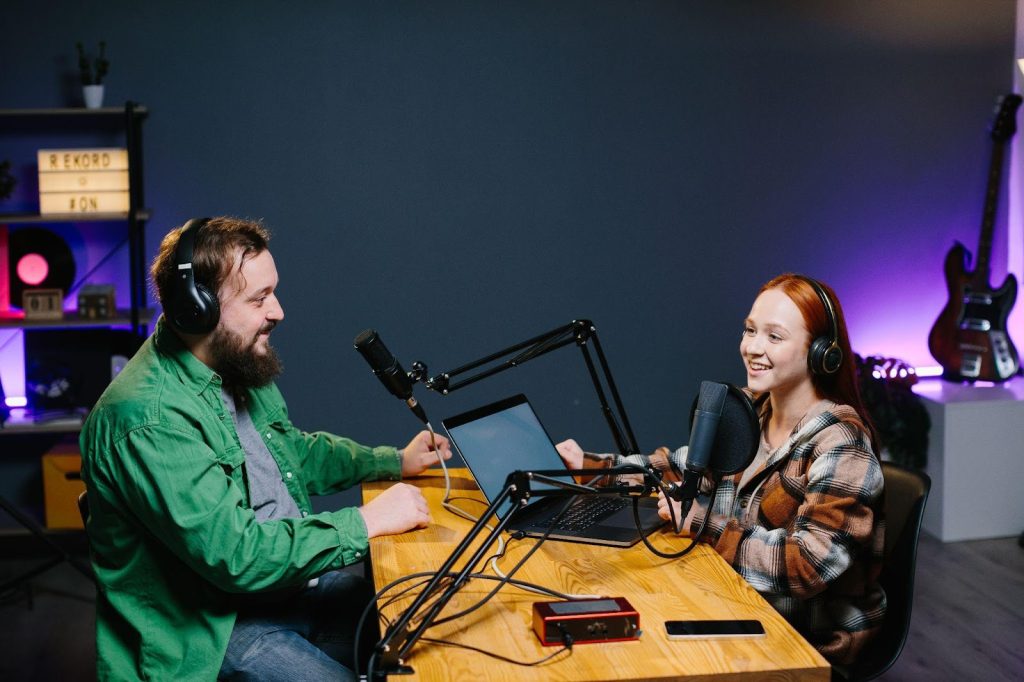
We’ll explore this new audio and video outlet by detailing how platforms like Apple Podcasts, Spotify, YouTube, and a host of others serve as gateways to this rich world of information, inspiration, and entertainment.
Plus, we’ll present 80 podcasts worth exploring. Let’s dive right in.
What is a podcast and how does it work?
Let’s begin by demystifying what exactly a podcast is. At its core, a podcast is an episodic series of digital audio files that a user can stream or download. It’s like having a radio show that you can listen to whenever and wherever you want.
However, it is important to note that podcasting is a young and evolving broadcasting model. As such, the radio analogy only partially applies, since video podcasting has become a leading player in the podcast marketplace. And it will come as no surprise that YouTube-hosted podcasts now lead the way in the video podcasting space.
How did podcasting begin?
Podcasts emerged in the early 2000s, initially as a form of independent audio content distribution. This allowed content creators to bypass traditional broadcast media outlets, not unlike how the rise of self-publishing in the book world made it possible for authors to bypass the established publishing houses to get their books to market.
Coined in 2004, the term “podcast” combines “iPod” and “broadcast.” This reflects their initial association with portable MP3 players.
This new medium gave individuals the power to create and distribute audio content without the need for large media companies or platforms such as YouTube, which at that time was not yet a dominant force in content distribution.
RSS: The backbone of the podcast revolution
Podcast technology pioneers Adam Curry and Dave Winer developed the Really Simple Syndication (RSS) tech tool that facilitated the direct-to-consumer podcast model. RSS allowed content creators to reach listeners directly through the internet, thus democratizing audio broadcasting.
RSS works like this: When a podcast is created, each episode is uploaded to a server where it gets a unique link. This link is added to an RSS feed, which acts like a directory or index of all the episodes.
Podcast platforms or apps subscribe to these RSS feeds. The feeds automatically update with new episodes as they are released.
Podcasters use these platforms to host and distribute their podcast content. Listeners discover and listen to podcasts via podcast apps such as Apple Play and Spotify, which allow them to download or stream episodes directly to their devices.
This setup means listeners don’t need to manually check for new content; it’s delivered to your phone, tablet, or laptop, ready for your convenience.
This is now referred to as the traditional podcast model, which is mostly an audio model. However, the model continues to evolve in response to the new kid on the block: video podcasting.
The video podcasting model: the YouTube gorilla
Recently, YouTube has risen to the top of the podcasting world. It is now the most popular platform for podcasters.
Most YouTube podcasts are what are known as streaming podcasts. In contrast to traditional podcasts like Apply Play and Spotify, they are not downloadable (except in a limited fashion with a YouTube Premium subscription).
YouTube podcasts offer a hybrid experience. While they are streaming-based, their evergreen status makes them permanently available, just like downloadable podcasts.

This podcast setup is great for creators who want to tap into YouTube’s huge audience and use all its multimedia features. But, it’s different from the usual podcasting style because you can’t listen to it offline as easily or take it with you on the go.
How YouTube podcasts work
Here’s how YouTube differs from traditional audio podcasting:
- Content hosting: YouTube serves as both the hosting platform and the discovery tool for podcasts. Creators upload their content (audio or video) directly to YouTube. This bypasses the need for an RSS feed or separate hosting provider.
- Streaming: Viewers or listeners access podcasts directly on the YouTube site or app.
- Channel subscription: When users subscribe to a podcast on YouTube, they’re subscribing to the YouTube channel, not to a podcast feed.
- Discovery and recommendations: Discovery on YouTube is algorithm-driven. Users are presented with content based on their viewing history, preferences, and search activity.
With YouTube’s rise as a video podcast platform, the way people expect to get their podcast content has changed. Now, more podcast fans are streaming them rather than downloading them.
However, creators can still choose to distribute their audio content through traditional podcast hosting platforms where downloadability is standard. It’s not uncommon now for podcast creators to distribute their content through more than one media outlet.
The current podcast landscape
Below are five of the most popular podcast apps. A podcast app is software used by listeners to discover, download, and play podcasts. It offers features like subscriptions, offline listening, and easy navigation of podcast playlists.
- YouTube: As noted, YouTube has emerged as the leading service for podcast consumption in the US, especially among younger audiences.
- Spotify: Known for its vast music library, Spotify has also heavily invested in podcasting and now offers a wide range of exclusive and original content. Its user-friendly interface and personalized recommendations are popular features.
- Apple Podcasts: Pre-installed on Apple devices, Apple Podcasts provides access to more than 30 million podcast episodes. Apple’s huge podcast library makes it a staple for many users.
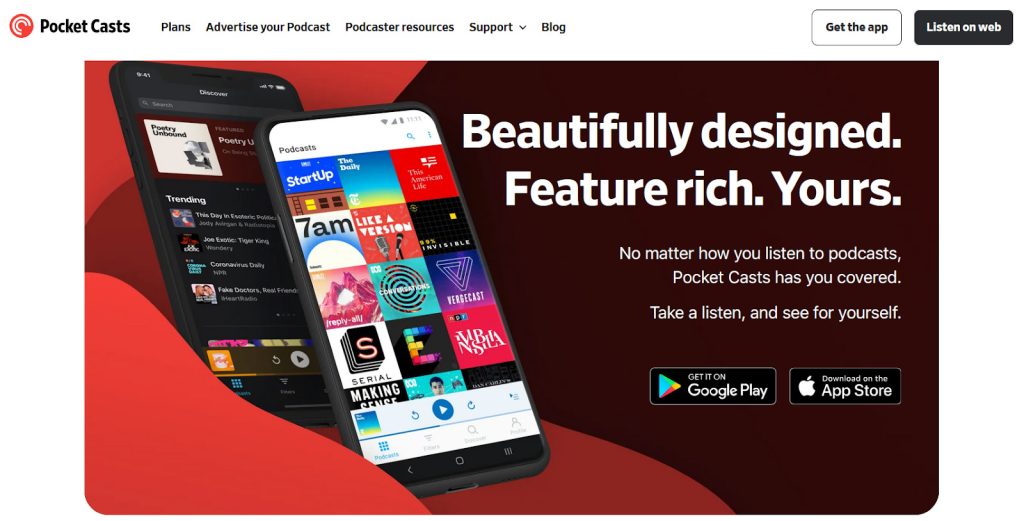
- Pocket Casts: Celebrated for its intuitive design and handy features, Pocket Casts offers customizable playback options and cross-device syncing, which appeals to both casual listeners and podcast enthusiasts.
- Overcast: Exclusive to iOS-run devices such as iPhones and iPads, Overcast is praised for its clean interface and unique features like Smart Speed and Voice Boost. Smart Speed shortens silences in podcasts without distorting the audio. Voice Boost makes voices clearer and more consistent, especially in noisy environments or with various levels of recording quality.
Podcast hosting platforms
In contrast to a podcast app, a podcast hosting platform is where creators upload their episodes. It manages the storage, distribution, and sometimes the analytics of podcast content. Basically, apps are for consumption, while hosting platforms are for content management and distribution.
There is no shortage of traditional podcast hosting platforms. Here is sampling:
- Buzzsprout: Known for its user-friendly interface and automatic optimization tools for audio quality, Buzzsprout offers features like dynamic content and detailed analytics.
- Podbean: Podbean provides unlimited storage and bandwidth with its paid plans, along with features for monetization, promotion, and detailed analytics.
- Blubrry: Known for its integration with WordPress through the PowerPress plugin, Blubrry provides detailed analytics and easy distribution to major platforms.
- Simplecast: Popular because of its modern interface and powerful analytics, Simplecast is suitable for both new and established podcasters.
- RSS.com: Focuses on simplicity with unlimited episodes and bandwidth, and offers automatic transcripts and SEO features.
For content creators dreaming about starting a podcast, looking into these and other podcasting platforms would be a good place to start. There are also excellent guides available online. Here’s one: How to start a podcast.
How do podcasters make money?
Success in the monetization of podcasts often depends on audience size and engagement.
Podcasts generate revenue through several methods. The most common way is through advertising and sponsorships. This is a method as old as radio. Podcast hosts promote products or services within their episodes, and earn revenue based on downloads or listener actions such as clicking on an ad link or using a promo code mentioned in the show.

Another popular method is direct listener support via platforms like Patreon, where fans pay for exclusive content or perks.
Some podcasters also leverage affiliate marketing. They earn commissions from product sales through their endorsements. Selling merchandise, hosting live events, or offering paid premium content can also create income streams.
A guide to podcast channels: what’s out there?
When you begin to explore the world of podcasts, the effort can be mind-boggling because of the sheer volume and variety of what’s available. Imagine walking into a major university’s library for the first time with only a vague idea of how to begin searching for books that might interest you. Trying to zero in on podcasts that align with your interests can be just like that.
To get you started, here are nine categories of podcasts with 80 individual podcast channels, organized by subcategories.
News & politics
Daily news briefs
Investigative journalism
Political commentary
Global affairs
Education
Science & technology
Personal development
Business and economics
Entertainment
Comedy
Pop culture
Lifestyle & wellness
Health & fitness
Travel
Food & drink
Hobbies & interests
Gaming
Sports
Arts & literature
DIY & home improvement
Spirituality & philosophy
Meditation & mindfulness
Philosophical discussions
Religion & spirituality
Technology & innovation
Tech news
AI & future trends
Programming & development
Kids & family
Educational
The podcasting landscape is vast, so explore different platforms and strategies to help you find content that speaks to your personal interests.

Leave a Reply