

The fishing boat pushed away from the dark shoreline long after sunset. Its engine sputtered as the overloaded craft drifted into the open water of the South China Sea. Dozens of people were crammed together on the narrow deck, the boat’s dim lantern barely illuminating the faces around them.
Families carried only what they could hold: a small bundle of clothes, a few photographs, perhaps a little rice wrapped in cloth.
Children sat quietly beside their parents. Even the youngest sensed the danger.
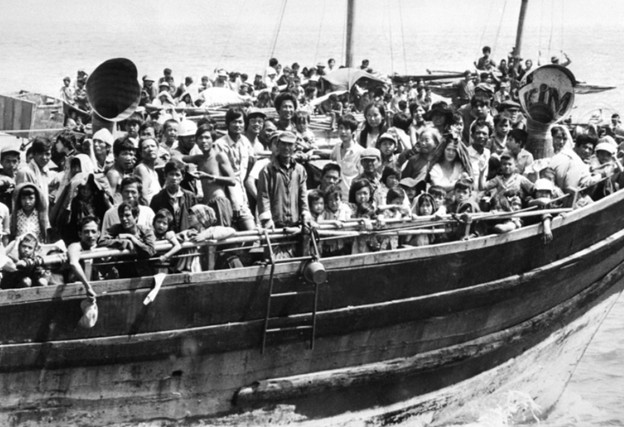
No one knew whether the engine would last the night. Patrol boats could appear at any moment. Pirates hunted refugee vessels across these treacherous waters. Storms could roll in without warning. Food and water might run out long before land appeared.
Many boats that slipped into the darkness never arrived anywhere at all.
Yet thousands of families took that risk. After the fall of Saigon in 1975, more than 800,000 Vietnamese fled by sea, looking for safety that was not to be had in their native Vietnam. For most, the chance to begin again was a distant dream. Survival was the immediate goal.
For the fortunate ones who did survive the harrowing journey by reaching land or being picked up by a sailing vessel, many spent months in refugee camps before eventually settling in the United States, Canada, Australia, and Europe.
From those uncertain beginnings would emerge a generation whose children went on to shape areas of life ranging from science and medicine to literature, technology, and military leadership.
The following profiles show how the children of that perilous exodus transformed almost unspeakable hardship into extraordinary achievement. At the deepest heart of these success stories lies a common thread: existential gratitude for a second chance at life—a life blessed to be lived in freedom.
The Vietnamese boat people: why families fled
When South Vietnam collapsed in April 1975, life changed overnight for millions of families. The new communist government sent hundreds of thousands of former soldiers, civil servants, and professionals to reeducation camps where many endured years of forced labor and political indoctrination.
Private property was confiscated, businesses were nationalized, and economic conditions deteriorated rapidly. Ethnic Chinese communities were also targeted during waves of expulsions and discriminatory policies.
For many families, escape became the only path forward.
They fled quietly and mostly at night, boarding small fishing boats, cargo vessels, or improvised craft along the southern coast and in the Mekong Delta. These fragile boats carried far more passengers than they were designed to hold.
The journey itself was perilous, but despite the dangers, hundreds of thousands eventually found refuge abroad. In the US, Vietnamese communities took root in places like California, Texas, and Virginia.
A new generation of pioneers
From those beginnings emerged a generation determined to repay opportunity with achievement.
Many children of the boat-people generation have served the country that gave their families refuge in remarkable ways. Some chose careers in the armed forces, dedicating their lives to protecting the freedoms their parents once risked everything for.
Another path taken by many children of refugee families has been the pursuit of education and innovation in medicine, literature, and technology. Others began stepping into leadership roles in journalism, public life, and local government.
Below are nine profiles of some of these special individuals. Each story is a testament to how one generation’s sacrifice opened the door for the next.
1. Hung Cao: Undersecretary of the US Navy
Hung Cao’s path to American military leadership began with uncertainty on the open sea. As a young child, he and his family fled Vietnam by boat after the fall of Saigon, eventually spending time in refugee camps before their family settled in the United States.
Cao grew up hearing the story of his family’s escape and the risks they took to reach safety. The hardships of his family’s early journey shaped the discipline and resilience that would define his career.
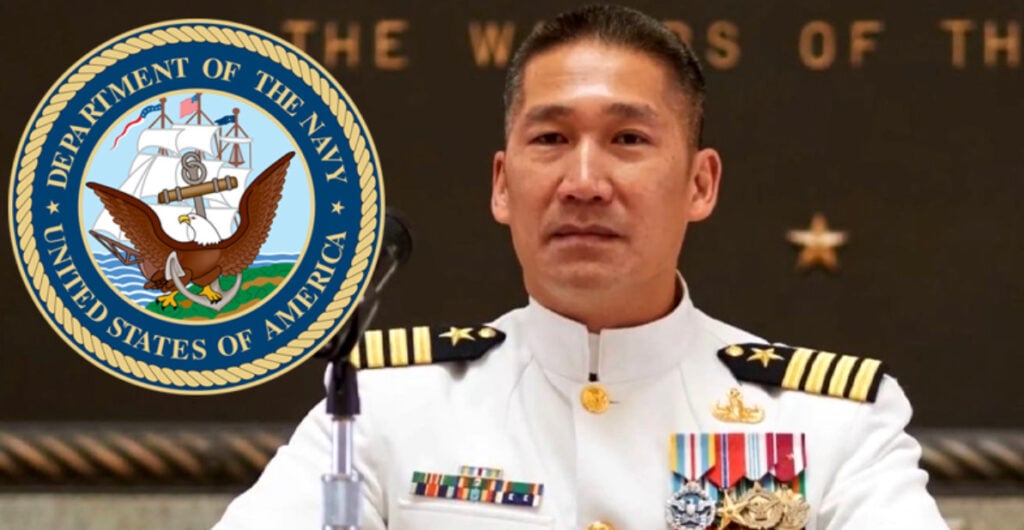
He entered the US Naval Academy and set out on a life of service that saw him placed in demanding leadership roles within the Naval Special Warfare department. Cao also served in leadership positions at the Naval Diving and Salvage Training Center, where he helped train sailors for complex underwater operations.
Hung Cao was recently nominated for and confirmed by the US Senate as Undersecretary of the US Navy.
2. Dr. Thuy Nguyen: a career in pediatrics and global health
Dr. Thuy Nguyen’s life story traces back to the escape her parents made in 1979, when they fled Vietnam by boat in search of safety and opportunity. They arrived in a new country with little more than determination to start again. Her path was shaped by growing up in that environment.
She went on to become a physician specializing in pediatrics and global health. Throughout her career, she has focused on expanding healthcare access for refugee families and underserved communities, particularly those who struggle to navigate unfamiliar medical systems.
For Nguyen, medicine became a way to extend the compassion and opportunity her own family once received to others in need.
3. Rear Adm. Huan Nguyen: flag officer in the US Navy
Huan Nguyen’s story begins with a tragedy few children could survive. During the 1968 Tet Offensive, Viet Cong attackers stormed his family’s home in Saigon. In the violence that followed, Nguyen’s parents and five siblings were killed. He himself was shot several times and left for dead. Somehow, he survived.
After the fall of South Vietnam, Nguyen fled the country with his uncle, a colonel in the South Vietnamese Air Force. He was part of the massive rescue of Vietnamese allies of the American military, undertaken by the US Navy as part of Operation Frequent Wind.
Nguyen eventually made his home in the United States. He pursued an education in electrical engineering and began building a career supporting advanced naval weapons systems.
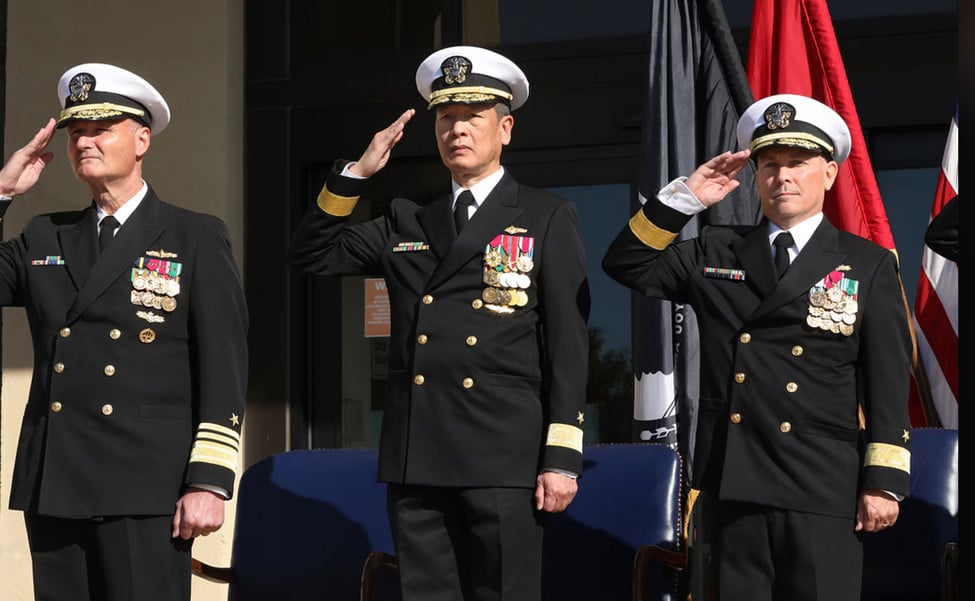
Over time, his work earned the respect of both civilian and military leaders. In 2019, Nguyen achieved a historic milestone when he was promoted to rear admiral in the US Navy, becoming the first Vietnamese-born officer to reach flag rank.
4. Danielle Ngo: US Army colonel
Danielle Ngo was just three years old when her mother carried her onto one of the last evacuation flights leaving Saigon in April 1975. Like many children of that chaotic moment, she was too young to remember the details. But growing up in the United States, she often heard the story of how narrowly her family escaped the closing days of the Vietnam War.
Those stories stayed with her.
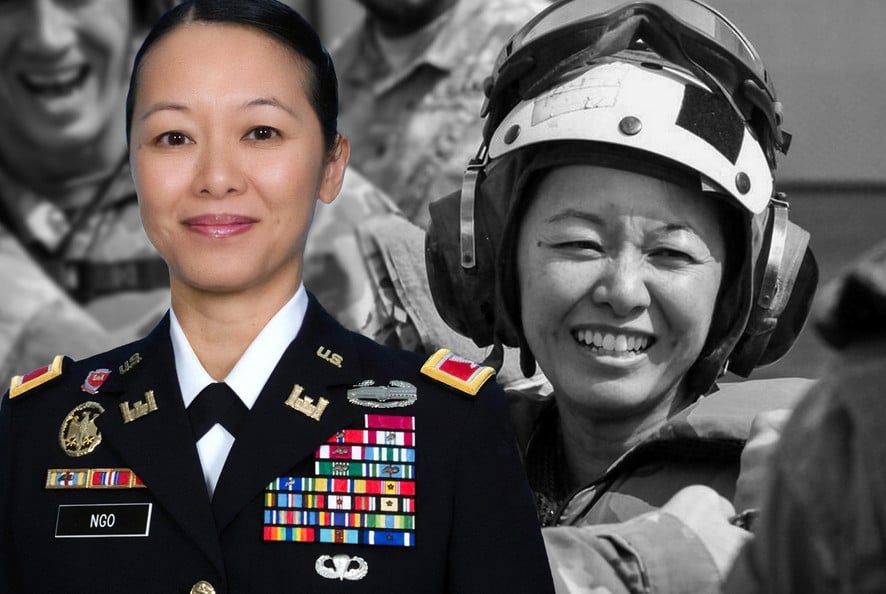
Ngo eventually chose a path of service, joining the United States Army and building a career that would span more than three decades. Rising through the ranks to become a colonel, she led engineering units and served in multiple assignments across the force.
For Ngo, military service has often carried a deeper meaning. It is a way of giving back to the country that gave her family refuge and the chance to begin again.
5. Viet Thanh Nguyen: narrator of the Vietnam War
When Viet Thanh Nguyen was four years old, his family fled Vietnam and eventually resettled in California. Like many refugee children, he grew up navigating two worlds: the memories and experiences of his parents, and the new American life unfolding around him.
That dual perspective would later shape his writing.
Nguyen became a professor and novelist whose work explores the complex legacy of the Vietnam War and the experiences of the Vietnamese diaspora. His novel, The Sympathizer, won the Pulitzer Prize for Fiction in 2016 and quickly gained international recognition.
Through his storytelling, Nguyen helped bring Vietnamese voices into conversations that were long dominated by American perspectives. His work has helped readers better understand the war and its human consequences.
6. Tan Le: global technology innovator
Tan Le was four years old when her family fled Vietnam on an overcrowded boat. They spent months moving through temporary camps before eventually settling in a new country and beginning the difficult work of starting over.
Le grew up with the memory of that escape and the determination it instilled in her family. She later emerged as a technology entrepreneur and became the founder and CEO of EMOTIV, a pioneering neurotechnology company.

EMOTIV develops brain–computer interface systems that allow users to interact with computers using neural signals. The company’s headsets are now used by researchers, educators, and developers around the world exploring applications ranging from neuroscience research to assistive technologies.
7. Dr. Quyen Nguyen: pioneering new tools for cancer surgery
Dr. Quyen Nguyen’s journey also began with a refugee family seeking safety and opportunity after leaving Vietnam. As a child, she arrived in the United States with her parents, who were part of the wave of families rebuilding their lives after the war.
Nguyen went on to pursue medicine, eventually becoming a surgeon and professor at the University of California, San Diego. Over the course of her career, she has combined clinical work with scientific research into more effective methods for surgeons to detect and remove cancer.
Her most influential contribution has been the development of fluorescence-guided surgery, a technique that uses specially designed imaging agents to illuminate tumors during operations. By making cancerous tissue glow under specific light, surgeons can distinguish tumors from healthy tissue with far greater precision. Nguyen’s innovative approach is now being explored around the world.
8. Tri Ta: mayor of Westminster, California
Tri Ta arrived in the United States as a young refugee in 1980 after his family escaped Vietnam by boat. They settled in what would become the vibrant community of Little Saigon in Orange County, California.
Growing up in this rapidly developing immigrant community shaped Ta’s understanding of both the challenges and the opportunities faced by refugee families.
He later entered public service, first serving on the Westminster City Council before being elected mayor. His victory marked a historic milestone: Ta became the first Vietnamese-born mayor in the United States.
His rise reflects the broader evolution of Vietnamese American communities. The children of refugees are increasingly stepping into civic leadership, helping guide the cities and institutions their families helped build.
9. Andrew Lam: telling diaspora stories through journalism and film
Andrew Lam’s life changed in 1975 when his family fled Vietnam during the chaotic final days of the war. They carried little with them except the hope of beginning again in a new country.
Lam eventually built a career in journalism and filmmaking, becoming known for his thoughtful explorations of the Vietnamese diaspora. His work often examines how refugees navigate identity, memory, and belonging after displacement.
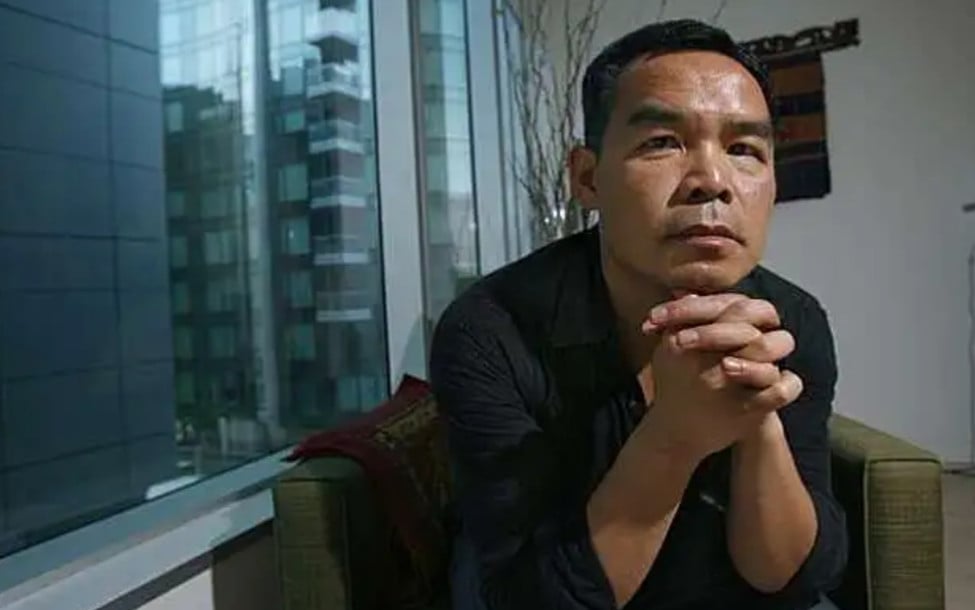
As a writer and commentator, Lam has contributed widely to public conversations about immigration, cultural identity, and the legacy of the Vietnam War. His storytelling—whether in essays, journalism, or film—has helped illuminate the human side of diaspora experiences.
Among his recognitions is a Peabody Award, honoring his work in promoting public understanding through powerful storytelling.
The enduring legacy of the Vietnamese boat people
The story of the Vietnamese boat people is often remembered for the danger of the escape itself. Small boats pushed into open water. Families carrying only what they could hold. The constant uncertainty of whether they would reach land at all.
Yet the deeper legacy of that exodus did not unfold at sea. It unfolded in the decades that followed.
Across the United States and other host countries, refugee families slowly established new lives. Their children grew up learning to navigate new languages, new schools, and new communities that were still figuring out who these newcomers were. From those beginnings emerged soldiers, scientists, physicians, writers, civic leaders, and more.
Their achievements point to something larger than individual success. When resilience meets opportunity, our human potential can expand in creative ways that are difficult to predict when looking only at tragic circumstances.
The fragile boats that once carried frightened families across deep, dark waters illustrate this point. They also carried the beginnings of a generation that would help shape life for the better, far beyond Vietnam’s shores.
One response to “Vietnamese Boat People Stories: From Harrowing Escape to Remarkable Success”
-
I love these stories. They are tales of the amazing strength and resilience of people who endured the worst life has to offer and came out victorious, both personally and professionally. It is both a Vietnamese story and a truly American tale.
For me personally, telling these stories takes me back 40 years to my first job as a newspaper reporter and a series of stories I wrote on boat people who had settled in Northern Virginia. Who knew that years later those children would grow into these most remarkable human beings.


Leave a Reply