
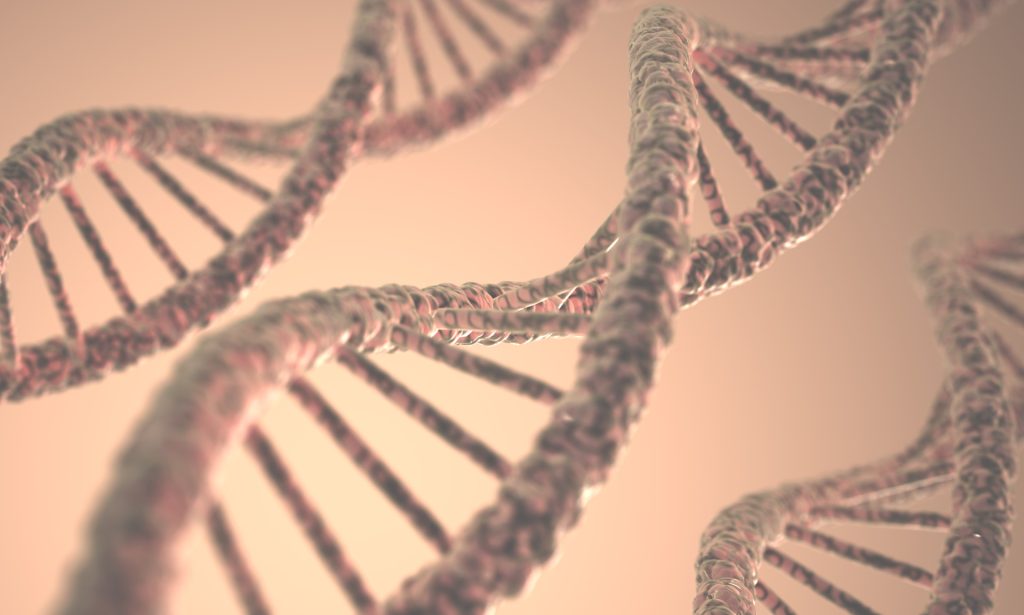

Epigenetics. It’s a big word, but one that’s well worth understanding. Epigenetics is the study of how your cells control your genes and—infinitely more important—how and why which genes in your body “turn on” and which don’t.
This process, known as gene expression, is at the heart of renowned neuroscientist Dr. Joe Dispenza’s work on personal empowerment.

Based on a decade-plus of research, Dispenza has developed techniques that he asserts can influence gene expression.
If true, this is no small feat. Imagine being able to influence which genes express in our lives and which don’t—for example, being able to “turn off” a genetic trait toward a disease that runs in a person’s family.
It’s no secret that our behaviors and our environment, such as what we eat and how active we are physically, play a key role in our health.
Dispenza takes that fundamental understanding to a higher level with his study of forces, often subconscious in nature, that influence our health and well-being, and even our gene expression.
Dispenza’s techniques, based largely on meditation and visualization, have garnered a huge, worldwide following. His seminars fill up within minutes of being announced. Testimonials from participants to the effectiveness of his methods abound.
Before looking more closely at Dispenza’s techniques, we’ll review some basic genetics-related terminology.
What is epigenetics?
Epigenetics is the study of how our behaviors and environment can cause changes that affect the way our genes work. Unlike genetic changes, epigenetic changes are reversible and do not change our DNA sequence, but they can change how our bodies read a DNA sequence.
Today, a wide variety of illnesses, behaviors, and other health indicators already have some level of evidence linking them with epigenetic mechanisms, including cancers of almost all types, cognitive dysfunction, and respiratory, cardiovascular, reproductive, autoimmune, and neurobehavioral illnesses.
What is gene expression?
Gene expression refers to how often or when proteins are created from the instructions within your genes. While genetic changes can alter which protein is made, epigenetic changes affect gene expression to turn genes “on” and “off.”
Imagine your body is like a huge library. This library has thousands of books, and each book contains specific instructions on how to do something. In this case, each book is like a gene in your body. Now, not every book in the library is being read at the same time. Similarly, not every gene in your body is active all the time.
Gene expression is like deciding which book gets read and when. Just like how you might choose to read a cookbook when you want to cook something, your body “reads” (or expresses) certain genes when it needs to do something specific.
For example, some genes are read to make your hair grow, others to help you digest your food, and so on.
The process of gene expression involves two main steps:
- Gene transcription: This is like copying a recipe from a cookbook onto a notepad. In gene expression, it’s where the instructions in a gene are copied onto a molecule called RNA.
- Gene translation: This is like using the recipe you copied to actually cook the dish. In gene expression, the RNA molecule is used to make proteins, which are like the dishes in our analogy. Proteins are crucial because they do most of the work in your cells, like building structures, speeding up chemical reactions, and much more.
In summary, gene expression is how your body reads and uses the instructions in your genes to make proteins, which are essential for just about everything your body does.
Influencing which genes are active in your body
Getting back to the library analogy: You know how, when you’re visiting a library, you have free will to choose which books to read and when to read them?
That’s similar to what Dr. Dispenza is talking about regarding our genes. He believes that through certain practices like meditation, positive thinking, and visualization, you can influence which genes are active in your body.
It’s like a genetic law of attraction: positive emotional changes, especially if these changes reach into our deep habitual and often unconscious mindsets, can “attract” which genes express in our bodies and which don’t.
The mind-body connection
The mind-body connection works through a feedback loop between your body and your mind. The way you feel influences the way you think and vice versa. The mind-body connection is the communication between your thoughts and your feelings.
“There’s a principle in neuroscience that says that nerve cells that fire together wire together,” Dispenza explained in a recent Diary of a CEO podcast. “If you keep thinking the same way, if you keep making the same choices, if you keep doing the same things, if you keep reproducing the same experiences and feeling the same emotions, your biology begins to become hardwired in a sense. It becomes programmed.”
Dispenza says that this biological hardwiring is what your body believes is true and what it reacts to as its reality. He continues:
“So, to arrive at a new vision of your future…you’d have to change the way you think, the way you act, and the way you feel” so that you begin to become conscious of your unconscious thoughts and feelings. “So conscious that you don’t let them slip by your awareness unnoticed or unchecked by you. If you catch yourself speaking in a limited way or you become conscious that you’re behaving in a certain way in a habit, and you can notice or pay attention to how you’re feeling, then you’re no longer the program.”
Instead, “you are consciousness observing the program. You’re only unconscious when you’re in the program. And so to change then is to become so conscious that you don’t go unconscious again.”
“Your body lives in the past,” Dispenza adds. “Your neocortex, your thinking brain, is a reflection of everything you’ve known in the past, it’s a reflection, it’s a record of everything you’ve learned and experienced to this date…To change is to be greater than your body, to be greater than your environment.”
Dispenza’s core empowerment practices
Dr. Dispenza employs an impressive arsenal of techniques in his guidelines for generating epigenetic changes in the body, including:
- Meditation and mindfulness: He emphasizes the importance of meditation as a transformative tool for reprogramming the mind. His meditation techniques are designed to help individuals break free from limiting beliefs, habits, and patterns by accessing a state of deep self-awareness and heightened consciousness.

- Visualization: Visualization is another key component of Dr. Dispenza’s teachings. He encourages people to vividly imagine their desired outcomes, believing that by doing so, they can signal their subconscious minds to manifest those outcomes in reality.
- Neuroplasticity: Dr. Dispenza is a proponent of the idea that the brain is highly adaptable and can be rewired through intentional practices. He teaches individuals how to create new neural pathways that support positive changes in behavior and thought patterns.
- Quantum physics and the law of attraction: Drawing from principles of quantum physics, Dispenza explores how thoughts and emotions can influence one’s reality. He delves into the concept of the law of attraction, suggesting that like attracts like and that individuals can manifest their desires by aligning their thoughts and emotions with their goals.
- Breaking the Habit of Being Yourself: This is the title of one of Dr. Dispenza’s best-known books, where he provides practical guidance on how to break free from the patterns and identities that hold individuals back from achieving their full potential. The book serves as a comprehensive framework for personal transformation.
Dispenza’s personal story
Joe Dispenza’s career path and teachings were significantly influenced by a personal experience he had early in life.
In 1986, he experienced a serious accident during a triathlon event. He was competing in Palm Springs, California, when he was struck by a truck during the biking portion of the race. This accident resulted in multiple fractures of his vertebrae.
The prognosis was not optimistic. He was facing the possibility of paralysis, and conventional medical opinion at the time suggested complicated surgery involving the insertion of Harrington rods in his spine.
However, Dispenza chose a different path. He decided against the surgery and instead focused on the power of thought and visualization to heal his body. He devoted his time to meditation, visualizing his spine healing, and mentally rehearsing the future he wanted to manifest. Remarkably, he recovered and regained full mobility.
This experience was pivotal in shaping his career. It inspired him to delve deeper into the potential of the human mind, leading him to study neuroscience, chiropractic, biology, memory formation, and aging.
His teachings now often focus on the intersection of science and spirituality, emphasizing how a person can use their thoughts and emotions to influence their physical health and life trajectory.
Dispenza’s live events
Dispenza’s sought-after events fall into two main categories: shorter introductory events and more advanced, intensive one-week retreats.
Introductory events
These events are designed as introductions to Dr. Dispenza’s teachings and methodologies. They usually span a day or a weekend and are geared towards newcomers or those interested in exploring his approach to personal transformation.
These sessions often include lectures, guided meditations, and discussions to help participants understand the science behind his methods and how to apply them to affect personal change.
Advanced one-week retreats
These longer, more intensive events are designed for individuals who are already familiar with his work or who have attended the introductory events.

These retreats often include deeper and more prolonged meditation sessions, advanced teachings, and more immersive experiences. They typically also incorporate a blend of neuroscience concepts and the principles of quantum physics.
Participants typically engage in various activities designed to deepen their understanding and practice, such as extended meditations, group activities, and interactive sessions.
Specifics of Dispenza’s teachings and practices
Here’s an overview of specific aspects often emphasized in his teachings and workshops:
- Understanding the brain and neuroplasticity: Dispenza often starts by educating attendees on how the brain works, with emphasis on the concept of neuroplasticity. This is the brain’s ability to reorganize itself by forming new neural connections throughout life. He explains how habitual thoughts and emotions can create neural patterns and how conscious changes in thought can lead to changes in these patterns.
- Meditation practices: A core component of his events is the practice of meditation. Dispenza’s approach to meditation often involves guiding participants through specific processes to achieve a deep state of relaxation and consciousness. These meditations typically focus on the visualization of certain outcomes, such as healing or achieving personal goals, and are designed to help participants create a more desired future.
- Heart coherence techniques: Dispenza incorporates heart coherence techniques, which involve focusing on and regulating the heart rate through breathing exercises and positive emotional states. This practice is based on the idea that heart coherence can lead to more balanced and harmonious states of being, both physically and emotionally.
- Quantum physics principles: Dispenza often integrates concepts from quantum physics into his teachings, particularly the idea that one’s perception of reality can influence actual events. He suggests that by changing one’s thoughts and emotions, it’s possible to influence physical reality.
- Activation of energy centers: Some of his meditations involve the activation and alignment of the body’s energy centers or chakras. This is believed to help in the release of energy stored in these centers, potentially leading to emotional and physical healing.
- Mind-body connection: Throughout his workshops, Dispenza emphasizes the interconnectedness of the mind and body. He teaches techniques for harnessing the power of the mind to create positive changes in the body, often using personal anecdotes and examples to illustrate these concepts.
- Personal empowerment: There’s a significant emphasis on empowering individuals to take control of their thoughts, emotions, and lives. This includes teaching self-awareness and self-regulation techniques.
Skepticism vs. results
It’s important to note that while Dispenza’s ideas are popular among his followers, he is not without his critics. Detractors argue that his claims often lack rigorous scientific evidence and sometimes misinterpret or overstate the findings of legitimate scientific research in epigenetics and neuroplasticity.
However, the volume and the quality of testimonials of major life changes for those who practice Dispenza’s techniques, and the scientific methods he uses to measure results, leave little doubt that they are effective in producing dramatic positive life changes in individuals who rigorously apply them.

Leave a Reply