

For decades in the United States, heart disease has been treated as a condition to manage, not reverse. Medications that lower cholesterol. Invasive surgical procedures that don’t fix the core problem. Consider this one fact. The US, despite having only 5 percent of the world’s population, is where 50 percent of all angioplasties and bypass procedures occur.
Lifestyle changes are encouraged, but usually presented as supportive rather than decisive.
However, a different line of research, focused on heart-healthy diets, challenges this disease management paradigm.
Can diet reverse heart disease naturally?
For decades, Mediterranean-style diets have been promoted as showing benefits for heart health. They have been widely recommended for heart disease prevention.
But one researcher, Dr. Caldwell Esselstyn of the Cleveland Clinic, has taken the understanding of the role of diet to a new level. His work focuses on what it takes to stop, and in some cases reverse, advanced heart disease, simply by what we eat every day.
In clinical work spanning more than three decades, he has followed patients with advanced coronary artery disease who adopted a strict whole-food, plant-based diet with no added oils.
Many subjects had already undergone bypass surgery or angioplasty, only to see symptoms return. Esselstyn reported not just stabilization in patients under this dietary protocol, but in some cases a halt—and even reversal—of disease progression, along with a sharp reduction in cardiac events.
These results are documented in his New York Times bestseller Prevent and Reverse Heart Disease.
Corroborating Evidence: The China Study
While Esselstyn’s work comes from clinical practice, similar patterns show up in population studies.
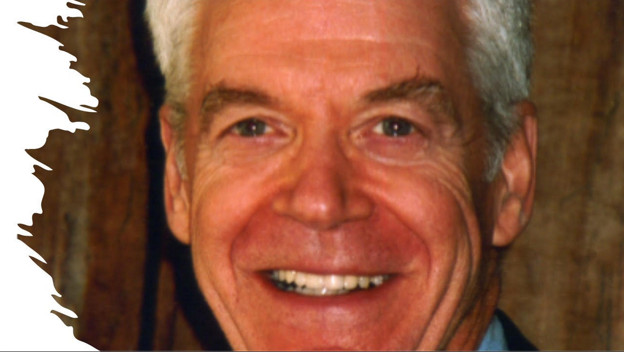
Nutritional biochemist Dr. T. Colin Campbell, a professor emeritus at Cornell University, and his colleagues examined dietary patterns across rural China in what became known as The China Study.
Campbell found that regions consuming predominantly plant-based diets built around grains, vegetables, and legumes with very little added fat or animal protein, showed strikingly low rates of cardiovascular disease. As dietary patterns shifted toward higher fat and animal-based intake, rates of chronic illness, including cardiovascular conditions, rose alongside them.
Although some of the more sweeping claims drawn from the original data have been challenged, Campbell’s China Study findings remain well supported. Diets built predominantly around whole, minimally processed plant foods are consistently associated with better cardiovascular and metabolic health.
Esselstyn’s clinical work with high-risk patients and Campbell’s population-level research in rural China point to the same broad conclusion: diet can influence not just cardiovascular risk, but the biology of the disease itself.
If that is true, it raises a question: what specific kind of diet is capable of producing those outcomes, and how does it differ from more widely recommended approaches like the Mediterranean diet, which emphasizes olive oil and a moderate inclusion of animal foods?
The answers begin with what Dr. Esselstyn has found.
What is the Esselstyn diet for heart disease?
The first thing to acknowledge is how far Esselstyn’s approach departs from the standard American diet.
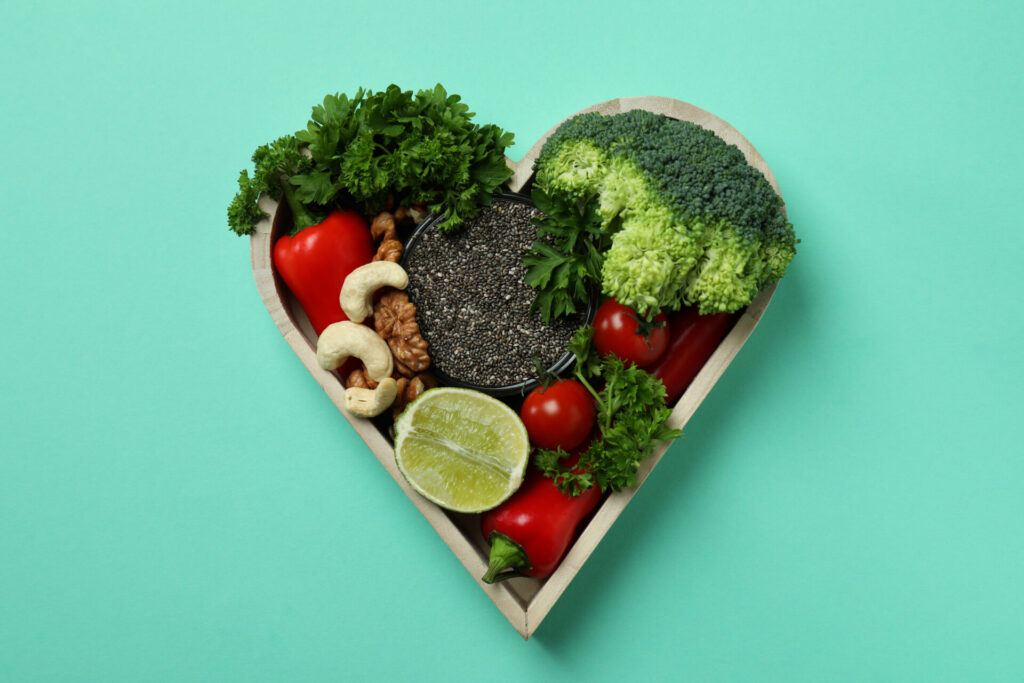
It is a strict whole-food, plant-based diet with no added oils. It consists of a wide range of vegetables, leafy greens, beans and lentils, intact whole grains, and fruits. Meals are simple, but they are dense in nutrients. The emphasis is on foods in their natural form, prepared without added fats.
At the same time, certain categories are removed entirely. That includes meat, dairy, and processed foods, along with all added oils—even those commonly considered healthy.
The goal is establishing a steady pattern that supports the same beneficial biological environment day after day.
For many people, this drastic regimen doesn’t just sound like a change. It sounds like a complete reset of how they’ve eaten for decades.
That reaction is understandable, as food is at the epicenter of habit, culture, convenience, and comfort. Asking someone to eliminate entire categories of familiar foods can feel close to impossible.
But the context matters.
The patients who came under Dr. Esselstyn’s care had severe coronary artery disease. Some had already undergone bypass surgery or angioplasty, only to see their symptoms return. The original 24 men and one woman in the study were running out of conventional options.
In that situation, the question changes. It is no longer, “Is this diet easy to follow?” It becomes, “What severe health outcome am I trying to avoid—and what am I willing to change to avoid it?”
For those facing progressive heart disease, the tradeoff becomes starkly clear. They must weigh the short-term difficulty of changing how they eat against the longer-term reality of invasive procedures, declining quality of life, increased cardiac risk, and ultimately, a shorter healthy lifespan.
What happened when patients followed the diet
In Esselstyn’s patients, the effects showed up over time in measurable ways. The pattern that emerged was consistent. When patients stayed with this way of eating, their health improved. When they didn’t, the disease tended to continue its course.
And this was not a one-time finding.
Follow-up data from Esselstyn’s ongoing work, along with parallel findings from other dietary intervention studies, continued to show that when patients adopt and maintain a whole-food, plant-based pattern, rates of cardiac events can fall dramatically compared to expected outcomes in similar high-risk populations.
That’s why Esselstyn presented the diet not as general nutrition advice or a lifestyle suggestion, but as a clinical tool with a specific purpose in a specific group of patients. That purpose was to change the direction of a serious condition.
Why eliminating oil is central to the Esselstyn protocol
One of the most debated parts of Dr. Esselstyn’s approach is the complete removal of added oils, including olive oil.
At first glance, that can seem extreme, especially given how often olive oil is described as “heart-healthy.”
However, Esselstyn’s reasoning is straightforward. Oil is a concentrated source of fat. When you extract oil from a whole food such as a seed or even an olive, you remove the fiber and much of the original structure, which leaves behind a dense, calorie-rich substance that is easy to overconsume.
His concern centers on the endothelium, the thin layer of cells lining every blood vessel in the body. When the endothelium is healthy, it helps keep blood moving smoothly by releasing nitric oxide. Nitric oxide allows blood vessels to expand, improves circulation, and reduces stress on the arterial walls.
Some research suggests that high-fat meals, especially those rich in extracted oils, can temporarily impair this function. In simple terms, the arteries don’t relax as easily, and blood flow can be reduced.
The issue isn’t just making a major dietary mistake. Rather, it’s the steady drip of small insults to the endothelium that add up over time.
For example, after a high-fat meal—even one made with olive oil—blood fat levels rise for several hours. During that window, the arteries don’t relax as well because nitric oxide production is temporarily reduced.
On its own, that effect is short-lived. But when it happens multiple times a day, day after day, the arteries spend much of their time in a slightly impaired state. Over time, those small hits can contribute to ongoing damage.
From Esselstyn’s perspective, if the goal is to repair damaged arteries, then even small, repeated impairments to endothelial function are worth avoiding. That’s why his diet removes all added fats, even those widely considered healthy.

Whole plant foods, on the other hand, appear to support a healthy endothelium. Leafy greens in particular are rich in compounds that the body can convert into nitric oxide. Over time, this can help restore more normal vessel function.
So, the goal of plant food consumption isn’t just to eat fewer calories or lose weight. It’s to deliver more of the compounds the body uses to repair and maintain itself.
That shift to nutrient-focused eating matters more than it may sound at first. The fundamental question becomes, “What is this food doing inside my body?”
How arteries get damaged over time
Esselstyn’s protocol is a targeted intervention designed to change the conditions inside the arteries that allow plaque to form and build up. Plaque is a fatty, cholesterol-rich substance that accumulates along artery walls over time, narrowing blood flow and increasing the risk of heart attacks.
So, what substances damage the arteries?
One of the most important is LDL cholesterol, often called “bad cholesterol.” More specifically, a particle called ApoB carries LDL through the bloodstream and plays a direct role in plaque formation.
When levels of these particles are high, they can enter the artery wall, become trapped, and begin the process that leads to buildup.
Lowering LDL and ApoB to very low levels reduces the raw material available for plaque to form in the first place.
That’s one reason plant-based diets can have such a strong effect. By removing animal products and added fats, they tend to lower LDL significantly—often more than standard dietary patterns.
Inflammation is another piece of the puzzle.
Chronic, low-grade inflammation contributes to the progression of atherosclerosis—the process of narrowing and hardening of the arteries. Whole plant foods, rich in fiber, antioxidants, and phytonutrients, are associated with lower levels of this kind of inflammation.
Taken together, these changes begin to shift the environment inside the arteries toward better endothelial function, lower LDL and ApoB, and less inflammation.
Instead of creating conditions that allow plaque to increase, the body is given a chance to stabilize what’s already there—and in some cases, begin to reverse it.
In short, Esselstyn’s results point to the importance of not just one isolated change, but multiple systems moving in sync at the same time.
Documented cases of plaque stabilization and reversal
Esselstyn’s work is often described in terms of theory, but it began with patients who had already run out of conventional options. These were people whose disease was progressing.
When they adopted the diet and stayed with it, a different pattern began to show up.
Episodes of angina, the chest pain caused by reduced blood flow to the heart, often decreased or disappeared. Patients who had been limited in how far they could walk or exert themselves began to regain capacity. In follow-up imaging, some showed improved blood flow through arteries that had previously been narrowed.

In some patients, angiograms documented something more striking. Areas of plaque that had been visible earlier appeared reduced over time, which suggested a partial reversal of the disease.
In contrast, the patients who did not stick with the diet tended to continue along the expected path of the disease, with ongoing symptoms or additional cardiac events.
This is what makes the findings stand out. These changes were not observed in a general population making modest adjustments. They were seen in patients with advanced disease who followed a specific diet.
That’s the takeaway from Esselstyn’s results. It is not a theoretical model, but rather a set of clinical observations showing that, under certain conditions, heart disease can be reversed.
The importance of a heart-healthy diet
Looking across the evidence, a consistent pattern emerges.
In clinical settings, patients with advanced heart disease have shown measurable improvements—and in some cases, signs of reversal—when following a strict plant-based, no-oil diet.
The underlying logic is straightforward: improve blood flow, lower the particles that help drive plaque buildup, and reduce inflammation; then the internal environment of the arteries begins to change.
It’s not a single factor but coordinated changes across multiple systems—blood flow, lipid levels, and inflammation—all moving in a healthier direction at the same time.
For those facing heart disease, that offers an extraordinarily hopeful alternative to “managing” their conditions with drugs and surgical interventions that do not reverse anything. That possibility is to slow, stop, and in some cases reverse advanced heart disease through a disciplined change in eating. Food for thought!

Leave a Reply