


The reach of the Great Firewall of China becomes clear the moment Chinese citizens encounter its invisible tentacles, even in the most ordinary parts of their day.
Between stops, a commuter on a packed Shanghai subway tries to open a foreign news site on her phone. The page loads halfway, hangs, and then dissolves into a blank screen.

Across town, a university student types “June 4” into her search bar. It is the date of the 1989 Tiananmen Square crackdown. For a few seconds, the results begin to load, then collapse into a row of uniform links, each one offering only the state’s preferred framing of that seminal event in modern Chinese history.
In a small café tucked behind an office tower, a father leans over a flickering Virtual Private Network (VPN) connection. He sends a message abroad and watches the spinning wheel icon while hoping the attempt doesn’t trigger new scrutiny.
These moments look like glitches, but they aren’t accidental. They are the daily contours of life inside one of the world’s most sophisticated systems of digital control.
Echoes of an older wall
Centuries ago, China built the Great Wall to guard its borders from northern invasions, most famously the Mongol armies. It was a physical barrier meant to keep dangers out.
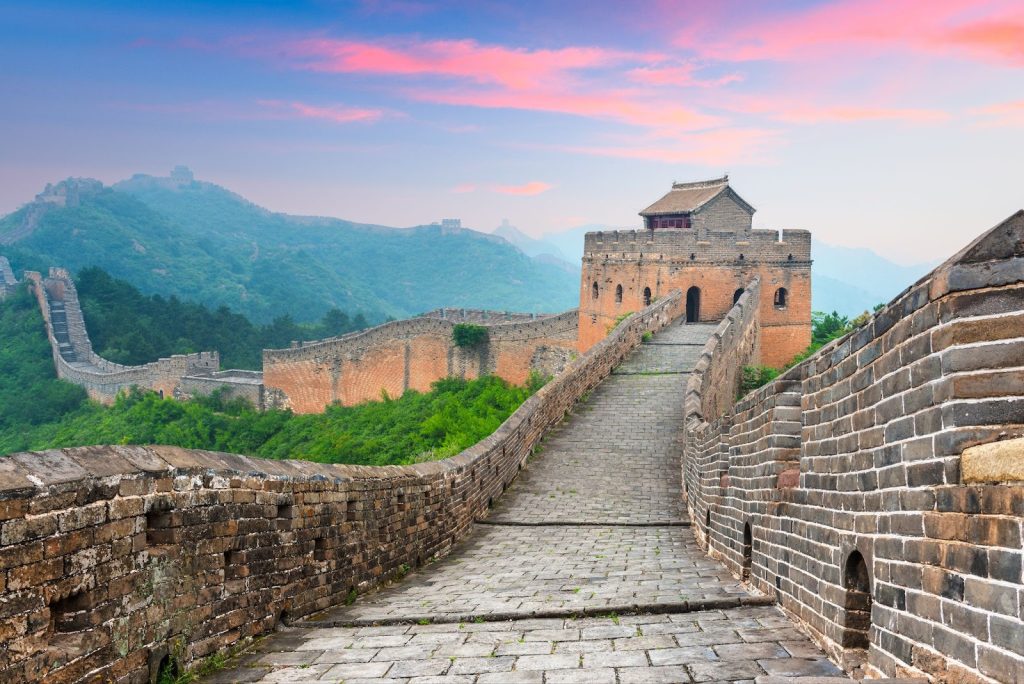
Today, China’s Great Firewall attempts to control much more than the original Great Wall ever did. This online “wall” shapes what information flows into and out of China, and what never flows at all.
The name itself carries the echo of that old fortress, but its function has expanded into all facets of Chinese life. Where stone once defended territory, digital controls now define the boundaries of thought itself.
Understanding the Great Firewall system means looking at both its technology and the accompanying machinery of surveillance, including social-credit-style government monitoring, that dictates how people communicate online.
But in between those layers sits a hope-filled truth: despite the vast reach of the system, people continue to find ways to share information, connect with each other online, and push for digital freedom.
How the Great Firewall shapes daily life in China
For most people in China, the Great Firewall isn’t a single barrier they encounter once in a while. Rather, it is a pervasive system that determines what loads instantly on the internet, what disappears, and what never appears at all.
Foreign news sites, global social platforms, and many messaging apps remain beyond the reach of Chinese citizens unless they turn to VPNs or other bypass tools designed to access blocked websites. Even then, connections drop in and out. A site may load one moment and vanish the next, replaced by a generic error page or a redirected link.
Search platforms inside China, from Baidu to Weibo, reinforce those boundaries. Sensitive terms yield “harmonized” results, which are pages that present a narrow set of approved explanations or omit entire topics altogether.
Over time, this narrowing of information horizons becomes almost invisible. This is especially true for users who grew up seeing only these curated versions of the world.
People adapt to these forms of censorship in creative ways. They use homophones, swapped characters, visual metaphors, or coded references to discuss events that would otherwise get flagged.
The use of humor and homophones as a secret language of resistance
Born out of that creativity are phrases and playful substitutions, including homophones (similar-sounding words with different meanings), that make it possible for people talk around restricted topics without triggering government-imposed filters. Here are a few of those:
河蟹 (héxiè) – “river crab”
- Homophone for 和谐 (héxié), “harmony,” the official euphemism used by authorities when content is censored (“harmonized”).
- Used as a playful way to talk about censorship itself.
草泥马 (cǎo ní mǎ) – “grass-mud horse”
- Homophone for 操你妈, a vulgar insult.
- Used as a symbolic creature representing resistance to censorship.
- Meaning: Not used for hiding messages in email, but became a cultural emblem of defiance.
敏感瓷 (mǐngǎn cí) – “sensitive porcelain”
- Homophone for 敏感词 (mǐngǎn cí), “sensitive words.”
- Used as a humorous oblique reference to banned topics.
翻墙 (fān qiáng) – “climb the wall”
- An important euphemism.
- Refers to circumventing the Great Firewall.
- Alternative coded forms included puns like “科学上网” (science-based internet use).
五月三十五日 – “May 35th”
- A date substitution.
- Used to refer indirectly to June 4th (Tiananmen Square protest and massacre).
- Shows how numbers are used to evade automated filters.
包子 (bāozi) – “steamed bun”
- Near-homophonic/visual nickname that was widely used online to refer indirectly to a political figure without naming him.
- Used in memes and metaphorical critique.
撸串 (lū chuàn) – “eat skewers”
- A playful substitution used in some forums because the pronunciation mimics slang referencing “sharing sensitive information,” chosen to lighten or obscure the topic.
How subtle reminders of control shape daily digital life
Yet, even with all this linguistic creativity, the clearest reminders of censorship often surface in far more mundane moments.
Screenshots of foreign reporting circulate quietly through group chats before automated filters remove them. Entire online conversations unfold in shaded layers of suggestion and shared understanding, never naming the subject outright.
Emotionally, the effect is cumulative. Many describe a mix of caution and fatigue, byproducts of the constant calculation of what is safe to say and how to say it. Others describe a kind of creativity that emerges under pressure, a steady pattern of inventing new phrases or symbols to slip meaning past the censorship filters.
As a Time newsfeed noted, the “grass-mud horse” metaphor became a popular “special lingo to evade and make fun of government censorship.” Moreover, during sensitive dates and events, people still find inventive workarounds. As a Vice article put it, “Every time, the citizens will find some way to express their view, to represent June 4 in a subtle way that the machines cannot catch.”
Even this creativity, though, reveals the weight of the system: communication is shaped not only by what people want to express but by what they must avoid. These are the lived realities that make China’s Great Firewall feel less like a wall and more like an atmosphere that is always present, and always shaping the space in which people operate.
Why the Great Firewall was built and how it works
Blocked news sites and restricted search results come from a multilayered system designed to control what reaches China from the global internet.
At its core, the Great Firewall uses network-level controls to intercept traffic before it appears on a screen. DNS tampering redirects or blocks certain domains. Keyword filtering identifies and drops connections containing politically sensitive terms. IP blocking prevents entire platforms, from Facebook and Instagram to WhatsApp and major news outlets, from loading at all.
Deep packet inspection (DPI) adds another layer of control. This monitoring tool doesn’t just see where internet traffic is going. It actually looks inside the data as it travels. By examining these “packets” of data in real time, DPI can spot patterns that suggest a user is trying to hide their activity through a VPN or encrypted tunnel.
When the system sees something it doesn’t like, it can immediately react by slowing the connection, interrupting it, or shutting it down altogether. These controls tighten during sensitive times, such as anniversaries, protests, and crises.
The agencies behind China’s online control system
Behind the technology is the Cyberspace Administration of China (CAC), supported by the Ministry of Public Security and other agencies. Together, they regulate content, monitor online behavior, and enforce compliance across private platforms.
The Firewall’s purpose extends beyond blocking websites. It exists to maintain the narrative discipline and ideological conformity imposed by the Chinese Community Party (CCP). It does that by shaping what information enters the country and how quickly unwanted content is quarantined and removed.
Its daily effects are clear: narrowed search results and uniform explanations. But this level of control generates an unintended side effect: the inventive workarounds people come up with to communicate in a meaningful way without triggering government filters.
Surveillance, real-name rules, and social credit pressures
The Great Firewall manages what enters China from the global internet, but the internal layer of surveillance shapes what people say, share, and search once they are inside the country’s digital environment. This layer is less obvious but more pervasive, as it’s woven directly into the tools people rely on every day.
Nearly every digital interaction in China begins with some form of real-name registration. SIM cards require a national ID. Messaging apps require a verified phone number. Mobile payment systems, which dominate daily commerce, link directly to personal identities. This identity-first design means the state rarely has to ask who is behind an account because the system already knows.
Where everyday clicks turn into risk signals
Because of this, everyday digital behavior influences someone’s risk profile. What people post, the groups they join, the articles they read, and the messages they forward become part of a data trail that can raise or lower a user’s online standing in subtle ways. A flagged post may not lead to a knock on the door, but it can result in account warnings or increased scrutiny across platforms.
These signals can also feed into social-credit–related blacklists, which influence far more than online privileges. People who trigger certain rules may find themselves restricted from booking flights or high-speed trains, applying for loans, or accessing certain digital services.
The penalties vary by province and system, but the bottom line is that online behavior can reshape life offline.
This explains why self-censorship in China is so widespread. The fear is not just that a message will be blocked but that it will be traced, logged, and interpreted.
Many users avoid sensitive topics altogether, switch to oblique phrasing, or move conversations offline. The risk of potential consequences, rather than any explicit warning, is often enough to quiet a discussion before it begins.
Platforms like WeChat sit at the center of this environment. For hundreds of millions of Chinese, WeChat is a messaging tool, a payment wallet, a news source, and a family scrapbook. But it is also one of the country’s most sophisticated monitoring hubs.
Public WeChat posts can be filtered or removed, group chats can be scanned for specific topics, and private messages can be restricted or flagged if they contain certain keywords or images. Ironically, the more integrated and popular a platform becomes in daily life, the more effective it is as a channel for monitoring speech.
These internal systems create a social and psychological censorship framework that reinforces the Great Firewall from within. This shapes behavior not through force alone, but through identity, data, and the constant sense of being watched.
Cyber police, AI censors, and the bureaucratic machinery
The Great Firewall and China’s internal surveillance systems do not operate on automation alone. Behind the technical architecture sits a vast network of human watchers, AI content filters, and regulatory agencies that ensure the system runs continuously and in alignment with political priorities.
Across the country, dedicated units known informally as cyber police monitor online activity at scale. They review posts, trace discussions, and intervene when conversations begin to drift into sensitive territory. In some cases, officers join group chats under anonymous profiles to track trending topics, warn participants, or identify the origin of a post that begins to circulate widely.
Much of this work is powered by AI-driven content moderation. AI models scan text, images, and videos for banned keywords, political symbols, coded references, or even sentiments that suggest emerging controversies.
These systems constantly adjust to new slang, new metaphors, and new strategies people use to evade detection. When the AI models flag questionable content, the human cyber police step in—often within minutes.
Let’s say a WeChat user in Shenzhen posts a short, seemingly harmless line during a national economic slowdown: “The river crab feels busy today.” It’s an old in-joke—a nod to héxiè (river crab), the homophone for “harmony,” which is the government’s euphemism for censorship.
Within a minute, the post vanishes from the group feed. Then a notification appears, saying the message had violated platform rules. A few minutes later, a moderator privately messages the group’s administrator and asks her to “maintain order.” He reminds her that discussions should “align with community guidelines.”
No explicit keywords were used. No banned event was named. The filters likely caught the appearance of a known metaphor linked to sensitive commentary, and escalated it to a human reviewer.
To everyone in the group, the sequence felt almost instantaneous. The joke appeared, flickered out of sight, and was replaced by the digital equivalent of a warning glance.
The moment passes quickly, but the effect lingers. People stop posting for a while. A few switch to generic emojis. Others move the conversation to a smaller, private thread. And by the next day, a new substitute phrase for “river crab” begins circulating—evidence of how the language evolves constantly under pressure.
How control is sustained through pressure and repetition
China’s propaganda bureaus then fill the censored space by steering news portals, trending lists, and platform algorithms toward their preferred narratives. Suppression and amplification work in tandem to control what the public sees and thinks.
In China, private companies also play a role. Each must maintain its own moderation teams, remove flagged posts, and report violations. The penalties for falling short include investigations, fines, or lost licenses, which push firms to sometimes enforce rules even more strictly than what the state demands.
For users,the consequences vary. Some face deleted posts or temporary bans. Others receive warnings or the occasional “tea invitation,” an in-person meeting meant to correct behavior. In more serious cases, people may be detained or placed under a tighter digital watch.
Together, the AI filters, cyber police, propaganda bureaus, and platform compliance form the upper architecture of the system. They keep the boundaries of online expression firm and highly responsive, even as new forms of resistance continue to emerge.
The push for freedom: the tools, the networks, and the global support behind them
Imagine this. Late one evening in Chengdu, a university student named Mei sits in her dorm scrolling through a chat group where classmates share study materials and jokes. Someone posts a link. It is nothing more than a line of text and a tiny, unfamiliar domain. Mei taps it.
For a brief moment, the page loads. A foreign news article appears discussing a protest she’s only heard rumors about. Two seconds later, the screen blinks and the story is replaced with an error message. Her WeChat app flashes a “content not available” notice.
But Mei has already taken a screenshot.

Within minutes, the screenshot is circulated through smaller side groups, sometimes with no commentary at all. Just the image. A classmate adds a coded phrase, such as “the window opened again tonight.” It echoes the slang students use when information slips through.
By morning, the link was gone from every feed, but the screenshot is still outside the censors’ reach, passed from person to person. It is a tiny breach in the Great Firewall of China.
To Mei, it isn’t just a news story. Rather, it’s proof that the Chinese government’s firewall isn’t unscalable, and that truth can still find its way over it.
As illustrated by Mei’s story, the desire to communicate freely does not disappear, even in one of the world’s most controlled digital environments. It adapts. It shifts shape. And this resistance continues to circulate through tools, communities, and small, persistent acts that push back against the Great Firewall’s limits.
What’s working now—and what could open the future
For many Chinese internet users, the first line of resistance is technological. VPNs remain the most familiar option. They offer encrypted tunnels into the uncensored world. Connections still drop, servers get blocked, and speeds fluctuate. However, even partial access can be enough to reach a foreign news story, download an academic paper, or stay in contact with family abroad.
How homegrown tools outsmart the Firewall’s pattern detectors
Shadowsocks and V2Ray sit at the heart of the more advanced anti-censorship tactics used in China. Both tools began as open-source software created by independent developers, and both work by making blocked traffic look ordinary.
Shadowsocks is a proxy tool that disguises internet requests inside encrypted connections. V2Ray takes the idea further. The tool offers multiple layers and protocols that shift shape to avoid deep-packet inspection, which is the AI system the Firewall uses to detect suspicious traffic.
Neither tool is a single app or website. Instead, they’re engines that power dozens of different clients, many shared privately as links, QR codes, or preconfigured apps.
People learn about them through trusted circles such as classmates, colleagues, or friends living abroad. Or they discover them through open-source repositories like GitHub that remain partly accessible inside China.
Users just have to install a small app, scan a setup code, and tap “connect.” The simplicity is the point: these tools evolve constantly, but using them remains surprisingly ordinary.
How global privacy tools slip through the cracks
Beyond homegrown methods, some users rely on tools built for a broader fight for internet freedom. Tor and Psiphon are two of the most widely known.
Tor routes traffic through a volunteer-run network of relays around the world. This makes it difficult for observers to trace who is visiting what. Its “onion” layers of encryption slow connections but offer stronger anonymity, which is prized by journalists, researchers, and activists who need a deeper shield.
China blocks much of the Tor network, but users still connect through bridges and pluggable transports that change frequently enough to keep access alive.
Psiphon takes a different approach. It blends multiple circumvention techniques such as VPN, SSH, and proxy technologies, and automatically switches between them when the Firewall blocks one path. This makes it a favorite tool during sudden outages or political flashpoints, when censors tighten controls with little warning.
Both tools are supported by global nonprofits and research teams that update their systems and distribute new access points whenever old ones are blocked. Their continued availability reflects a simple reality: the Great Firewall is powerful, but it must constantly react to the tools built outside it.
Alongside these types of technologies, people-powered networks play an equally vital role. Citizen journalists document local events before censors can react. Students swap taboo information through coded language that shifts faster than filters can track. Global communities quietly send news articles, eyewitness videos, and historical accounts into private Chinese chat groups.
The global ecosystem that supports digital freedom
Outside China, an entire constellation of organizations works to support these efforts.
- Freedom House reports on censorship trends and highlights where digital rights are under the greatest pressure.
- Citizen Lab maps filtering patterns and uncovers how new blocks and surveillance mechanisms are deployed.
- Human Rights Watch documents how censorship shapes daily life, education, and generational identity.
- Think tanks, such as Chatham House, analyze how speech restrictions intersect with governance, real-name rules, and emerging social credit practices.
- Nonprofits dedicated to Internet freedom maintain open-source tools, publish block lists, and develop safer communication technologies.
Individually, these efforts do not dismantle the Great Firewall. But they create openings. A blocked keyword resurfaces. A suppressed video ripples through a private group. A student reads a foreign article for the first time in his life. Each breach, no matter how small, imperfect, or fleeting, matters in the fight for freedom of communication.
These everyday acts of defiance keep the possibility of openness alive. They demonstrate that even the strongest wall cannot extinguish the insatiable human drive to speak freely, to connect, to learn, and to be heard.

Leave a Reply