

In this unprecedented era of technological acceleration, we find ourselves in the company of machines that can write sonnets, compose symphonies, and generate lifelike portraits in seconds.
Generative AI (AI tools that create original content) is here, and it’s evolving at warp speed. It is reshaping the creative landscape in ways both exhilarating and unsettling.
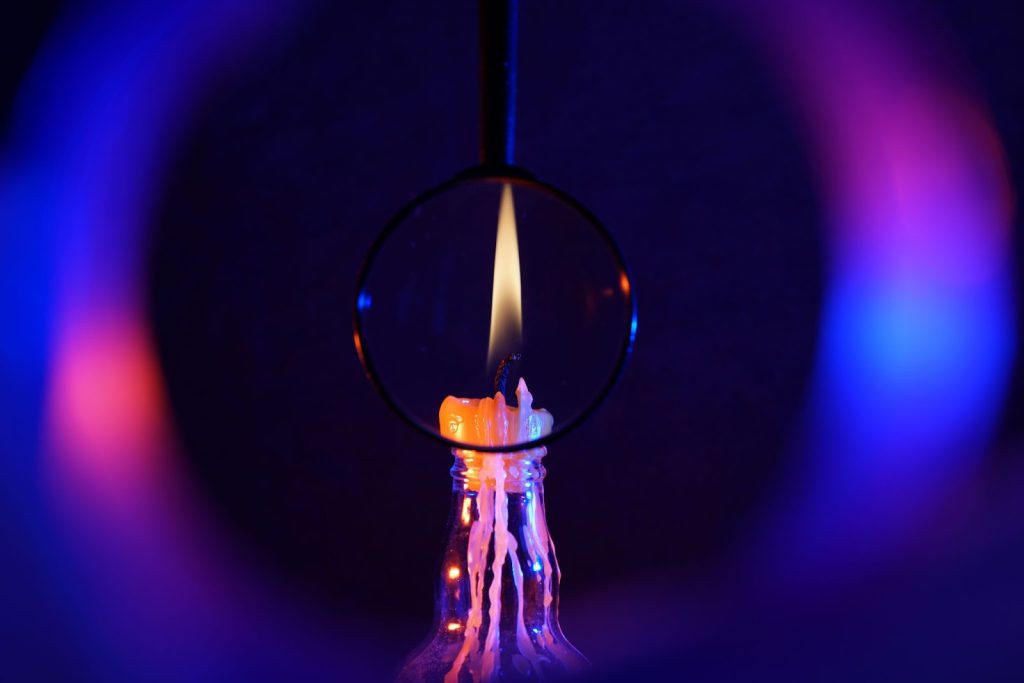
As these tools grow more powerful and pervasive every day, we’re faced with a defining question: How do we preserve the flame of human creativity in an age when machines can imitate just about everything we do?
Creativity in the crosswinds
This new wave of machine-generated expression is unlocking extraordinary potential: skills and abilities once the rare domain of elite creatives or trained professionals are now accessible to anyone with an internet connection.
Yet, these new possibilities raise a disquieting question: What will happen to human creativity?
At the heart of this question lies a paradox. Generative AI is both a magnifier of human potential and a potential destroyer of our own creative flame.
Will we use these tools to amplify the uniquely human aspects of ourselves—our vision, our values, our voice—or risk letting that spark grow dim in the shadows of convenience and automation?
If we don’t pause to ask the right questions now, we may find ourselves outsourcing not just labor or logic, but imagination as well—and with it, a deeper, creative dimension of ourselves that defines what it means to be human.
What is human creativity, really?
Before we can protect or preserve creativity, we have to understand what it truly is. Human creativity isn’t just about novelty or productivity—it’s something far more mysterious and layered.
It’s the ability to make meaning where there was none. To feel an insight before it’s fully formed. To combine memory, emotion, experience, and intuition in a way that births something original.
Whether it’s a child drawing in crayon, a chef inventing a new recipe, or a choreographer interpreting silence, there’s often no formula—just a felt sense, a leap, a flame.
Creativity, at its core, is inseparable from intent. It carries a purpose, a perspective, a point of view. It’s also deeply entwined with risk: the risk of failure, of being misunderstood, of daring to say something no one has said before.
Algorithms don’t take risks. They don’t feel nervous or brave. They don’t suffer from creative blocks, nor do they experience joy when an idea finally lands after hours of uncertainty. This doesn’t mean AI-generated content lacks utility or beauty—but it does lack context born of human life.
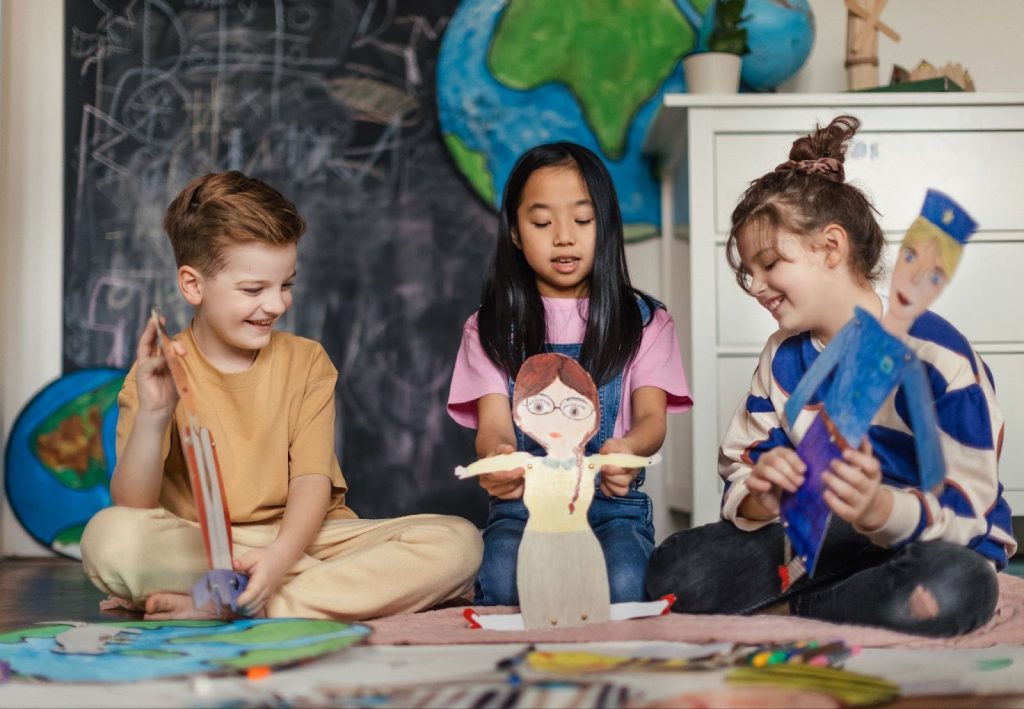
The difference lies not just in what’s produced, but in how and why.
A generative model like ChatGPT or Midjourney learns from vast datasets and statistically reassembles patterns. It can simulate creativity—mimicking tone, style, or structure—but it does not create in the way a human does, from memory, desire, or moral insight. It doesn’t know what it’s saying, even when it says it eloquently.
So, can AI be considered creative? It depends on how we define the term. If creativity is merely novel output, then yes, AI qualifies. But if it’s something messier, more soulful—rooted in choice, emotion, and intuition—then the answer becomes more nuanced.
AI might be a stunning mimic, but the fire that forges meaning still belongs to us.
The question now is: will we tend that fire, or let it go out? To answer that, let’s first look back—because the past holds not just memories, but lessons for our time.
Lessons from the past
We are not the first generation to stand at the edge of a creative frontier. History offers us a powerful mirror—and guidance, if we know where to look. It doesn’t just record what happened in the past; it helps us see ourselves more clearly.
In earlier revolutions—like the invention of the printing press or the rise of photography—we find familiar patterns of disruption, resistance, innovation, and renewal.
The tools may change, but the human experience of grappling with transformation remains remarkably consistent. By studying these moments, we gain more than knowledge. We gain orientation. We see that creativity not only survives great upheavals; it often evolves and emerges stronger than before.
The printing press: a world transformed
When Johannes Gutenberg introduced the movable-type printing press in the 15th century, it shattered the barriers to written knowledge.
Books, once painstakingly copied by hand and accessible only to the privileged few, could now be printed quickly and affordably. Scribes, once the gatekeepers of books and learning, feared for their livelihoods. Some scholars worried that the flood of printed material would cheapen education itself. Yet the shift proved hugely transformative.
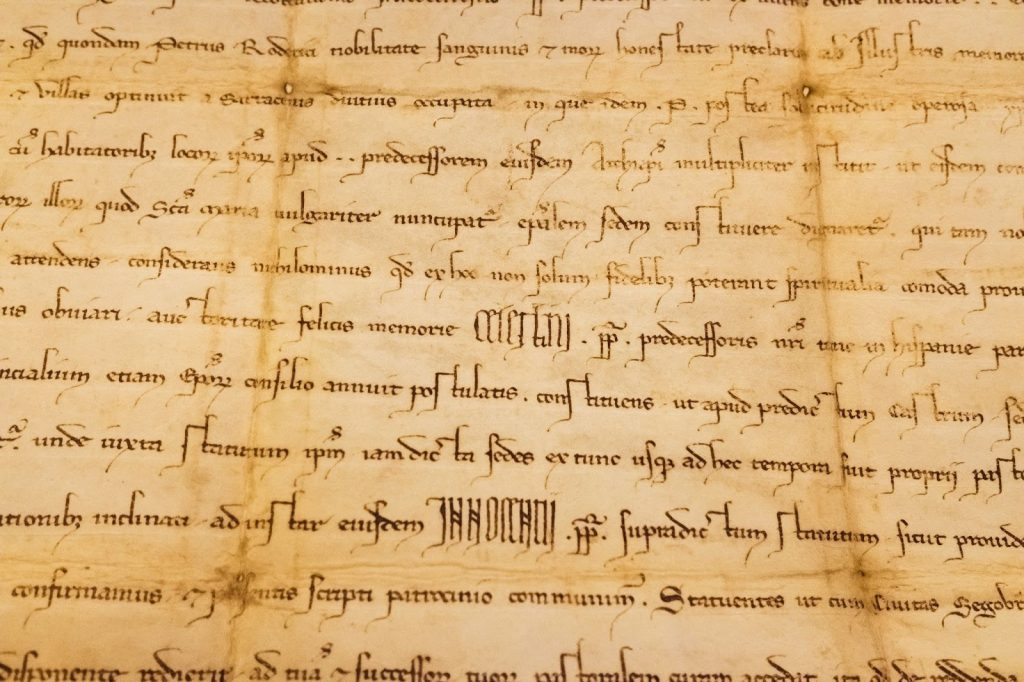
Humanity gained tools it had never possessed on such a scale: printed books that democratized access to knowledge, pamphlets that carried revolutionary arguments across regions, and scholarly works that fueled cross-border dialogue. Reading, once a rare privilege, began to change entire societies.
For the first time, ordinary citizens could engage directly with the ideas shaping their world, question old structures, and take part in movements that redefined art, science, politics, and faith.
Perhaps most profoundly, the printing press planted the seeds of a shared, evolving body of knowledge—an interconnected web of thought that continues to expand to this day.
The rise of photography: a new challenge to art
When photography first appeared in the early 19th century, it was met with both awe and unease. Many artists feared it would reduce the artist’s painstaking skill to a mechanical process. Some critics dismissed photography as a mere technical craft, unworthy of being considered true art.
Meanwhile, the public was fascinated by this new ability to capture life with such realism and speed—something which no painter, no matter how talented, could replicate.
Because photography blurred the lines between documentation and creation, it forced a reevaluation of what it meant to capture beauty, truth, and emotion.
While traditional artists wrestled with its implications, a new generation of photographers began to push the medium beyond simply chronicling reality to exploring mood, composition, and even storytelling through the lens.
In time, photography claimed its place as both a record of the world and a profound new avenue for human expression.
More recently, the rise of digital art and computer graphics in the late 20th century again stirred debates about authenticity, craft, and creativity. Yet today, few question that these digital tools have expanded the boundaries of creative possibility rather than contracting them.
A pattern of action and reaction in innovative times
In each of these past revolutions, the same pattern emerges:
- New tools initially threaten old forms of expression.
- Fear and skepticism follow.
- Then, over time, human creativity adapts—not by imitating the machines we created, but by exploring new frontiers that these machines help reveal.
Today’s generative AI represents another such inflection point. It challenges us, as every great shift has, to rethink what is essential to creativity.
History shows that those who thrive in such moments are not the ones who resist change outright, nor the ones who surrender their craft to machines, but those who find ways to partner with new technologies without losing the soul of their work.
The partnership model: AI as a creative companion
If we are to guard the flame of human creativity in the AI age, we must shift our mindset: from rivalry to partnership.
Rather than viewing AI as a competitor that seeks to replace human expression, we can begin to see it as a collaborator—one that offers new perspectives, expands our reach, and frees us from some of the mechanical burdens of creation.
The question is not whether AI will shape the creative process—it already is—but how we can shape our relationship with AI in ways that keep human vision at the center.
Imagine an artist using an AI model to quickly generate dozens of concept sketches, then choosing one to refine by hand, imbuing it with intentionality and emotion.
Picture a novelist using a language model to brainstorm plot twists, but trusting her own instincts to select the ones that align with her story’s heart.
Think of a composer experimenting with AI-generated melodies but weaving them into a larger piece that only human intuition could orchestrate.
This is the partnership model: using AI as a tool to spark ideas, break creative blocks, or offer new angles—but never as a substitute for judgment, taste, or original intent.
A healthy, human-centered workflow that recognizes that while machines can suggest, only humans can choose meaningfully. It means using AI not to shortcut the creative journey, but to enrich it, quickening the imagination without outsourcing the soul of the work.

Yes, generative AI can help carry the load. But the vision, the choices, and the final word must remain ours. When used wisely, AI becomes not a rival, but a reminder that creativity is not just about making things—it’s about making meaning.
And that is something no machine, no matter how sophisticated, can truly do for us.
The sacred thread behind every creative act
True creativity is a conversation between the inner and outer worlds, between our longing for beauty, meaning, and transcendence, and the raw material of life itself. When we create, we do not just assemble information; we offer something personal, vulnerable, and alive. It is an act of giving—a reflection of the divine spark within.
Thus, the stakes of this technological moment are not merely practical. They are existential.
Will we nurture a future where creative expression continues to be a sacred bridge between human beings—and between humanity and something greater—or will we allow it to be reduced to an endless churn of synthetic noise?
Preserving the soul of creativity requires vigilance, humility, and above all, love: love for truth, for the awesome variety of the creation, and for the mystery of human potential that no machine can fully replicate.
Education for a creative future
If creativity is to remain a vital force in human life, we must not only protect its meaning; we must actively pass it on. We must rethink both how we create and how we teach.
Education must evolve beyond training students to master technical skills alone. In an AI-rich world, the greatest advantage will not belong to those who can generate the most content the fastest, but to those who can create with authenticity, discernment, and emotional resonance.
This means prioritizing critical thinking by teaching students to question sources, challenge assumptions, and evaluate outputs with both the intellect and the intuition. It means cultivating emotional intelligence: the ability to empathize, to feel deeply, and to understand the human experience behind every story, every artwork, every invention.
Critical thinking and emotional wisdom: new pillars of learning
Technical proficiency will still matter, of course. Understanding how AI tools work and how to use them skillfully and ethically must become a foundational part of creative education. But it must not eclipse the deeper work: inspiring curiosity, nurturing originality, and strengthening the inner compass that guides true creative expression.
Imagine classrooms where students not only learn to prompt AI models, but also grapple with the ethical questions they raise. Where young creators are encouraged not just to produce, but to pause and ask themselves: Why am I making this? What truth am I trying to share? Whose story am I amplifying, and whose might I be overlooking?
We must also encourage play. Playfulness—the willingness to experiment without fear of failure—is essential to human creativity and will remain so, even as machines grow more capable.
Above all, we must remind the next generation that while tools will change, the source of creativity remains the same: their own minds, hearts, and spirits.
The future will be open to those who understand that creativity is not about keeping pace with machines—but about daring to imagine worlds that machines, for all their data and speed, could never conceive of.

Philosophical reflections
At the deepest level, this moment of technological acceleration offers a mirror—not just to our abilities, but to our essence.
It asks us: What is the human spirit, really? What is the creative impulse that stirs within us? Is it merely a clever recombination of patterns, or something far more mysterious—a living current that draws from wells deeper than intellect alone?
There is a temptation, as machines become more capable, to see creativity as a process that can be endlessly augmented, optimized, and replicated. But if we look more closely, we recognize that true creativity often defies logic. It arrives as a whisper, a flash, a force that transcends the sum of its parts.
At its apex, creativity touches the divine: that invisible thread that links us to each other, to life itself, and to the great mystery of existence. It is the spark that allows us not just to reflect the world as it is, but to dream of what could be.
In short, our task is not to keep pace with artificial production, however impressive it may be. It is to stay rooted in the living soul of creation—to remember that we are not merely users of tools, but vessels of something sacred that no machine can ever fully know.

Leave a Reply