

Are the days of capitalism numbered? Perhaps not quite yet. But there are signs that point in that direction.
Global business is changing rapidly. In the past, success was measured primarily by profit and quarterly performance. Today, more companies are paying closer attention to how their products are made and how their workers are treated.
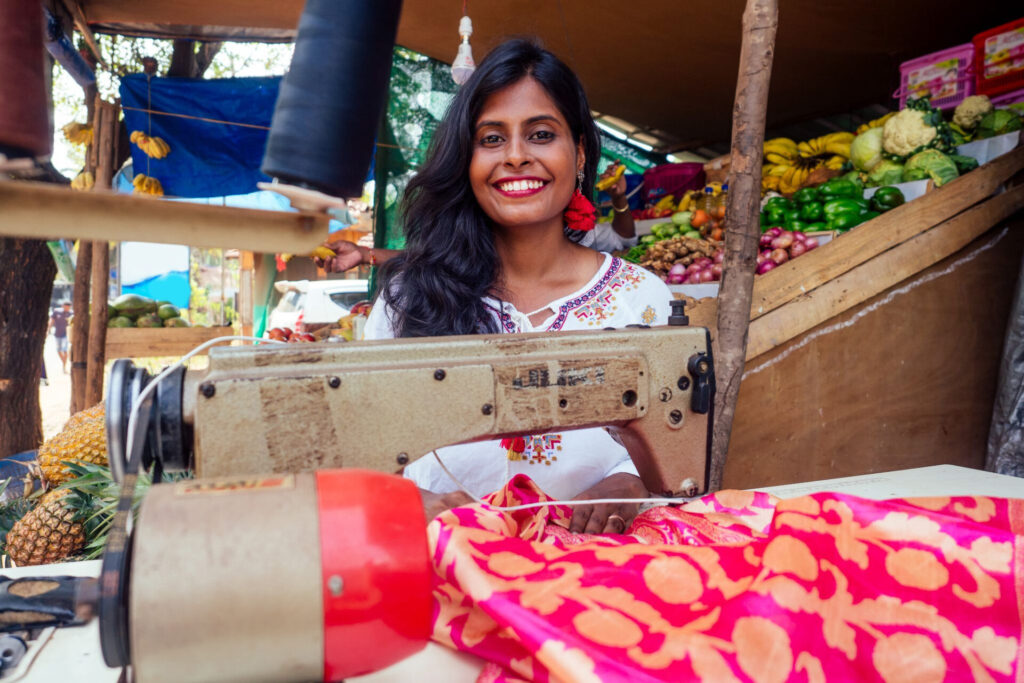
What is the meaning of social entrepreneurship?
Social entrepreneurship refers to business ventures that combine commercial success with practical approaches to real-world challenges.
These companies use everyday business practices—how products are sourced, priced, and delivered—to address issues such as sustainable resource use, healthy working conditions, and fair access to essential goods and services. Simultaneously, they adhere to traditional business goals such as staying profitable and competitive.
This marrying of societal problem-solving with profitability is showing up in companies that build these practices directly into how they operate, rather than treating them as separate initiatives.
Many of these companies are also seeing strong performance. A widely cited Deloitte analysis found that companies operating this way often grow faster than competitors, while also reporting higher levels of customer and employee engagement.
Do social entrepreneurs make money?
Yes—and in many cases, their business models support it.
Companies that build trust through consistent products, reliable sourcing, and clear ways of doing business often develop strong customer loyalty. That can translate into brand strength and and more stable revenue.
Rather than relying on short-term gains, these models tend to focus on durability—products that last, relationships that hold, and operations that can grow without breaking down.
To understand the impact of this new trend, social entrepreneurship, on traditional business models, it’s helpful to first take a look at the many faces of capitalism that have shaped the world’s business climate in centuries and decades past.
Capitalism’s full spectrum: from built-to-last to exploitative
As the business landscape evolves, so does our understanding of capitalism. Some models support innovation and build value over the long haul. Others concentrate power or operate as take-first business models that extract value without investing in lasting systems.
Not all capitalism operates the same way. Understanding the differences helps clarify which models tend to last and which tend to break down over time.
Honorable business models: building value that holds up
At one end of the spectrum we find models of capitalism that emphasize stability, performance, and long-term value creation:
- Stakeholder-focused models: Businesses consider the impact of decisions across employees, customers, and suppliers, not just shareholders.
- Clear, straightforward ways of doing business: Companies set clear standards for sourcing, pricing, and product quality.
- Cooperative structures: Ownership and decision-making are shared among workers or members.
- Practices that restore what they use: Businesses maintain or improve the resources they depend on rather than depleting them.
- Reinvestment models: Profits are directed back into operations, communities, or long-term growth.
These approaches tend to reinforce trust, consistency, and resilience over time.

The dark side: concentrated power and other exploitative models
At the other side of the spectrum are certain forms of capitalism that concentrate power or extract value without building lasting stability. Key examples include:
- Monopoly capitalism: A single company dominates an industry and limits competition. A well-known example is John D. Rockefeller’s Standard Oil empire in the late 19th and early 20th centuries. Through owning companies from the well to the pump, Rockefeller controlled extraction, refining, transport, and sales, and became a dominant economic power of that era.
- Crony capitalism: Success depends on close ties with government officials rather than open competition, often resulting in favorable treatment for insiders.
- Casino capitalism: Financial markets prioritize high-risk speculation over stable growth, as seen in the lead-up to the 2008 financial crisis.
- Plutocratic capitalism: Wealth concentrates influence over policy. During the Gilded Age, industrialists such as Andrew Carnegie and J. P. Morgan used their financial power to shape regulations and limit competition.
- Vulture capitalism: Investors acquire distressed companies and extract value through layoffs and asset liquidation, often without long-term plans for the business.
- Disaster capitalism: Crises are used as opportunities to push through profit-driven policies or projects that would otherwise face resistance.
- Extractive capitalism: Value is drawn from three main sources without any real balance: natural resources are depleted faster than they recover, labor is pressured through low pay or unsafe conditions, and financial systems impose fees or debt structures that leave communities carrying long-term costs.
These models highlight how capitalism can drift away from built-to-last value creation.
How business models are shifting
In our time, the contrast between these two sets of models is becoming more visible.
Consumers and investors are paying closer attention to how companies get work done, not just to what they sell. In response, some businesses are adjusting how they design products, structure their supply chains, and manage relationships with the outside world.
This shift is less about adopting new frameworks and more about how decisions are made—what gets prioritized, what gets measured, and what is sustained over time.
Across different industries, this shift takes recognizable forms.
Cooperative business models
Cooperative models, for example, distribute ownership and decision-making more broadly. Mondragón Corporation in Spain operates as a federation of worker-owned cooperatives across manufacturing, finance, and education. In the United States, Cabot Creamery Cooperative is owned by hundreds of farm families, with profits returning to members rather than external shareholders.
These models rely on shared ownership and decision-making, profit distribution in proportion to contribution, pricing structures that keeps business viable, and reinvestment into operations and communities.
They tend to prioritize steady performance over short-term gain while maintaining competitive performance levels.
Regenerative and long-term resource practices
Another area of change is how businesses manage the resources they depend on.
In sectors such as agriculture and land management, some companies are moving beyond just minimizing environmental damage. Instead, they focus on maintaining or improving soil, water systems, and biodiversity.
Organizations like the Savory Institute work with farmers and ranchers to restore grasslands while maintaining viable agricultural businesses. These approaches reflect a simple reality: long-term business performance depends on the health of underlying environmental systems.
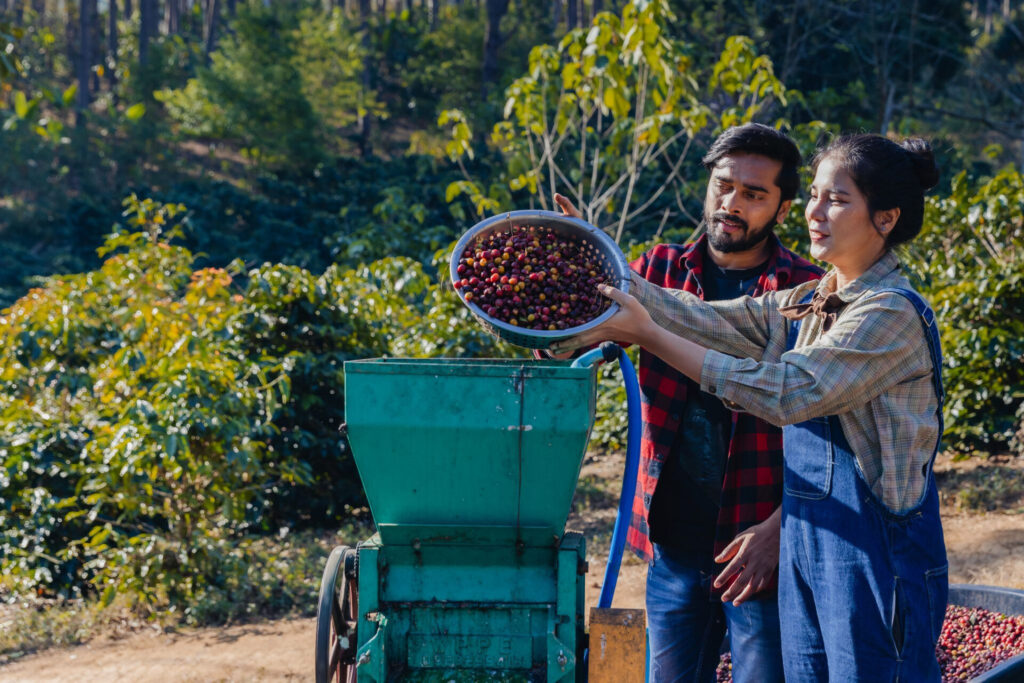
The multi-stakeholder business model
Some companies are also expanding how they evaluate success.
Instead of focusing only on investor returns, they consider how decisions affect their employees, customers, suppliers, and broader communities. This can show up in governance structures that include employee input, community feedback, or transparent reporting.
For example, REI operates as a consumer cooperative that reinvests profits into member benefits and operations. Novo Nordisk, majority-owned by a foundation, aligns business strategy with ongoing investment in healthcare and production systems.
A meaningful shift in the business landscape
Taken together, these examples point to a broader shift.
More companies are building their operations around consistency—how products perform, how relationships are maintained, and how decisions play out. In doing so, they are showing that competitive businesses can be built on stable, repeatable practices rather than short-term optimization.
From add-on programs to everyday business practices
The shift underway is less about labels and more about how businesses actually run. In earlier decades, corporate social responsibility often showed up as add-on programs or philanthropic efforts separate from the core business. Today, these decisions are being built directly into how products are designed, sourced, and delivered.
For example, some clothing brands now source organic cotton from farms using regenerative techniques. This supports both healthier soils and more stable income for farmers while reducing water and chemical fertilizer use. Others, such as furniture makers, use reclaimed wood in place of newly cut timber while maintaining quality craftsmanship.
These businesses are not treating this as a parallel track. They are embedding it into the way they operate day to day.
In many cases, these changes are being adopted because they strengthen operations and build long-term trust. In that sense, this shift is a return to durable business principles—fair exchange, sound products, and long-term thinking—applied with greater intention in a more connected world.
The rise of principle-driven businesses
A growing number of companies are rethinking how they define success. The focus is shifting away from short-term gains toward building businesses that hold up—operationally, financially, and in how they treat the people connected to them.
In practice, that often shows up in straightforward ways. Patagonia, for example, designs products specifically with durability and repair in mind. This encourages customers to keep gear in use longer rather than replace it. Another standout example is Dr. Bronner’s, a family-owned grocery company. Dr. Bronner’s sources key ingredients through long-term supplier relationships that provide stable income for farmers while maintaining consistent product quality.
These choices are not being made as statements about a company’s ethics or sense of environmental responsibility. In many cases, they reflect what works—approaches that strengthen operations and customer relationships and reduce friction across the business.
What’s emerging is not a new ideology, but a more grounded enterprise model. This model draws on durable principles—clear value, mutual benefit, and long-term thinking—and applies them consistently in a modern business environment.
Ethical supply chains and fair vendor treatment
Fair treatment of vendors and suppliers is a key component of high-integrity businesses. Companies that emphasize ethical supply chains ensure that their partners—especially those in developing economies—receive fair compensation and have humane working conditions.
One example is Divine Chocolate, a business co-owned by Ghanaian cocoa farmers. Unlike many major chocolate companies that rely on commodity-driven pricing structures, Divine Chocolate ensures that farmers have an ownership stake in the business, which allows them to share in the profits and decision-making process. This model not only improves the livelihoods of small-scale farmers but also fosters innovation and quality improvements in the supply chain.
Similarly, Tony’s Chocolonely has made eliminating child labor and exploitation in cocoa farming its primary mission. By establishing direct, long-term partnerships with cocoa cooperatives in West Africa and paying higher-than-market prices, Tony’s has demonstrated that ethical sourcing can drive brand loyalty and financial sustainability.
The role of the circular economy in conscious capitalism businesses.
A growing number of businesses are adopting circular economy principles—designing products for durability, repair, and recyclability to minimize waste.
Take Allbirds, a footwear company that uses renewable materials such as wool and sugarcane without compromising on product quality. The company even offers a recycling program for used shoes.
The home furnishings giant IKEA has also begun implementing circular business models. It does so by piloting furniture take-back and resale programs, which reinforces the idea that these types of practices are also good for customer retention and cost efficiency.
Ethical leadership and meritocratic principles
True social entrepreneurship requires ethical leadership that upholds meritocracy while fostering a culture of fairness. Companies that recognize and reward talent regardless of background tend to build more innovative and resilient teams.
For example, Greyston Bakery, a New York-based company, employs people who face barriers to employment, such as former prison inmates. Despite this hiring approach, Greyston maintains a high-performance culture by providing job training and professional development opportunities.
The future of business built on durable principles
As this shift toward social entrepreneurship continues, the direction becomes clearer. In some sectors, long-standing patterns of concentrated power and short-term decision-making are beginning to give way to models that emphasize consistency, performance, and lasting viability.
Many of these companies are not just positioning themselves around ideals. They are making practical choices—how products are built, how people are treated, and how relationships with suppliers and customers are managed.
In the end, it’s the results that drive change. Businesses that align with sound, ethical operational principles are showing that it is possible to compete effectively while earning society’s trust and respect.
3 responses to “The Rise of Social Entrepreneurship. A Primer [2026]”
-
Wow, I had no idea how many types//versions of Capitalism existed.
I’m going to use this list as a ‘Shopping Directive’ and be much more alert when making my shopping decisions. Thank you for your work in this arena, its very helpful and useful in directing my decrees into such things.
Beautifully designed website 😉Hey, when can we go to brekky? Maybe get Susan our too?
-
Thanks, Destyne. We appreciate the support and feedback! Patrick
-
-
getting caught in a feedback loop here…
Thank you for this work!


Leave a Reply