

Planting trees to keep up with wildfires and agricultural deforestation is experiencing a high-tech revolution. North America alone shows why this is critical in light of losing vast tracts of forest every year.
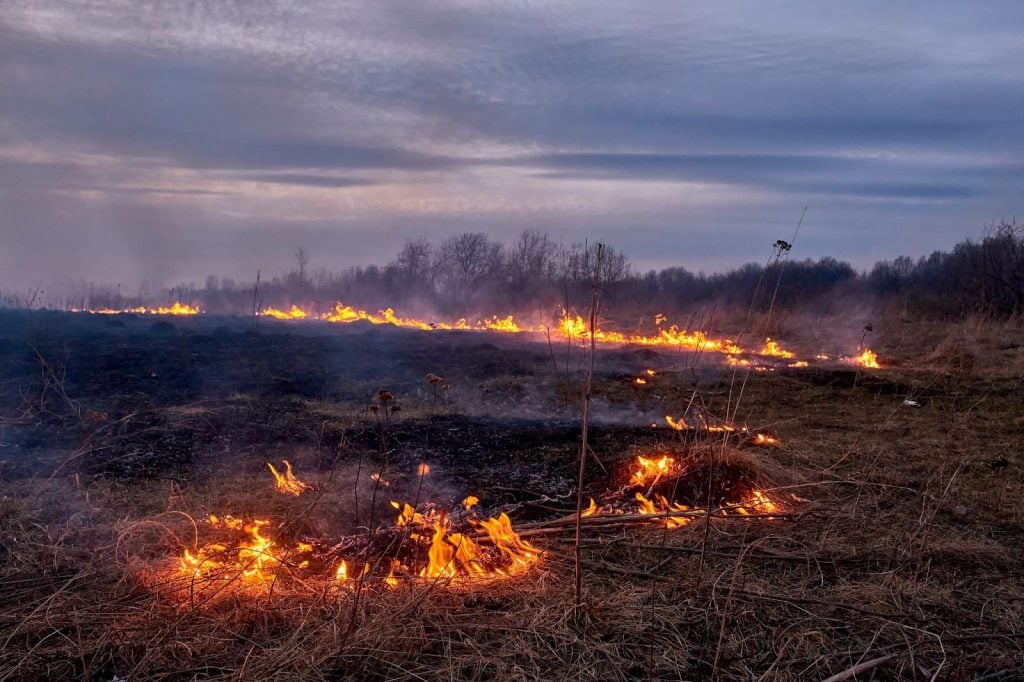
For instance, Canada’s 2023 wildfire season was the most destructive on record. The fires burned more than 18 million hectares1 and sent smoke across major cities in Canada and the US. By mid-July 2025, more than 5.5 million hectares had already burned, threatening communities, impacting important ecosystems, and degrading air quality far beyond the fire lines.
The global picture is just as sobering.
In Indonesia’s peat-rich provinces, for example, slash-and-burn clearing for logging and agriculture—especially industrial palm oil—has driven massive deforestation. Over the past half century, the country has lost roughly 74 million hectares of forest, about the size of Texas and South Carolina combined.
Although the country’s policies slowed losses for a time, deforestation spiked again in 2023, including illegal clearing in protected areas and expansion tied to nickel mining and palm oil.
The deforestation of Indonesia is just one stark example of the worldwide scale of the challenge. Whether we’re talking about Australia, southern Europe, California’s mountain regions, or the Amazon rainforest, the enormous loss of forests and grasslands doesn’t bode well for Planet Earth—and manual replanting can’t keep up with the enormity of the problem.
An ingenious solution: tree-planting drones and aerial seeding
Traditional tree planting is too slow, costly, and limited to meet today’s pressing needs. But reforestation pioneers are tackling the problem with new tech: planting trees with drones.
Drone teams—think of them as aerial Johnny Appleseeds—can plant from the sky with precision, data-guided targeting, and speed.
As this green technology spreads, these flying foresters offer a practical path to reforesting damaged landscapes quickly, accurately, and at scale.
What are tree-planting drones and how do they work?
Tree planting drones are specially designed unmanned aerial vehicles (UAVs) equipped with technologies like GPS, artificial intelligence, and seed release machinery. They are used to reforest areas that are too vast, remote, or hazardous for people to easily reach.
The process begins with mapping. Drones survey the land using 3D imaging and environmental data to identify the most promising planting zones.
Then comes aerial seeding: the drones launch biodegradable seed pods. Most drone systems place seeds, not saplings, so there is no need for hole digging or mulching. Each seed pod contains a carefully selected tree species, as well as nutrients and moisture-retaining substances, which are injected into the soil at precisely the right depth and spacing.
Astonishingly, some drones can plant more than 20,000 pods per day. By comparison, the best ground planter walking the woods today might, on a good day, plant just a tenth of that number.
How is aerial seeding used in reforestation?
Aerial seeding isn’t new. The concept dates back a century, with early applications in agriculture and even military operations.
In the 1920s, farmers in New Zealand experimented with dropping grass and clover seeds from aircraft to replant inaccessible hill country after overgrazing. The idea took off, literally, and became a regular tool to revitalize farmland in steep or remote terrain.
Later, during and after World War II, aerial seeding was adapted to reseed war-damaged landscapes across Europe. The effort focused on areas where bombings had destroyed forests and farmland. The US military even explored aerial seeding as a means to quickly establish cover crops on training grounds and airfields.
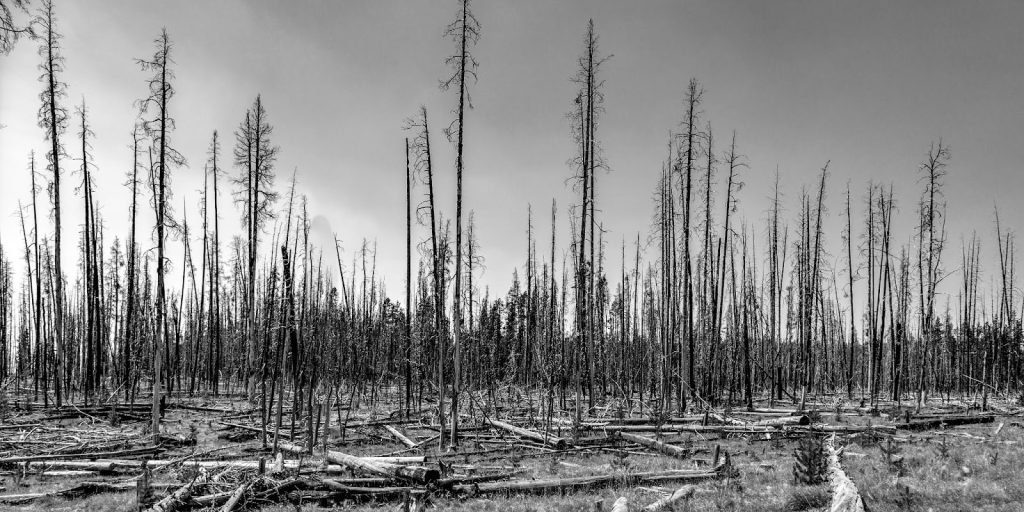
But modern drone technology has elevated this old idea into a precise, scalable reforestation tool. Instead of dropping loose seeds from planes, today’s drones deliver tightly packed, biodegradable seed pods—each engineered with the right mix of soil, nutrients, and moisture-retaining materials—to plant trees in exactly the right locations and at the right depth.
Each seed pod acts like a mini greenhouse. Some are engineered to retain moisture and deter pests. They may also contain mycorrhizal fungi to help with root development. By planting at the right soil depth and using AI to target the most fertile zones, drone planting maximizes the seeds’ germination rates and reduces waste.
This method is especially useful in post-disaster zones, where speed and access to affected areas are important and traditional methods may be too slow or dangerous.
Why is drone planting important?
Compared to manual planting, drone planting has two advantages: it can handle large volumes, and it excels in areas where ground planting struggles, such as mountainous terrain, post-wildfire burn zones, and remote locations with no road access.
In these scenarios, speed matters. After a wildfire, for example, soil erosion can begin almost immediately. This factor alone makes quick replanting critical.
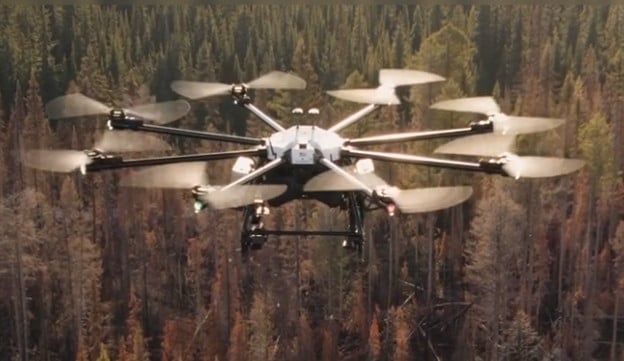
In response to a forest emergency, drone teams can gear up and arrive on location within days. They can plant thousands of pods in hours and return to monitor the results by using aerial imaging. This rapid-response capability gives drone-based reforestation a huge edge in such situations.
The innovators behind the drones
The people driving the drone planting movement come from a range of backgrounds including robotics, software engineering, ecology, and even aerospace design.
Companies like Dendra Systems in the United Kingdom use AI-based technologies and satellite data to monitor and reforest lands that have been degraded by industrial agriculture or mining.
Others, like Terraformation and Mast Reforestation, are forming global partnerships with forest rangers, universities, and nonprofits. These firms’ expertise lies in merging conservation science with state-of-the-art environmental technology. This cross-disciplinary approach is fertile ground for breakthroughs that wouldn’t have been possible with conservation expertise alone.
Precision tree planting
Modern reforestation drones pair LiDAR and GIS technology for very precise planting methods.
LiDAR uses laser pulses to build precise 3D maps of a section of terrain. It can do so even if the ground is covered with dense layers of vegetation. GIS stands for Geographic Information Systems. This technology combines different layers of data like moisture rate, slope angle, and types of vegetation into actionable maps. Together, these tools make precision planting a new forestry reality.
With LiDAR’s fine-scale scans, drones can skip rocky or compacted ground so seeds aren’t wasted, and instead target spots that are prime for germination—even in rugged landscapes. GIS helps pinpoint microclimates with the right mix of sunlight and moisture. These systems guide the drones to plant the seeds in spots where young trees are most likely to become established.
This targeting is dynamic as well. If sensors pick up shifting wind or changing soil moisture, the drones can adjust their altitude, speed, or release timing in real-time to improve the outcomes of their planting efforts.
As Qinghua Guo, lead author of a recent LiDAR-based tree mapping (and tree counting2) study in China, explained: “The fusion of high-precision data and intelligent models ensures that every tree can be planted in the most suitable location.”
Some drone systems plant just one tree species at a time. Others carry multiple species and select which one to drop based on the detected microclimates. For instance, Flash Forest customizes its seed pods with species-specific nutrients, mycorrhizae, and moisture-retaining hydrogel suitable for the selected location—an attempt to replicate what a forester would do by hand.
How successful are drones in restoring forests?
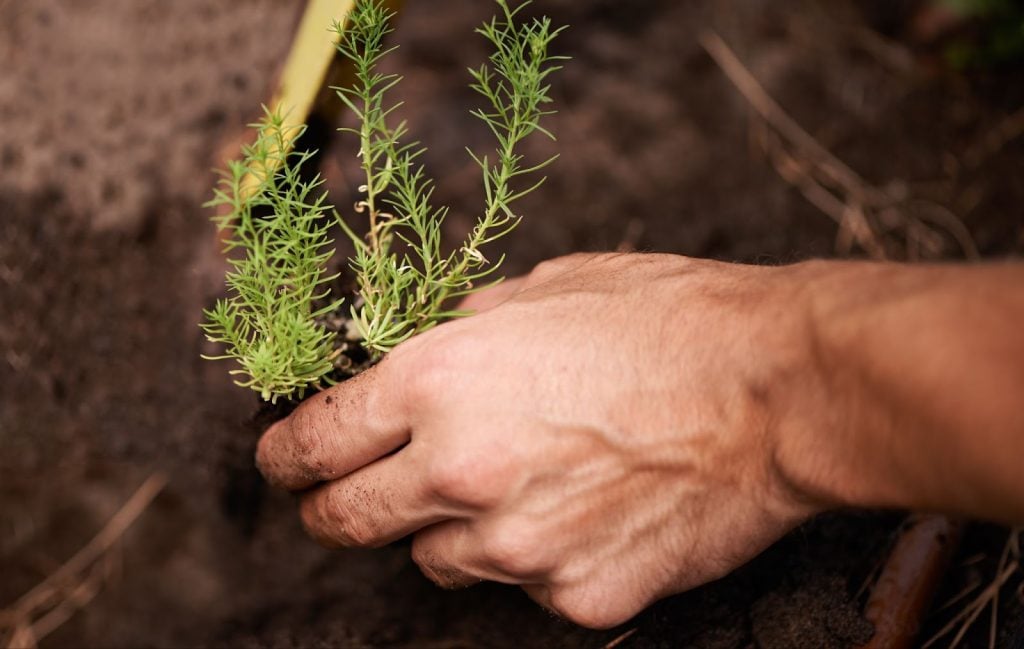
Effectiveness in reforestation is measured not just by how many seeds are planted, but by how many of these seeds survive and grow into mature trees. This takes research into the entire spectrum of planting methods and terrains where this new technology is being tried out.
A growing number of organizations are piloting drone-based reforestation projects, and are doing so in a range of ecosystems—from burned forests to coastal wetlands. These early efforts offer valuable insight into what works, where, and why.
In British Columbia, for instance, Flash Forest reported planting over 300,000 trees across wildfire-damaged land during the spring of 2021. In Myanmar, Worldview International Foundation used drones to plant mangrove saplings along coastlines threatened by rising seas. These trees not only survived but began thriving within months. Both plantings demonstrated that drone seeding can succeed even in delicate or degraded environments.
But a key question remains: how well do drone-planted trees survive over time?
So far, the results are promising.
In early trials, drone-planted trees have shown survival rates between 60% and 75%. That’s in line with many hand-planting programs, where rates can vary from 50% to upwards of 80%.
But because drones can plant tens of thousands of trees per day, even modest survival rates translate into massive numbers. For example, a 60% survival rate from a million drone-fired seed pods results in 600,000 new trees—with far less labor, time, and cost than traditional reforestation.
What does drone reforestation cost vs. manual planting?
Cost is another advantage. While the technology has upfront expenses, the per-tree planting cost is often lower than that of manual labor. Depending on the region, manual planting can range from $1 to $5 per tree. Drone planting can lower this figure to $0.50 or less. These cost advantages increase exponentially when scaled over large areas.
Flash Forest estimates that its technology can reduce reforestation costs by up to 80%. That makes drone forestry especially attractive for governments and environmental organizations that are working with limited budgets but ambitious environmental goals.
The biggest hurdles in drone forestry
Despite the promise of this new technology, planting trees by drone is not without obstacles and limitations. Survival still depends on species fit, moisture, soil condition, and follow-up care.
Compacted soils, invasive grasses, or heavy browsing pressure from local wildlife can doom seedlings regardless of how smart the flight plan was. In some landscapes, light ground prep or targeted aftercare makes the difference between a flush of sprouts and a failed tree stand.
Airspace and terrain also pose practical hurdles. Wind, smoke, and heat can ground flights. Batteries and payloads impose limits on how far a team can reach in a day. Permits and no-fly zones near towns, power lines, or critical habitat also shape where drones can work.
In addition, there are some regulatory and ethical concerns. Some environmentalists worry that drone planting could lead to monoculture forests if not managed properly.
Still, these concerns are not reasons to slow the progress of this promising new technology. They’re simply reminders to move forward wisely.
Planting trees with drones: plan, plant, verify
Dedicated drones can speed up the reforestation process exponentially. They can seed hard-to-reach sites and target good microsites with LiDAR and GIS.
They work best in tandem with careful site selection, light soil prep where needed, and simple follow-up. The verification step includes tracking survival through seasons two and three and beyond, publishing the results, and adjusting the planting processes as needed.
In short: plan carefully based on the available data, plant at a good pace, verify what survives—and keep doing what works.
In a world badly in need of forest recovery, planting trees from the sky may be one of the smartest moves we make.
NOTES:
1. A hectare is 10,000 square meters or about 2.5 acres.
2. How many trees are there in China? Despite the environmental degradation the nation has suffered during its rapid industrialization over the last half-century, trees still outnumber people by 150 to one. For the record, that’s 142.6 billion trees in China.

Leave a Reply