


For nearly a century, scientists have dreamed of harnessing the same force that powers the stars: nuclear fusion. Unlike the nuclear fission used in today’s reactors, which splits atoms apart and produces long-lived radioactive waste, nuclear fusion melds light atomic nuclei together.

This process releases vast amounts of energy without toxic byproducts. Nuclear fusion is not just cleaner than fossil fuels; it’s fundamentally different. There’s no combustion, no smoke, and no fuel rods to bury deep in the earth for millennia.
Nuclear fusion: clean energy at a planetary scale
What makes fusion so attractive, even though major hurdles will need to be surmounted before the technology becomes commercially viable, is its potential to deliver clean energy at a planetary scale.
Nuclear fusion promises a future where baseload electricity—always-on, reliable power—can be produced without combustion, long-lived waste, or environmental degradation. That’s a rare and precious combination in a world struggling to meet growing energy demands while simultaneously safeguarding the planet’s ecosystems.
Unlike solar and wind, which are intermittent and require storage, fusion could operate around the clock and ultimately become a backbone solution for a global transition to clean energy. With abundant fusion fuel sources, such as deuterium from seawater and tritium bred from lithium, its long-term potential is enormous.
Nuclear fusion is not a new idea. Scientists have experimented with this idea since the 1930s, but prototypes were plagued by the fact that the energy required to start and maintain a nuclear fusion reaction was far greater than the energy output of these early systems.
However, recent laboratory breakthroughs changed this equation. And now, the race is on to bring this holy grail of energy production into practical reality.
What is nuclear fusion and how does it work?
Simply put, nuclear fusion is the process that lights up the stars. Inside our sun, hydrogen nuclei collide under immense pressure and temperature. They fuse into helium and release energy in the form of light and heat. Reproducing that same reaction here on Earth is both the ambition and the challenge of fusion scientists.
To achieve fusion ignition, conditions must be extreme: temperatures over 100 million degrees Celsius and sufficient pressure to force nuclei together. One common approach involves fusing deuterium and tritium—two heavy forms or isotopes of hydrogen, each with additional neutrons that make them especially suited for fusion reactions.
When they combine, they form helium and release a neutron carrying massive energy. Another approach under investigation is helium-3 fusion, which could offer even cleaner reactions but is still years away from feasibility due to fuel scarcity.
Is nuclear fusion safe?
Fusion energy is far safer than conventional nuclear fission. Fusion reactions can’t run out of control or cause meltdowns like those seen at fission reactors, such as the infamous Cheryobyl disaster in 1986. The fuel used in fusion, primarily deuterium and tritium, is not prone to runaway reactions, and the process requires precise, extreme conditions to sustain itself. If anything goes wrong, the reaction simply stops.
Fusion also has the huge advantage of producing no long-lived radioactive waste and poses no risk of large-scale radiation release. This makes it an exponentially safer path to clean energy than conventional nuclear power.
What are the toughest challenges with fusion technology?
While reaching 100 million degrees Celsius may sound unattainable, scientists have already accomplished this, both in magnetic confinement (tokamak reactors) and inertial confinement fusion settings, where lasers compress fuel pellets to achieve ignition conditions. In fact:
- Tokamak reactors like JET, located near Culham, England, and EAST in Hefei, China have reached temperatures over 150 million °C.
- The National Ignition Facility in the US achieved momentary ignition in late 2022 and again in 2023 using inertial confinement, where the fuel briefly produces more energy than the laser input.
So, reaching the temperature is possible. What remains difficult is:
- Sustaining those conditions long enough for a net energy gain (especially in magnetic confinement).
- Repeating it reliably, efficiently, and at scale.
- Creating materials and reactor systems that can withstand those extreme environments over time.
It’s not just about temperature—it’s about the whole trinity of fusion challenges:
- Temperature: Must be hot enough for nuclei to overcome their electrostatic repulsion.
- Pressure: Particles must be packed densely enough to collide and fuse.
- Confinement time: These extreme conditions must last long enough to release more energy than was put in.
This is known as the Lawson criterion, which is recognized as the key scientific benchmark for viable fusion. Most fusion designs are still working to meet or exceed this requirement in all three areas simultaneously.
In short, today’s nuclear fusion research is not about proving the concept. Rather, it’s about building a system that can repeat fusion reliably and efficiently at scale.
Two main areas of today’s fusion research
Let’s dive more deeply into the technicalities of nuclear fusion. There are two main ways researchers are pursuing fusion:
1. Magnetic confinement fusion
Magnetic confinement fusion traps an extremely hot, electrically charged gas called plasma inside a vacuum chamber. Think of plasma as a superheated soup of charged particles.
The plasma must reach over 100 million degrees Celsius, far hotter than the core of the sun. At those temperatures, no material container could survive direct contact, so the only practical solution is to suspend the plasma in mid-air using magnets. The chamber’s magnetic fields are so strong that they act like invisible walls.

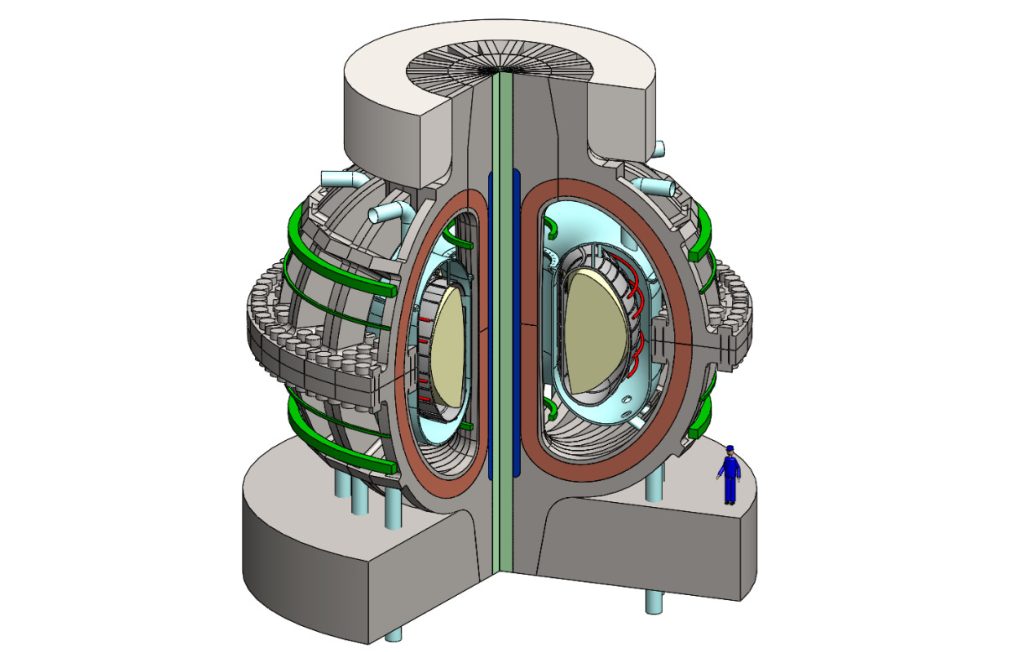
The most common design is the tokamak, a doughnut-shaped reactor developed in the Soviet Union in the 1950s. Inside, powerful magnetic coils curve and twist the plasma into a stable loop, preventing it from touching the chamber walls. A variant called the stellarator uses more complex magnetic geometries to keep the plasma steady without the need for external current.
Why high-temperature superconductors are a key to fusion
Recent advances in these systems involve high-temperature superconductors, which are revolutionizing the design of fusion reactors. These new types of superconductors are special materials that, when cooled to a certain critical temperature (still extremely cold, but warmer than traditional superconductors), can carry massive electric currents with zero electrical resistance. That means no energy is lost as heat.
As you might imagine, these massive currents can generate very strong magnetic fields. The stronger the magnetic field, the tighter and more stable the plasma can be held.
Thanks to these high-temperature superconductors, we can now create strong magnetic fields with smaller and lighter magnets. That means fusion reactors can be made more compact, less expensive, and potentially faster to build than older designs.
Shrinking the sun: fitting fusion into a room
Imagine a donut-shaped fusion reactor the size of a gymnasium. In older designs, enormous copper or low-temperature superconducting magnets were required to generate the magnetic field, and much of the machine’s bulk came from simply housing and cooling those components.
Now, with high-temperature superconductors, that same reactor can be shrunk to the size of a large room, yet generate even stronger magnetic fields. This makes it much easier to reach fusion conditions.
If the plasma inside this compact machine remains hot enough (over 100 million °C) and is kept stable and confined for a long enough period, the atomic nuclei in the fuel—typically isotopes of hydrogen like deuterium and tritium—will begin to fuse into helium, which is the same nuclear reaction that powers the sun.This is the magic moment in the fusion process when immense energy is released.
To sum it up, high-temperature superconductors are a key to technology for making practical, compact fusion power plants a reality in the not-too-distant future.
2. Inertial confinement fusion
Inertial confinement fusion takes a radically different approach. Instead of using magnets to hold a plasma in place, it uses powerful lasers to crush a tiny fuel pellet from all sides. This rapid compression heats and squeezes the fuel so intensely that its atomic nuclei can fuse together, just like in the heart of a star. The extreme conditions last only a blink of an eye, but in that moment, fusion can occur.
Here’s how the process unfolds: The fuel pellet—typically made of frozen deuterium and tritium—is placed inside a special chamber and hit from all directions by dozens or even hundreds of ultra-powerful laser beams. In a split second, these lasers deliver a burst of energy to the pellet’s outer surface, causing it to rapidly implode under the sudden force.
As the pellet collapses inward, its core is squeezed to such extreme temperatures and pressures that fusion reactions can briefly occur. The method is called “inertial confinement” because the pellet’s own inertia, its resistance to changing motion, keeps the material compressed just long enough for fusion to happen, before everything flies apart.
From theory to proof: ignition becomes reality
This extreme process has long been studied in theory and tested in laboratories. However, only recently was there a significant breakthrough.
As noted above, in 2022 and again in 2023, the National Ignition Facility in California achieved a scientific milestone by creating conditions where the fusion reaction released more energy than the lasers delivered to the fuel—a breakthrough known as ignition.
While much work remains to be done before this process can be scaled up for power generation, the demonstration confirmed that inertial fusion is not just theoretical—it’s physically achievable.
Creating star-like conditions on Earth
Both approaches have their champions, from Commonwealth Fusion Systems and Tokamak Energy working on high-field compact reactors to First Light Fusion and Helion Energy exploring novel reactor designs and alternative fuels.
While each pathway faces its own engineering hurdles, the underlying principle remains the same: create star-like conditions here on Earth, and then let the fusion reaction do the rest.
So, who’s involved in trying to make unlimited energy from nuclear fusion a reality?
The global push: ITER and EUROfusion
While private companies such as the four noted above forge ahead, some of the most ambitious efforts to commercialize nuclear fusion are happening multinationally. Chief among them is the ITER project, a collaboration among dozens of nations that’s underway in southern France.
Short for International Thermonuclear Experimental Reactor, ITER’s goal is to become the largest and most advanced tokamak ever built. It is designed not just to study fusion, but to prove that the technology can work at a scale relevant to power generation.
ITER brings together 35 nations, including the United States, the European Union, China, India, Japan, South Korea, and Russia. This turns this technical marvel into a rare symbol of scientific cooperation in an increasingly fractured world. Once complete, ITER will attempt to produce 10 times more energy than it consumes. This would be a major step forward toward the dream of net energy gain.
Construction of ITER began in 2010. While the project has faced delays and cost overruns, major milestones continue to be reached. Key components of the reactor—including its cryostat, superconducting magnets, and vacuum vessel segments—have been successfully delivered and assembled on-site.
As of 2025, ITER is targeting the plasma stage by 2035, with full deuterium-tritium fusion operations to follow later in the decade. Though slower than private-sector efforts, ITER’s scale and collaborative model make it a critical proving ground for the future of fusion energy.
Parallel efforts such as EUROfusion, a European research consortium, are providing vital support across the continent. These programs are tackling fusion’s toughest engineering challenges, such as advanced radiation shielding needed to protect reactor walls, and real-time fusion diagnostics that monitor plasma behavior during high-energy reactions.
Together, these initiatives form a scientific backbone for fusion’s future. They’re not chasing quarterly results; they’re building both knowledge and infrastructure that private firms can lean upon.
Private pioneers: Helion, CFS, TAE Technologies, and more
Alongside government-backed mega-projects, a wave of private companies is racing to commercialize fusion. These startups are drawing in billions in venture capital and attracting talent from across the energy and aerospace sectors.
Helion Energy, based in Washington State, is pioneering magneto-inertial fusion, a hybrid approach that uses magnetic fields to compress plasma without the massive footprint of a traditional tokamak. Helion has claimed that its next prototype, Polaris, could achieve net electricity generation—a bold target that, if met, would be a breakthrough moment.
Meanwhile, Commonwealth Fusion Systems, a spinoff from the Massachusetts Institute of Technology, is betting on high-temperature superconductors to shrink the size and cost of tokamak reactors. Its flagship project, SPARC, is meant to demonstrate net energy gain by using cutting-edge magnetic confinement technology, making the concept more commercially practical than its predecessors.
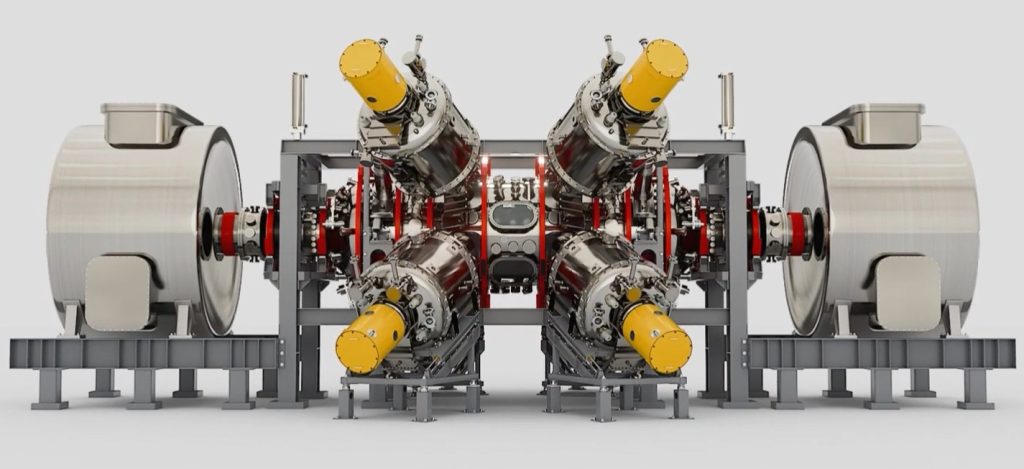
TAE Technologies, headquartered in California, is taking a different route altogether. Its field-reversed configuration design uses beams of particles to heat plasma and sustain fusion conditions. The company touts helium-3 and proton-boron fuel cycles as a future path toward cleaner, non-radioactive fusion.
Other key players include Zap Energy, General Fusion, Marvel Fusion, and First Light Fusion. These companies are exploring distinctive strategies, from liquid-metal compression to projectile-driven fusion. While their technologies vary, they share a common goal: scalable, affordable fusion power plants that could begin feeding the grid within the next decade.
These private pioneers represent the fast-moving, risk-tolerant edge of the fusion world. If even one of them succeeds, the impact on global energy would be profound.
Commercialization and the path to market
After the recent scientific breakthroughs, attention is now shifting to commercialization. Industry analysts predict that demonstration fusion plants could connect to the grid within the 2030s. Pilot plants are already under development by companies like Commonwealth Fusion Systems and TAE Technologies.
These firms are collaborating with utilities and energy giants to integrate fusion into existing infrastructure. For example, Fusion Fuel Green is working to combine fusion with hydrogen production technologies, creating synergies with renewable and legacy systems alike.
Advocacy groups such as the Fusion Industry Association (FIA) also play a role in this emerging field. FIA promotes private-public partnerships, lobbies for regulatory clarity, and advocates for targeted funding. While fusion won’t replace fossil fuels overnight, momentum is building for it to become a major player in the global energy mix over the next two decades.
Beyond the labs, fusion is gaining powerful cultural and financial traction. Visionaries like Elon Musk have publicly encouraged more funding and faster innovation in the field. Meanwhile, governments across North America, Europe, and Asia are investing billions, while major philanthropists are backing private startups that are working to close the commercialization gap.
Lighting the way to Earth’s energy future
Nuclear fusion is no longer a distant dream. It is now an emerging pillar of what could become a more stable and abundant energy future. While it won’t solve every energy challenge on its own, fusion offers a clean, compact, and near-limitless power source that could one day help bridge the global transition away from fossil fuels.
Fusion science is rapidly advancing. Fusion machines are shrinking, and the timeline to such systems coming commercially online is narrowing. But what may matter most is the collective will of governments, scientists, entrepreneurs, and communities choosing to invest in tomorrow.
As we move toward practical fusion power, we’re not just chasing energy. We’re lighting a path toward a more peaceful, prosperous, and cooperative world.

Leave a Reply