
In the span of a generation, video production has changed dramatically. Expensive cameras and specialized editing equipment have given way to smartphones, inexpensive software and, most recently, artificial intelligence. Nowadays, almost anyone can create and distribute a video.
But the harder question may be what makes one worth watching.
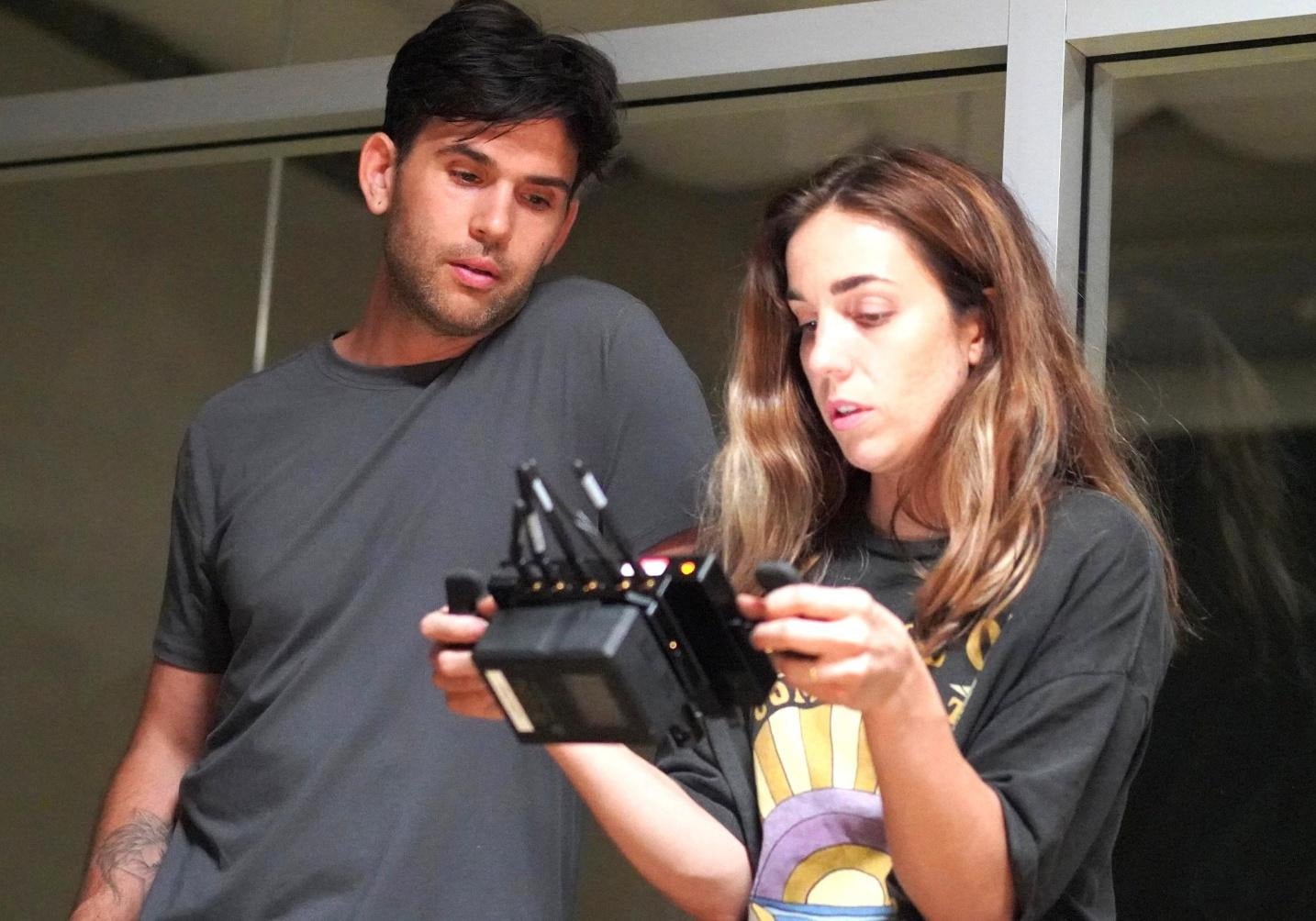
Kristin and Raphael Rogers have experienced that transformation from inside their rapidly evolving profession. Their two decades of work span commercial video production as well as documentary and fictional filmmaking.
But their own experience includes something technology cannot manufacture so easily: a story rooted in the most special of human experiences. Their documentary Inconceivable began as one kind of project and became something different and deeply personal along the way.
I talked with Kristin and Raphael about how video production has changed, where AI may take it next, and why human stories may matter more than ever.
Interviewer: Think back to when each of your first got into video production. What drew you to it?
Kristin: I think what drew me to it was storytelling. I started off by editing little public service announcements. I won two scholarships when I was in high school for creating anti-drunk-driving PSAs.
So it was the idea that I could create something that could help people, make change, or just tell a story—because I’ve always been really artsy, so I think that’s for me what it was. And then I went to film school.
I just love telling stories. It’s like one of my favorite things to do, and so to be able to do that as a career is pretty cool.
Raphael: I think what interested me the most was being able to create another world that somebody could experience, whether that’s a fantasy world or sci-fi world and then tell them a story through that.
Making films still exists where you build your sets and put people in them. The cool part of that way of filmmaking is you get to be in it physically and have that community experience. But it’s also extremely gate-kept and hard to become a part of.
The interesting part of the craft now is that you can create that experience on a screen—for example, just by telling AI to create a background for you.
Kristin: The other thing now that’s interesting is that back then filmmaking used to feel a lot more niche, and now it feels oversaturated. And so it’s harder to get your work seen. There’s much more visual noise to break through. Back then not everybody was trying to make films. Social media didn’t exist and not so many people were trying to be content creators.
Raphael: It took more effort to be good at it. So when you did something like make a short film, you got a lot more attention because very few people could make them, and very few people put in the effort. But now it’s a lot easier, so you get less attention.
Kristin: And the equipment was a lot more expensive back then, such as the cameras. Now you can shoot on your phone and edit on your phone and upload it from your phone and there’s all these different online platforms to post videos on. Whereas even 10 years ago you would shoot on a real camera and you would edit on a computer and the whole process was different.
So back then, if you wanted to get into filmmaking, you had to really want to do it. When I won my first scholarships I was a sophomore and everybody else was a senior. And the school said it’s a scholarship, but since you don’t yet know where you’re going to college we’ll just give you the money. So I used the money to buy myself a computer because I wanted to be able to create at home, not just at school.
How AI is changing video production
Interviewer: So if video has become dramatically easier to create and share, what has that opened up for people who want their voices and ideas to be heard?
Raphael: Well, if you have the ambition and you have the ability to just get up and go, you can make anything you want. There are no limits now, basically. Everybody’s got a phone, and everybody’s got a computer and the internet. So everybody can make anything they want.
However, not everybody has taste. Not everybody has knowledge of story structure or how things should work. But physically it’s possible to do anything, which is wild.
Shortcode:
Kristin: I think also only in the last year or two has AI played into that. Because now you see things online you never saw before. For example, people will send us or show us a video that says the world’s going to end. And then you watch the video and it was all made in AI. And the world obviously isn’t going to end. It was that somebody wanted clicks.
So you’re competing not only with other people who have phones and computers, but you’re also competing with artificial intelligence where somebody gives it a prompt and it creates a video. And that contributes to the video world being very oversaturated.
Interviewer: So if you have something of quality, does that make it harder to break through all the noise?
Raphael: Yes, although there is a level of good AI and bad AI and you can easily see the difference. So you have to put the work into it, do your research and then do the right things creatively to make something that obviously stands out.
For example, just this week I made a trailer for my book using AI. Because it’s a sci-fi story, without AI it would be a very expensive movie to make. So I decided to make a trailer just to see if I could help it go viral or whatever.
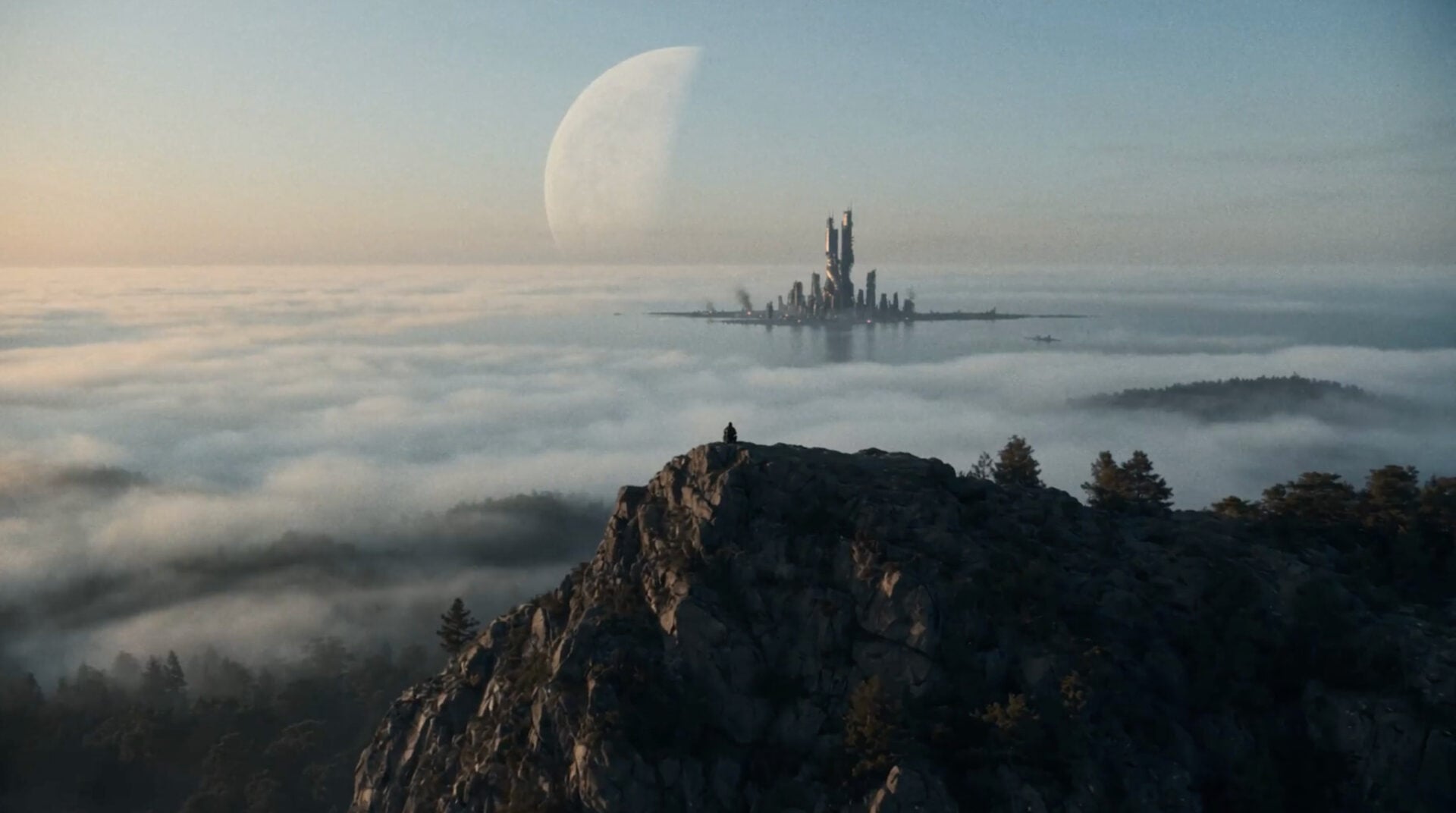
A still image from the AI-assisted trailer Raphael Rogers created for his science fiction novel.
I ended up showing the trailer to the commercial people in these agencies I do work for. They all literally said this is the best AI we’ve seen. And just this week, I got so many jobs making AI spec commercials as a result of that one trailer.
Interviewer: How does that work?
Raphael: What these agencies do is they’ll have the script for a commercial, and they’ll have me make the commercial in AI. Then they’ll take it and pitch it to a company so they can actually get the job and go and shoot it. So as we speak, on this computer I have shots rendering for a big-brand commercial.
Kristin: The thing to add is that the reason why his trailer looks really good is because he has a filmmaking background. So he was able to tell AI what lenses and what camera to use, and how to do it. And then he edited it together piece by piece. There was over two-and-a-half hours of footage that had to be cut down to a minute and 30 seconds. Other people that don’t have a filmmaking background can’t do that.
When documentary filmmaking became personal
Interviewer: Let’s move past the actual technology into raising awareness. It seems that your film Inconceivable is an example of using video to raise awareness about an issue you believe deserves attention. Why did you choose this subject and what do you hope this film can accomplish?
Kristin: Well, it’s a personal story.
Raphael: We didn’t choose the subject; the subject happened to us.
Kristin: Yeah, the subject chose us, because we never set out to make that film. And that’s the interesting thing about filmmaking. When a story is not scripted, you can set out to make one story and then it turns into something completely different. Some of the best documentaries I’ve seen are stories that have a really crazy twist halfway through or they set out to do one thing and then something happens along the filmmaker’s journey.
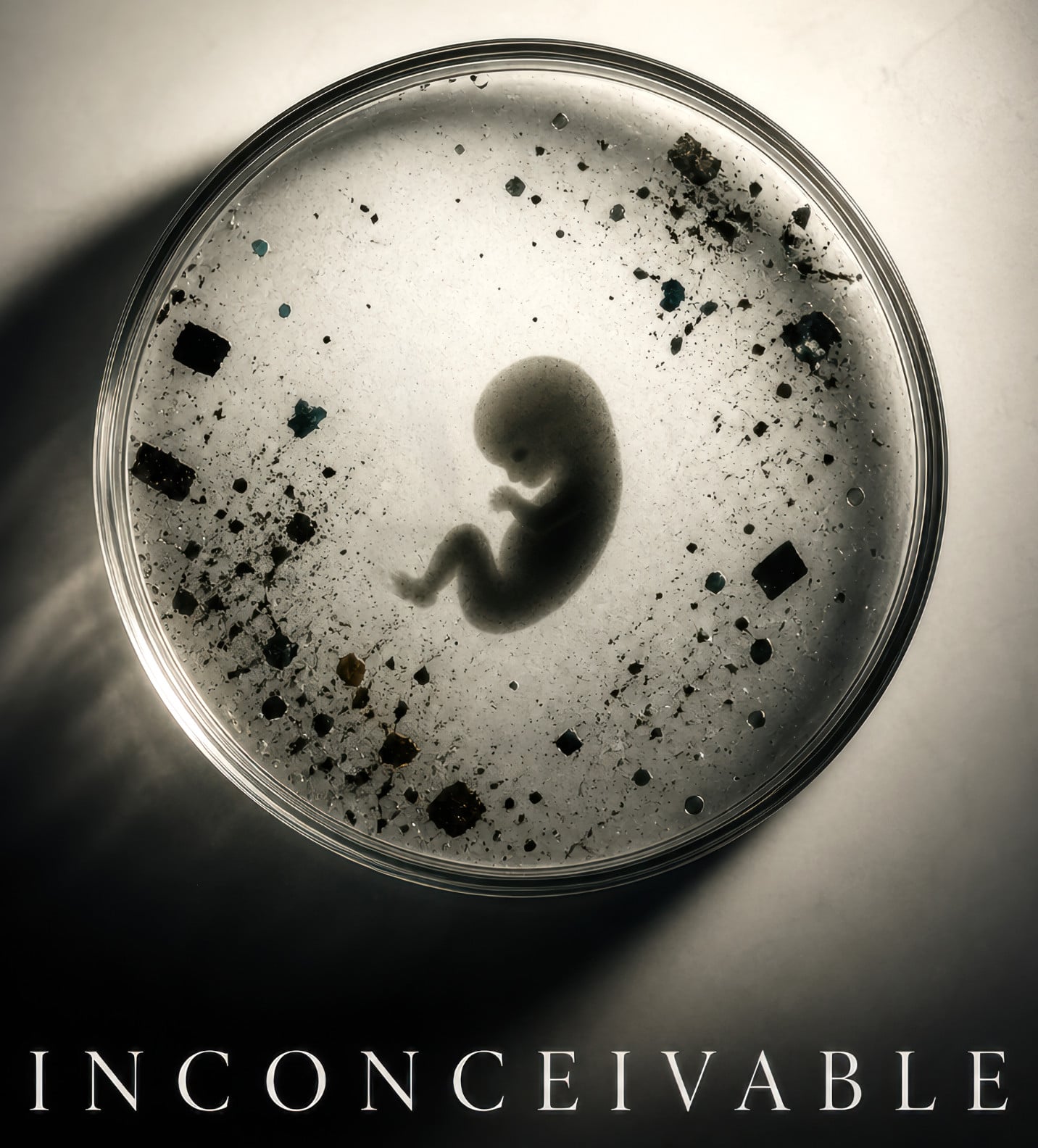
Interviewer: Please tell us about the film.
Raphael: It originally started as Kristin wanting to document getting pregnant and what that was all about, because she was doing a ton of research into what’s the best way to have a baby, and going through that process. And then she was not getting pregnant. So Kristin, as she does, went down the rabbit hole of research, because she doesn’t like unanswered questions.
And then we just started interviewing all these different scientists around the world while trying to figure it out.
Kristin: Yeah, I set out to make a film about pregnancy but then when I wasn’t getting pregnant I started to question everything. Then I saw Shanna Swan on Joe Rogan’s podcast. She was talking about her book Countdown, which is about how sperm counts and fertility rates were decreasing and miscarriages were going up, and how chemicals in the environment played a role.
And it scared me. I thought I might not be able to do this [get pregnant]. And so I went down a deep research rabbit hole. And the film changed. It became less about us and more about looking at what’s happening to other people. Because I had friends who were going through infertility.
I felt like we should warn people, and then it kind of just took off from there. And then I actually got pregnant while making the movie and now our daughter is three years old, and also we’re going to have another baby.
While we were making our movie, statistics about fertility and infertility were changing. So when we set out to make the film, it was one in eight couples who were struggling with infertility, and by the time we finished it was one in five. Sperm counts in men have dropped 62 percent in 50 years. And now it drops two percent a year.
So we felt that we had to get this information out.
Raphael: Also, we were trying to personally adapt by just changing the way that we did things. We completely changed our own fertility. My sperm count went from 40 million to 180 million because of a combination of lifestyle changes.
Kristin: We didn’t have a bad lifestyle. In fact, we were very health conscious, but we just learned a lot of little things to do, such as what vitamins to take, and what physical activities not to do. We did eat healthier and got rid of chemicals and plastics in our environment. For example, we used to eat a lot more takeout, so we started to cook mostly at home. We got rid of our non-stick pans that we had cooked with, our shampoo with chemicals. Things like that.
Interviewer: Kristin, you seem to be obsessive going down research rabbit holes. You go into great detail in your general curiosity about life, and health in particular. How has that helped you in your career?
Kristin: I don’t know how that has helped my career, but it’s helped me a lot with my own health, and with our friends and family.
Raphael: Health begets everything around you, even career.
Kristin: I just get really passionate about helping people. If I see a problem, I want to fix it. It’s just my personality. I’ve always been that way, which is probably how I got into filmmaking.
Raphael: It helped you find all the people that you wanted to be in the film and message them. She was relentless about messaging them until they said they would participate.
An uncertain future for filmmakers
Interviewer: Let’s revisit the AI aspect of video production. It’s unsettling for a lot of people because the changes are happening so fast and it’s bringing major changes to video production, as you alluded to in the beginning. What new possibilities does this create? Also, what concerns you about where video production may be headed because of AI?
Raphael: The scariest thing is we don’t know. If technological advancement stopped here, we would have an answer for that. But I don’t feel like anybody knows and I think that’s what’s scary to most people that are in video production.
I don’t think I would encourage our daughter to go into video production. I would encourage more of an entrepreneurial mindset, such as opening a physical business.
Kristin: Young people nowadays love TikTok and Instagram and viral videos.
Raphael: Yes, but there is a pendulum swing back toward reading more books. Books are getting more and more popular now because of the oversaturation of videos and the unending choices. I think that people are craving that analog experience, and books can never be oversaturated because it’s just only consuming one thing at a time.
Kristin: As long as AI doesn’t write the books.
Why human storytelling still matters
Interviewer: Okay, last question. How do your personal values influence the work you choose to do, and how do you balance that work with marriage, raising a family and the rest of life?
Raphael: Realistically, most people that make movies are part of a very select few. Most filmmakers make their money with commercials because it’s so much easier to get work making commercials. So I just try not to do work on bad products.
Kristin: I love trying to help people. So like with the documentary Inconceivable I’m still working on that. We’re talking about putting it out at certain medical conferences. The film did just win best documentary at the Raw Science Film Festival in New York.
Interviewer: Tell me about that experience.
Kristin: The festival is in Manhattan, which is interesting.
Raphael: I would never have expected to make a documentary that wins a science film festival.
Kristin: It’s a very legit film festival, a very big one in the science world. We won the grand jury award for best documentary.
Raphael: So we’re going to New York, and we are going to have it screened there, maybe at the New York Public Library or some auditorium.
Kristin: Hopefully it helps us get distribution. We’re also trying to show it at conferences, and we’re going to do screenings with different organizations. For me, it’s because I’m so passionate about this topic, now having gone through it myself, and having to figure it out myself.
You have to know enough to ask the right questions when you’re going through something with your health, like struggling with fertility. So I’m just very passionate about educating people and taking a product that we’ve built and being able to show people and talk about it.
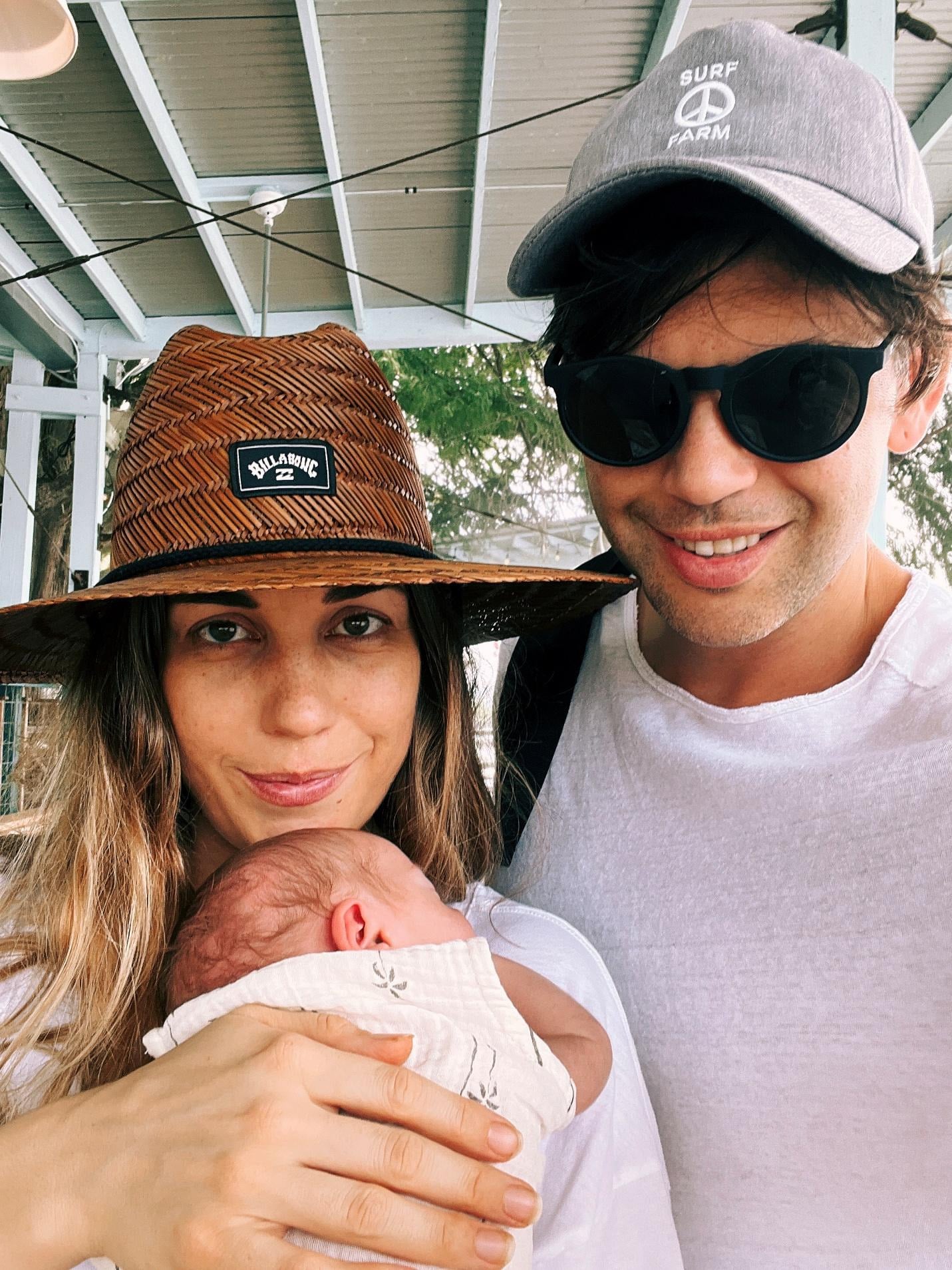
Raphael: You asked about balancing family. I think that’s probably one of the hardest things for me specifically. If our daughter asks me to play with her and I tell her I can’t play right now because I’m working, it’s very difficult. But on the upside it’s good because we work from home. So I think we have to keep reminding ourselves that she gets more attention than a lot of children used to back in the day when people worked in factories and the like.
Interviewer: Any final thoughts?
Raphael: I think that people will always want stories—human stories. So filmmaking will always be there in some capacity. We’re just in a phase with AI where we don’t know what’s going to happen next, just like when cars replaced horses.
Kristin: I think we’ll always tell stories, so that’s not going to change. It’s just the ways that we tell stories might shift.
