

What if tariffs, which have long been a key revenue-driving instrument of economic policy, no longer shaped the terms of global trade?
That question feels especially timely now, as the United States is in negotiations with a number of nations over a sweeping US overhaul of its global trade relationships. The goal of this ambitious effort is not just restructuring tariffs but also confronting non-tariff barriers to trade head-on.

Led by President Trump’s negotiating team that includes Secretary of the Treasury Scott Bessent, Commerce Secretary Howard Lutnick, US Trade Representative Jamieson Greer, Director of the National Economic Council Kevin Hassett, and Vice President JD Vance, the approach is a blend of pressure and pragmatism.
So far, Trump’s method to achieve his goal has been to increase tariffs or threaten to do so. At other times, he has paused them as leverage to bring nations to the negotiating table.
These unfolding events offer a real-time glimpse into the strategic chessboard behind international trade. They also invite us to step back and ask deeper questions regarding the roles tariffs might play in a 21st-century global economy.
Tariffs: tools of balance or blunt instruments?
It is true that tariffs, as government-imposed taxes on imports, are used to protect domestic industries or correct trade imbalances. But tariffs—particularly steep ones—can also distort markets. More so, they can provoke retaliation and strain international relations, as we are seeing in the news almost daily these days.
For the most part, global commerce is deeply interdependent. Supply chains, such as those for mobile phones, for example, often run through multiple countries. In such a world, is it possible to imagine a future where tariffs become largely obsolete and trade flows freely? Or is that vision a fantasy built on naive assumptions?
Could such a tariff-free future ignite a new era of prosperity and cooperation—a golden age of global exchange? Or would it simply empower bad actors, undercut workers, and erode national industries?
When “free trade” isn’t free
The idea of frictionless global trade has obvious appeal: lower prices, greater competition, and faster innovation. But theory often diverges from reality. “Free trade” presumes level playing fields and good-faith traders, but that’s often not the reality.
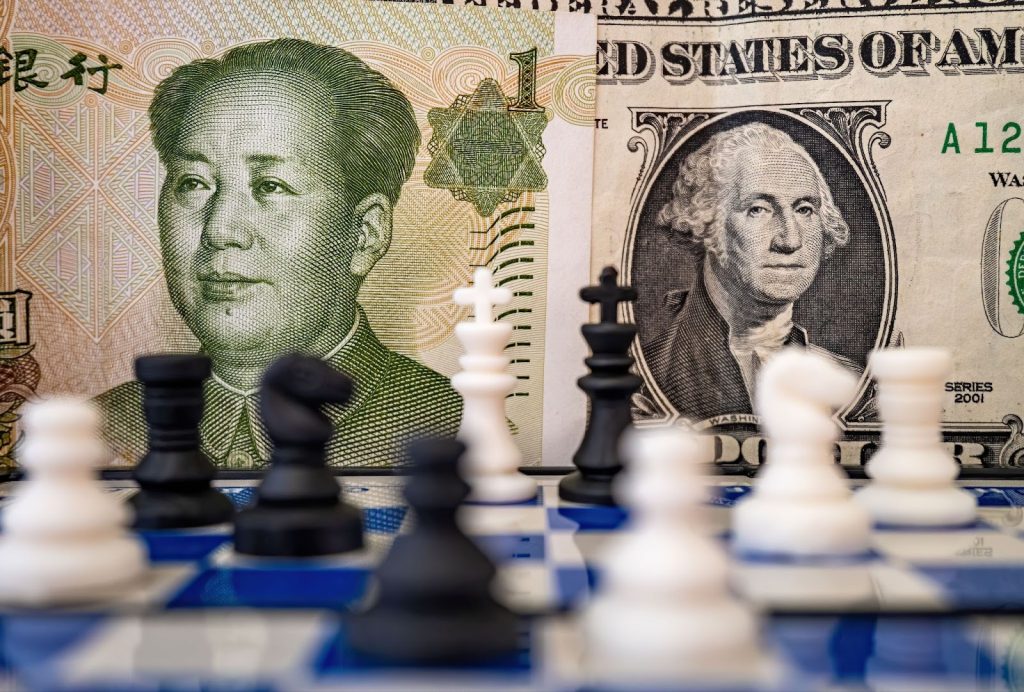
Even if tariffs were removed, non-tariff barriers—such as quotas, regulatory hurdles, state subsidies, and opaque approval processes—could tilt the balance.
Some nations even deploy criminal tactics, such as intellectual property theft, to gain an edge. Nowhere is this more evident than in China, whose state-backed enterprises have long crossed the line into economic warfare.
Without enforceable checks in place, a tariff-free world could hand an enormous advantage to authoritarian regimes and state-run economies that exploit loopholes, suppress labor costs, and sidestep environmental or safety standards. These practices result in artificially low production costs. This allows such nations to dominate markets not by merit, but by manipulation.
As corporations chase the lowest bidder with the fastest production speed, the offshoring of skilled jobs would only intensify, further hollowing out industrial heartlands everywhere.
Countries with open markets and strong labor laws, like the United States, could find themselves flooded with cheap imports produced under conditions they would never permit at home.
In that scenario, domestic manufacturers may be unable to compete, simply because they’re playing by rules others ignore. Trade, then, becomes less about fair exchange and more about strategic domination.
It’s a race to the bottom, where companies cut wages and standards to stay competitive with the cheapest producers, and where long-term resilience is sacrificed for short-term gain.
The consequences of global trade liberalization
These are not hypothetical concerns—they’re the real-world conditions the United States has been navigating for decades. Since the late 20th century, the push toward global “free trade” has steadily eroded America’s industrial backbone.
A key turning point came in 2001, when China was admitted into the World Trade Organization (WTO). The move was hailed as a step toward greater economic integration and cooperation for the nations of the world. In practice, it unleashed a wave of asymmetrical competition.
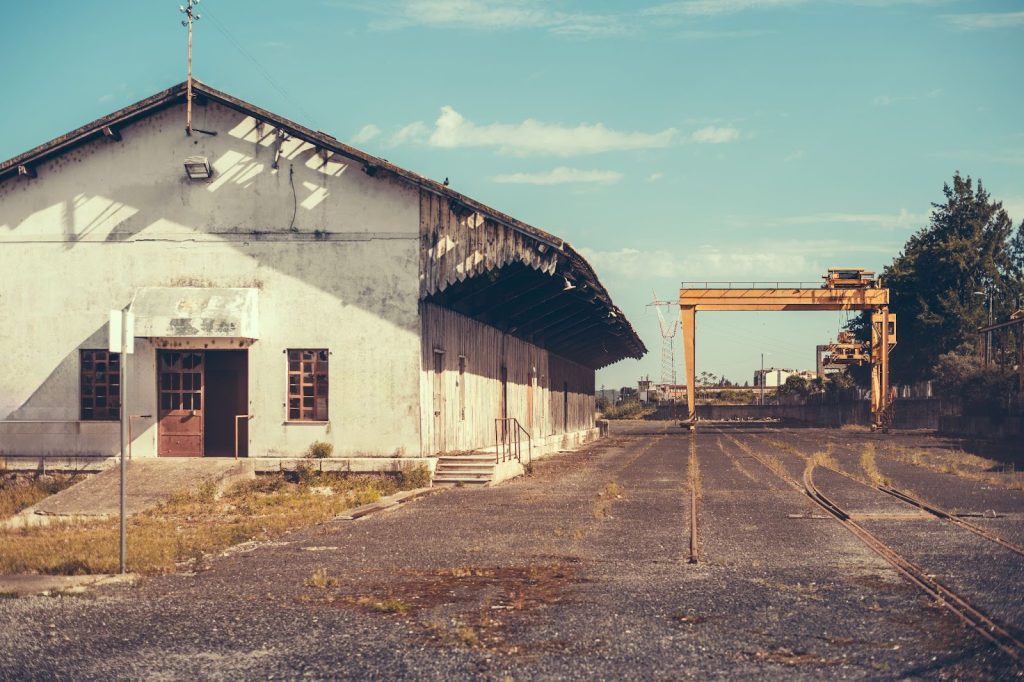
Corporations, driven to maximize shareholder value, relocated factories to China in pursuit of cheaper labor, looser regulations, and higher profit margins. Entire industries disappeared from US soil, leaving behind shuttered plants, broken local economies, and generations of skilled workers with nowhere to turn.
The human cost of offshoring
The fallout didn’t stop there. Waves of drug addiction, overdoses, and rising crime have plagued many of the communities left behind. From the decimated steel towns of the Rust Belt to the hollowed-out tech manufacturing hubs once anchored in California, the toll of this unbalanced system is visible across the country.
While consumers gained access to cheaper goods, the hidden costs include widening trade deficits, vulnerable supply chains, and the loss of US self-sufficiency in critical sectors.
In retrospect, admitting China into the WTO was like leaving the hen house door open to the neighborhood fox. More than two decades later, that analogy still holds. China has consistently gamed the global trade system to its advantage. We’ll take a deeper look at the current trade landscape with China, including the nation’s latest tariff-dodging tactics.
But first, let’s look at the history of tariffs and what they were meant to accomplish.
What history teaches us about tariffs
To make sense of today’s fast-moving trade negotiations—and to evaluate whether a largely tariff-free world is realistic or wishful thinking—let’s start with some historical background on tariffs.
Tariffs are hardly a modern invention. As early as 2,000 BCE, the ancient Sumerians were imposing levies on goods transported by merchants along key trade routes.
From the rise of empires to the industrial revolution, tariffs have been used not just to raise revenue, but to protect strategic industries, influence diplomacy, and define the very boundaries of economic power.

The Roman Empire famously imposed customs duties on goods entering its vast territory. Known as portoria, these tolls were collected at border crossings and ports to raise revenue and control the flow of goods—especially luxury items.
In fact, Roman customs houses functioned much like modern border checkpoints. Tariffs were integral to funding the empire’s military, its famous road networks, and its civil administration.
In the medieval world, city-states like Venice and Genoa relied heavily on tariffs to fund naval protection and monopolize trade routes across the Mediterranean.
In China’s Tang and Song Dynasties, maritime trade boomed, and the imperial government used harbor taxes to regulate commerce while promoting state interests.
The bottom line is that the concept of protecting domestic producers through external duties is as old as the idea of a “nation” itself.
Tariffs in the age of mercantilism
By the time of mercantilism in the 16th to 18th centuries, tariffs had evolved into key instruments of national power. European empires used them not only to generate income but to protect their growing industries from foreign competition.
The idea was simple: exports were good, imports were suspect. Tariff walls helped fuel the rise of colonialism and various industrial revolutions. Eventually, they also led to global conflicts rooted in competition for markets and resources.
How tariffs built America
It’s an underappreciated but indisputable fact that the United States was built on a foundation of tariffs. From the very first Tariff Act of 1789, duties on imported goods served as the young nation’s primary source of federal revenue—funding everything from roads and ports to national defense.
In a recent All-in-DC podcast interview, Commerce Secretary Howard Lutnick put it plainly: “America was built on tariffs with no income tax. No income tax till 1913. None. Greatest, richest country in the world.”
The quiet surrender of tariff power
That changed with the Revenue Act of 1913, which introduced the federal income tax—just in time to fund America’s entry into World War I. In the decades that followed, America’s tariff policy took a back seat to other global priorities.
After World War II, the United States intentionally lowered its own tariffs to help rebuild allied nations devastated by the war. According to Lutnick, the US attitude at the time was: “We’ll let them have [their] tariffs up and we will export the power of our economy to let them rebuild.”
Through programs like the Marshall Plan, countries such as Germany, Japan, and others in Southeast Asia were allowed to maintain high import duties—while benefiting from access to the open US market.
What began as a temporary gesture of generosity soon hardened into a structural imbalance. Even nations like Kuwait, which received nearly $100 billion in US military support during the Gulf War, today impose some of the world’s highest tariffs on American goods, Lutnick noted.
Pointing to America’s failure to revisit and revise these outdated trade arrangements, Lutnick said simply, “Then we forgot.”
The US Commerce Secretary credits President Donald Trump as the only modern leader willing to confront this status quo. Trump’s use of tariffs—both threatened and imposed—isn’t just a negotiating tactic, Lutnick suggests, but an effort to restore balance. The goal: fairer, reciprocal trade terms between the US and its global partners.
Economic theory vs. human reality
When the All-in-DC interviewers raised the standard economist’s objection—that tariffs raise prices and slow economic growth—Lutnick pushed back.
“India has a 50% tariff on average [on US imports]. We have, on average, 4 [on imports from India],” he noted. In his view, such critiques ignore the social costs of decades of offshoring and unbalanced trade. “Let’s do human beings first before we go to the math,” he said.
Pointing to the collapse of American manufacturing communities, Lutnick cited a stark statistic: “The difference today of average life expectancy between [high school–educated and college–educated Americans] is seven years…It’s not the air, it’s not the food, it’s not the medicine. It’s despair.”
When free trade became foreign aid
America’s decision to lower tariffs after World War II wasn’t just economic—it was geopolitical. The hope was to achieve peace through prosperity. But over time, what began as postwar aid turned into a long-term imbalance.
While the U.S. continued to honor the liberal trade rules it helped design, many partner nations retained high tariffs or erected non-tariff barriers of their own, often with little pushback from Washington.
Which brings us back to the core question: Can the world move beyond tariffs without sacrificing fairness, sovereignty, or resilience? Or is a tariff-free future less a vision—and more an illusion?
Is a future beyond tariffs realistic, or even desirable?
It’s an idea that appeals to idealists and economists alike: a world where goods move freely across borders, unencumbered by the friction of tariffs.
In theory, a low-tariff or tariff-free global economy would mean more efficient supply chains, lower consumer prices, greater innovation, and a higher standard of living across nations. Trade, in this vision, becomes a bridge, not a battleground.
But reality pushes back.
For many countries, especially the United States, tariffs are more than just taxes—they’re leverage tools in an increasingly unbalanced system. As mentioned, global trade today is riddled with asymmetries: some nations protect their domestic markets with sky-high tariffs and hidden regulatory barriers, while others, like the US, offer open access with little reciprocity. This lopsided arrangement has hollowed out entire industries and fueled serious political backlash.
Enter President Donald Trump, who once again finds himself at the center of this debate. His second-term policies challenge decades of trade liberalization. By calling out non-reciprocal tariffs and reasserting America’s right to protect its own economy, Trump has reignited the discussion around fair trade versus free trade.
To some, his approach marks a needed correction. To others, it risks fracturing the global trading system entirely.
What might the road ahead look like?
In the short term, we’re likely to see sharper distinctions between trading blocs. Countries that trade on mutual respect and transparency may form closer ties, while those that manipulate rules or close their markets could find themselves shut out of preferred access.
Tariffs—and their shadowy cousins, non-tariff barriers—may become more targeted and conditional, rather than blanket tools of trade warfare.
In the long run, however, a new vision could take root. One where trade agreements aren’t just about lower prices, but about shared rules, ethical production, digital transparency, and genuine reciprocity. Smart tariffs that are adjustable, measurable, and tied to fairness benchmarks could emerge as a tool to reward good behavior and discourage exploitation.
But such a future won’t come easily. It requires not only new policies, but new thinking. It also requires a shift from ideology to integrity. And it raises a question few global leaders have yet answered: What is the sweet spot, the middle ground, between mutually beneficial trade and trade that honors and protects the individual national interests of countries?
China: the outlaw trade nation
Speaking of not coming easily, let’s now look at trade with China.
This article asks whether a future beyond tariffs is a genuine vision or an unattainable fantasy. When it comes to China, there’s not much room for debate.
It’s a fantasy. Let’s examine why.
For decades, the Chinese Communist Party has built its economic base of power not merely on innovation and efficiency, but on a calculated disregard for international trade norms.
While others follow the rules—honoring trade agreements, upholding labor standards, and competing through innovation—China operates differently. It bends the rules where possible, breaks them when necessary, and rewrites them when it can.
The world’s most prolific intellectual property thieves
Perhaps nowhere is this more evident than in the arena of intellectual property (IP) theft. Since China’s accession to the WTO in 2001, Western companies have reported systematic IP violations.
Entire product lines have been reverse-engineered, software pirated, and patented technologies stolen—often with state involvement or tacit approval. One of the most notorious examples came in 2014, when Chinese military hackers were indicted by the US Department of Justice for stealing trade secrets from major American companies, including Westinghouse and U.S. Steel.
In more recent years, the theft has shifted from crude copying to more sophisticated espionage. Think of targeting aerospace, biotech, and semiconductor industries through cyberattacks and forced technology transfers.
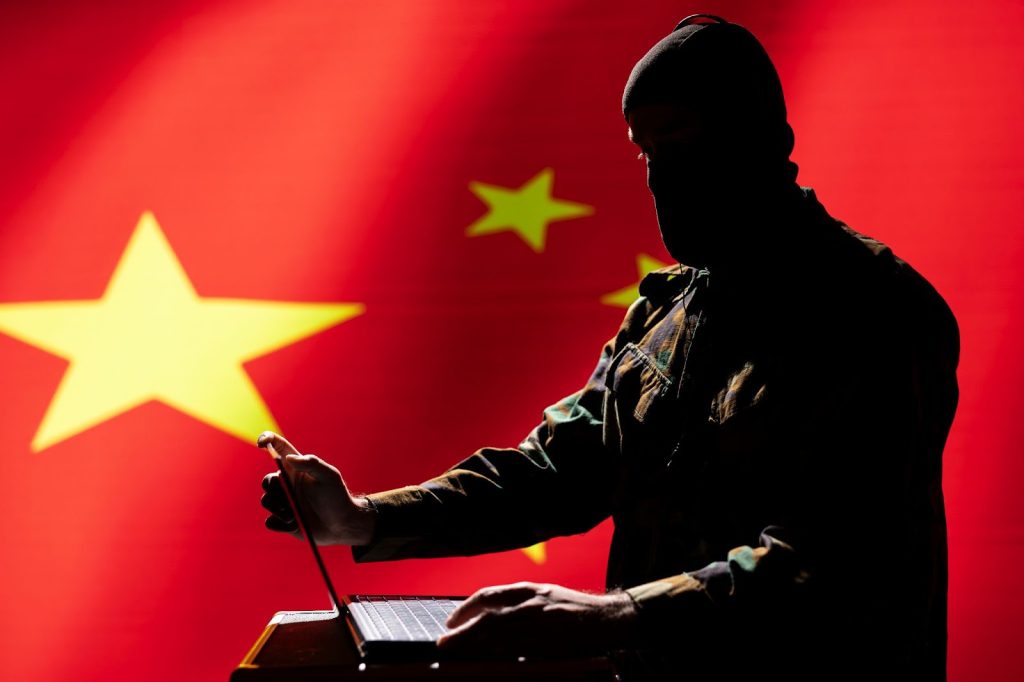
China’s violations go far beyond IP theft. The regime has long manipulated its currency to artificially depress the value of the yuan. This practice makes its exports cheaper and imports less attractive. This undercuts foreign competitors without any corresponding gain in productivity. It’s merely a sleight-of-hand tactic to maintain export dominance.
Though China has denied it, multiple administrations, both Republican and Democrat, have criticized Beijing for its currency practices. The US Treasury has on occasion formally labeled China a currency manipulator.
The evolution of China’s trade tactics
More recently, China’s approach has evolved. Its modern tariff-dodging strategy is no longer just about factories and shipping containers. Rather, it’s a tricky decentralized, e-commerce-based machine that exploits US import loopholes.
As trade expert Tim Odell explains, since 2016, China has shifted from relying on bulk orders to deploying more than a million cross-border sellers through platforms like Temu, Shein, and Amazon.
These sellers underreport shipment values, misclassify goods, and use opaque structures like delivered duty paid (DDP) arrangements and non-resident importers (NRIs) to avoid tariffs and taxes entirely. In this situation, US customs revenue evaporates, and domestic manufacturers are left unable to compete on cost.
To fight back, tariffs alone are not enough. The US must reform its import system, including requiring all sellers to register as US-based entities with verifiable tax IDs, addresses, and bank accounts.
Customs enforcement agencies should use digital tools to cross-reference the declared values of imported goods with actual online sales data. And loopholes like NRIs and DDPs must be closed to reveal the true importer of record. Without these structural safeguards, China’s weaponized logistics will continue to exploit the system unchecked.
China’s masterful use of non-tariff barriers
Finally, China’s trade behavior includes the use of non-tariff barriers: state subsidies, opaque approval processes, and quota systems that protect domestic champions while shutting out foreign competition. And through lax labor and environmental standards, it enables mass-scale worker exploitation that drives a global race to the bottom where companies worldwide must cut wages and safeguards just to survive.
If China continues to play by its own rules while the rest of the world follows another set, the global trading system will grow more distorted—and less defensible.
How to move forward?
So what’s the answer to our original question, given China’s trade-related behavior over decades?
The first order of business is to make China pay for its predatory and criminal trade behavior through tariffs and penalties. Yes, the devil is in the details of how that would be done, and that topic is beyond the scope of this article.
However, setting the China problem aside, the solution is not that complicated. To put it simply, balanced, mutually beneficial trade agreements between nations should be the goal of global trading partners going forward.
A trade future that rewards fair play and reciprocity
If a world beyond tariffs is to be more than a mirage, it will likely emerge not from sweeping global pacts, but from targeted, bilateral agreements that reward fair play and reciprocity.
The recent trade deal between the United States and the United Kingdom offers a glimpse of what this more realistic path could look like—a measured step forward that balances national interests with mutual gains.
Rather than pursuing a full free trade agreement, the US and UK opted for a focused deal aimed at strategic sectors—steel, autos, and agriculture—where both sides stood to benefit. It’s not about tearing down every tariff wall overnight, but about building bridges where there’s trust and mutual alignment.
Specifics of the US-UK trade agreement
Let’s take a look at the nature and outcome of this tailored trade agreement.
The United States kept its 10% baseline tariff on most UK goods but made key concessions where it mattered—dropping tariffs entirely on UK steel and aluminum and slashing auto tariffs from 27.5% to 10% on up to 100,000 vehicles annually.
In return, the UK cut its average tariffs on US goods from 5.1% to 1.8%, removed its steep 19% ethanol tariff, and opened a 13,000-metric-ton quota for duty-free US beef.
The results are tangible. American farmers and exporters are poised to gain $5 billion in new opportunities, while the Treasury holds on to $6 billion in annual tariff revenue. Industrial sectors from chemicals to machinery gain easier access to UK markets.
On the other side, the UK shields critical domestic industries, preserves food safety standards, and placed a $10 billion order for Boeing aircraft—delivering a major boost to US manufacturing and supporting both economic momentum and national security interests.
For the UK, the agreement secures stable access to high-quality US goods and strengthens trade ties with one of its most important economic partners.
A blueprint for a world “beyond tariffs”?
Deals like this may be the blueprint for a world that goes “beyond tariffs”—not by eliminating them outright, but by recalibrating them in ways that reinforce fair, rules-based exchange.
Nations that continue to exploit loopholes, distort markets, or flood others with subsidized overproduction, as China does, may find themselves increasingly isolated unless they adapt to this new trade architecture.
In this light, a future beyond tariffs may not be an illusion after all. Rather, it may take the form of a series of deliberate steps taken by countries that choose cooperation over coercion and healthy reciprocity over manipulation.
This is a pragmatic middle way that holds hope for the nations of the earth to cooperate in an economic endeavor that’s as old as the ancient mariners who sailed goods from port to port and from sea to shining sea: trade.

Leave a Reply